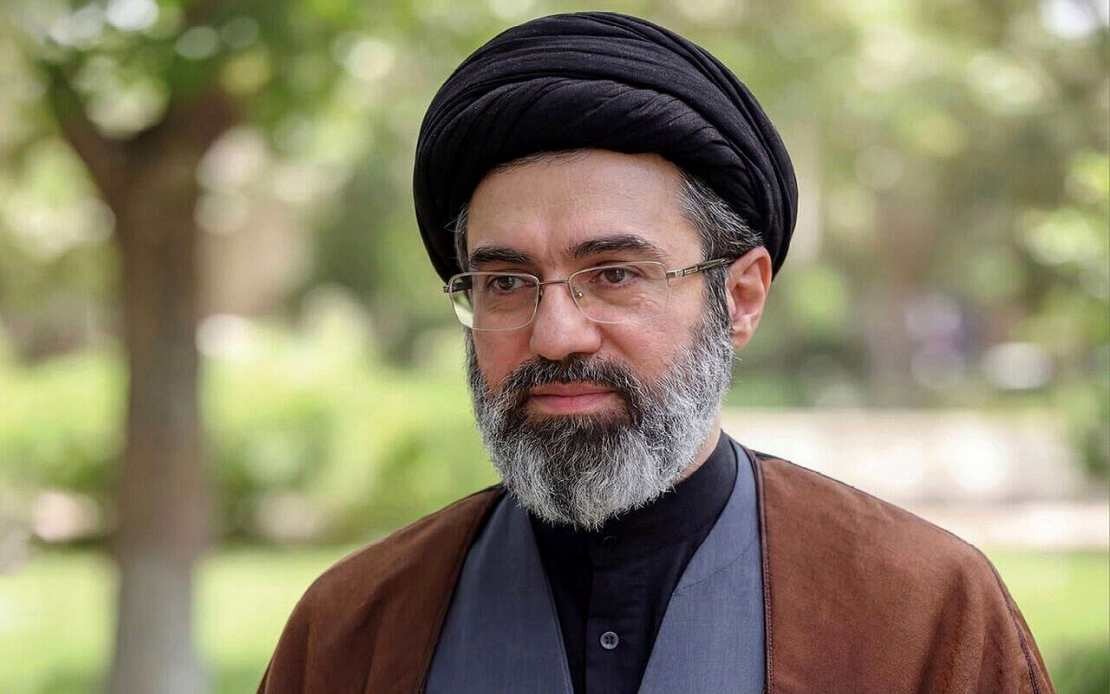
Iranian President Masoud Pezeshkian has publicly reaffirmed the good health of Iran's Supreme Leader Mojtaba Khamenei during a television interview with state broadcaster IRIB, seeking to put to rest any lingering questions about the leadership's wellbeing. The president's comments came after he spent seven hours in direct consultation with the supreme leader, a meeting that signals active engagement between the two top officials as Iran navigates mounting economic and geopolitical pressures.
The timing of Pezeshkian's remarks is significant, coming as the Iranian president commenced his third year in office. During this extended private session, the two discussed an expansive agenda touching on matters that cut to the heart of contemporary Iranian governance and public concern. The supreme leader, according to Pezeshkian's account, emphasised the critical importance of maintaining national cohesion and strengthening solidarity among Iran's diverse population—a recurring theme in Iranian leadership rhetoric given the country's complex ethnic and sectarian composition.
Pezeshkian characterised the meeting itself as highly productive, describing it in positive terms that underscore unity within the Iranian power structure. The conversation ranged across multiple policy domains, with particular emphasis placed on the everyday struggles confronting ordinary Iranians. Employment generation, housing accessibility, and improvements to living standards featured prominently in their discussions, reflecting the administration's awareness of public discontent over economic hardship that has persisted despite various reform efforts.
The question of international sanctions emerged as another focal point during their deliberations. Pezeshkian specifically raised the problems flowing from Washington's and other Western nations' restrictive measures, which have severely constrained Iran's ability to participate in global commerce, access international financial systems, and develop key economic sectors. This acknowledgment underscores the extent to which external pressure continues to shape internal policy debates and economic planning within Tehran's leadership circles.
The confirmation of Mojtaba Khamenei's health carries particular weight given the extraordinary circumstances of his appointment to Iran's highest office. In March, the Assembly of Experts selected him to succeed his father, Ali Khamenei, who was killed during coordinated military strikes attributed to the United States and Israel on February 28. That succession, one of the most consequential political transitions in recent Iranian history, took place amid regional turbulence and international scrutiny. The younger Khamenei's elevation represented a watershed moment for the Islamic Republic, consolidating supreme authority within a single family while the nation faced unprecedented external military threats and internal economic strain.
Since assuming this position, the new supreme leader has largely refrained from public appearances, maintaining a deliberate low profile that contrasts sharply with his father's decades of visible leadership. This absence from the public eye has naturally invited speculation about his health, political positioning, and the extent to which he commands the security and military apparatus that underpins Iran's power structure. Pezeshkian's public assurances therefore serve a dual purpose: affirming the supreme leader's physical fitness while simultaneously projecting an image of continuity and stable institutional functioning at the highest levels of Iranian government.
For regional observers and international analysts, the president's comments offer limited transparency into the actual workings of Iran's hybrid theocratic system, where the supreme leader wields vast authority over the military, judiciary, and state media, while the elected president manages day-to-day governance. The concentration of power in the supreme leader's hands, combined with the deputy's recent transition and limited visibility, creates inherent uncertainty about long-term policy direction and decision-making processes during a period when Iran faces mounting external threats and internal economic difficulties.
The substantive content of their meeting—national unity, economic hardship, employment, housing, and sanctions—reflects the persistent challenges that have defined the Iranian experience since the 1979 revolution and intensified dramatically over the past decade. Youth unemployment, currency instability, and the deterioration of basic services continue to generate public frustration, factors that any effective leadership must address to maintain legitimacy. The fact that these concerns occupied significant portions of the supreme leader's discussion with the president suggests awareness of potential fragility in the social compact.
Pezeshkian's assertion of perfect health represents a calculated move to reassure both domestic constituencies and international actors monitoring Iranian affairs. Stability at the apex of Iranian power matters enormously for regional security, given Iran's central role in Middle Eastern geopolitics, its influence over multiple state and non-state actors, and its ongoing confrontation with Israel and Western powers. Any perception of leadership weakness or succession instability could invite miscalculation among adversaries or embolden domestic challengers to the regime's authority.
Looking forward, the quality of governance under the new supreme leader will ultimately be judged not by statements about health, but by tangible improvements in Iranians' material circumstances and the regime's ability to navigate regional conflicts without catastrophic escalation. The lengthy presidential audience suggests deliberate efforts to project continuity and coordinated decision-making, though the supreme leader's continued absence from public view leaves many questions unanswered about the distribution of power within Iran's arcane constitutional framework and the vibrancy of its governing institutions.

