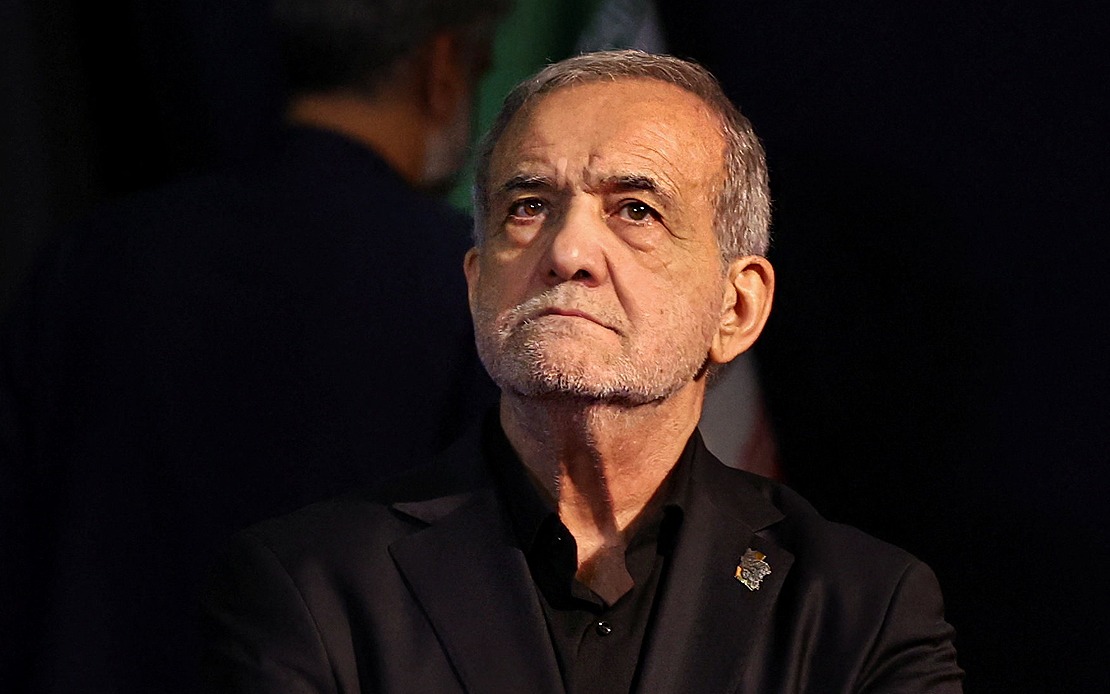
Iranian President Masoud Pezeshkian has escalated diplomatic pressure by formally calling for international legal action against the United States over alleged damage inflicted on Iran's transport and infrastructure networks, describing the attacks as constituting clear war crimes under international law. The pronouncement, made during a ministerial inspection on Sunday, signals Tehran's intention to pursue accountability through competent international organisations rather than through bilateral channels, marking a significant shift in how Iran intends to respond to the recent military escalation.
The president's visit to the Ministry of Roads and Urban Development included a comprehensive briefing on the extent of damage across Iran's critical infrastructure networks. Ministry officials detailed the destruction affecting border terminals, maritime ports, key bridge structures, railway systems, and logistics hubs, alongside broader assessments of how the damage has impacted the supply chain and distribution networks for essential goods throughout the country. The presentation underscored the scope of the alleged strikes, which officials characterised as targeting civilian rather than military installations.
Farzaneh Sadegh, the Roads and Urban Development Minister, presented an itemised report cataloguing destruction to ports, border crossing facilities, bridges, roads, railways, and logistics complexes following what Iran describes as US military operations. The briefing painted a picture of systematic damage across multiple transport modalities, suggesting coordinated strikes designed to degrade Iran's broader logistics capacity rather than isolated attacks on discrete military targets. This framing is central to Tehran's legal argument that civilian infrastructure was deliberately targeted.
The timing of Pezeshkian's statement carries particular significance given recent developments in the regional conflict. A period of heightened military tension spanning nearly two weeks witnessed intensive air operations, during which Iran maintains that American forces damaged critical civilian infrastructure in southern Iran. According to Iranian accounts, these operations only ceased following what Tehran characterises as a decisive retaliatory strike by the Iranian Armed Forces, which the government describes as an expression of its deterrence doctrine.
Pezeshkian's response went beyond rhetorical condemnation, directing government officials to accelerate reconstruction efforts on damaged infrastructure while simultaneously activating alternative transport routes to mitigate ongoing disruptions. The directives reflect a dual strategy of both preparing the international legal case against the United States while simultaneously demonstrating governmental competence in managing the crisis and maintaining essential services. The president's emphasis on strengthening infrastructure resilience suggests Iran is preparing for the possibility of future operations while building the narrative of a nation weathering external aggression.
The president's comments represent a notable departure from purely military or diplomatic responses, instead channelling grievances through the framework of international law. By characterising the alleged attacks as war crimes—terminology with specific legal implications under the Geneva Conventions and Rome Statute—Pezeshkian is attempting to internationalise the dispute and potentially mobilise support from other nations and non-governmental organisations focused on international humanitarian law. This approach could complicate Washington's regional positioning by forcing allied nations to address allegations of civilian infrastructure targeting.
For Southeast Asian observers and policymakers, the escalating Iran-US tensions carry broader implications for regional stability and international law. Malaysia, as a nation committed to principles of international law and a member of various UN-affiliated bodies, may face pressure to weigh in on accusations of war crimes and breaches of humanitarian law. The precedent being set regarding permissible targeting of civilian infrastructure during international conflicts could have ramifications for how regional powers conduct military operations and how the international community responds to allegations of civilian harm.
The economic dimension of the infrastructure damage extends beyond immediate repairs. Damage to ports and border terminals disrupts Iran's ability to conduct international trade and regional commerce, with potential ripple effects across Middle Eastern supply chains. For Malaysian trading partners and companies with regional operations, the degradation of Iranian transport infrastructure represents both a near-term disruption and a longer-term uncertainty regarding the country's logistics capacity during periods of geopolitical tension.
Pezeshkian's confidence that domestic reconstruction efforts combined with public support can ultimately thwart what he termed enemies' plans to disrupt infrastructure reflects an attempt to project governmental resilience and nationalist solidarity. By framing the infrastructure challenge as both a technical problem amenable to government management and a broader strategic contest where public support matters, the president seeks to mobilise domestic backing for whatever international legal strategies Iran pursues while managing expectations about recovery timelines.
The invocation of international law mechanisms raises complex questions about enforcement and realistic prospects for accountability. International legal proceedings against major powers, particularly permanent Security Council members, face substantial procedural and political obstacles. Iran's decision to pursue this path nonetheless signals that Tehran views legitimacy and international standing as important strategic assets in the broader competition with the United States, even if concrete legal outcomes remain uncertain.
Looking forward, Iran's combination of military deterrence doctrine and international legal mobilisation represents a multifaceted approach to addressing the recent escalation. The success of either strategy—whether the deterrent threat prevents future operations or international legal proceedings generate meaningful consequences—remains to be seen. For regional observers, the incident underscores how contemporary conflicts increasingly intersect questions of military strategy, civilian protection, international law, and diplomatic legitimacy.

