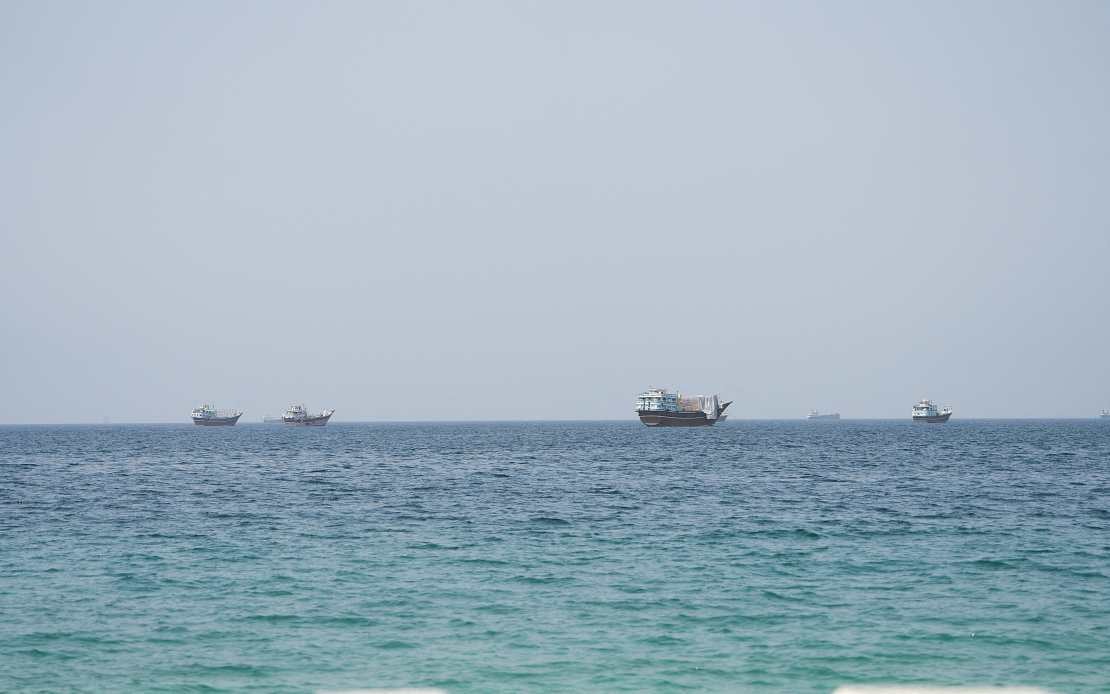
Iran's Foreign Ministry reported on Monday that bilateral negotiations with Oman regarding transit procedures through the Strait of Hormuz are advancing in a positive direction, with both nations working toward a comprehensive framework for maritime safety and commerce. The announcement, made by spokesman Esmaeil Baqaei at a weekly news conference, signals tentative progress in one of the region's most strategically significant maritime corridors, through which roughly one-third of global seaborne oil passes daily.
According to Baqaei's remarks as reported by the semi-official Tasnim news agency, negotiators have already reached consensus on a shipping traffic map detailing safe passage routes through the waterway. The two governments are now focused on resolving remaining technical details required before finalising a joint statement, suggesting that the framework governing future maritime operations in the strait is taking concrete shape. This incremental advancement reflects months of patient diplomacy between Tehran and Muscat, two Gulf neighbours with historically strong ties despite broader regional tensions.
The Iranian Foreign Ministry spokesman outlined several key objectives guiding the talks, emphasizing that establishing mechanisms to guarantee secure maritime traffic, environmental protection, and prevention of maritime criminal activity remain central priorities. Additionally, Tehran has clarified that vessel operators will bear the costs associated with providing maritime services through the strait—a point reflecting Iran's insistence on recovering expenses related to its enforcement and safety roles in the waterway. These provisions suggest a framework where Iran would maintain a supervisory presence rather than serving as a neutral transit point.
Baqaei stressed that the fundamental purpose underlying Iran's engagement with Oman is achieving a durable understanding that delivers comprehensive security throughout the Strait of Hormuz. He characterised the bilateral discussions as technical in nature, explicitly divorced from the broader geopolitical disputes that have characterised Middle Eastern relations. This framing attempts to position the talks as a practical, apolitical arrangement focused purely on maritime logistics and safety—a messaging strategy potentially aimed at avoiding international criticism or complications from third parties.
The diplomatic progress with Oman contrasts sharply with the larger stalemate affecting broader negotiations between Iran and the United States. In June, Tehran and Washington achieved a memorandum of understanding through mediation by Pakistan and Qatar, which successfully halted military escalation and created pathways toward a more comprehensive agreement. That accord contemplated the gradual reopening of commercial shipping lanes through the Strait of Hormuz, addressing one of the most consequential outcomes of years of regional military tension and economic sanctions.
However, implementation of the June memorandum has stalled significantly, with both Iranian and American officials accusing each other of violating its terms. Washington has maintained that Iran continues aggressive maritime posturing and interference with shipping, whilst Tehran contends that the United States has not fully lifted its naval blockade of Iranian ports or scaled back surveillance operations in the Persian Gulf. This mutual recrimination has prevented the agreement from translating into tangible changes to shipping patterns or security arrangements.
Iran's insistence that the Strait of Hormuz will not fully reopen until Washington addresses its grievances—particularly regarding the lifting of naval blockades—represents a significant hardline position that threatens to derail the broader American-Iranian negotiations. Baqaei's public reiteration of this precondition underscores Tehran's determination to extract concessions on sanctions relief and military posturing as part of any ultimate resolution. For Malaysia and other Southeast Asian nations dependent on Persian Gulf energy supplies, continued uncertainty surrounding Strait of Hormuz operations carries implications for oil prices, shipping insurance costs, and regional energy security.
The strategic importance of successfully establishing maritime transit protocols with Oman lies partly in demonstrating Iran's capacity to manage the strait responsibly through bilateral agreements. By negotiating a framework with Muscat—a neutral party respected across the region—Tehran may be signalling to international observers that it can implement orderly maritime governance without requiring comprehensive political capitulation from Washington. Oman's historical role as a mediator and its geographic position as Hormuz's southern guardian make it an ideal partner for legitimising such arrangements.
For Southeast Asian policymakers and businesses, the outcome of these negotiations carries practical consequences. Malaysia's significant dependence on oil imports and substantial shipping interests mean that any instability or uncertainty in Hormuz transit directly affects domestic fuel prices, manufacturing competitiveness, and financial stability. The region's maritime shipping industry, centred partly in Singapore and involving Malaysian ports and logistics companies, remains vulnerable to disruptions caused by ongoing tensions or incomplete safety agreements in the Persian Gulf.
The Iran-Oman talks also underscore a broader pattern in Middle Eastern diplomacy wherein smaller, traditionally neutral states increasingly serve as architects of pragmatic agreements that larger powers cannot negotiate directly. This model, whilst generating incremental progress, also highlights the fragility of arrangements dependent on bilateral rather than multilateral frameworks. A comprehensive regional maritime safety agreement might prove more durable and satisfactory to all parties, yet appears distant given the entrenched positions of Iran and the United States.
Baqaei's mention that Iran has not finalised its delegation composition for September's UN General Assembly meeting suggests that Tehran retains flexibility in how it engages international forums on these issues. The timing of such announcements—made parallel to reports of constructive Strait of Hormuz negotiations—may reflect Iran's strategy of keeping diplomatic channels open at multiple levels whilst maintaining leverage through occasional shows of cooperation with regional neighbours.
Looking forward, the success or failure of the Iran-Oman negotiations will significantly influence regional stability and global energy markets. If talks produce a functioning maritime safety framework, it could demonstrate that bilateral diplomacy can achieve practical results even amid broader geopolitical standoffs. Conversely, should negotiations stall or prove ineffectual, they may reinforce perceptions that fundamental disagreements between Iran and Western powers remain too deep for resolution through intermediaries.

