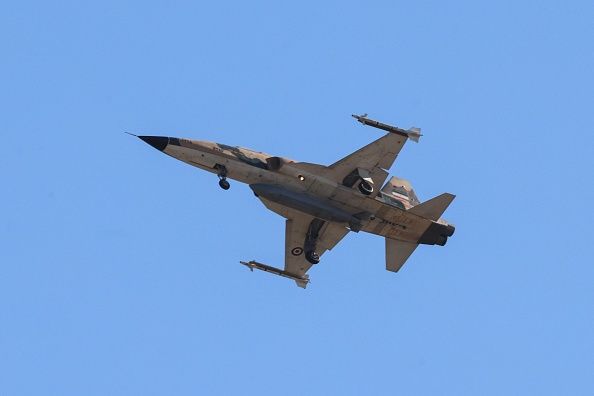
The dispute between Iran and its Gulf neighbours over missing military personnel has intensified, with Tehran rejecting official accounts from both Qatar and Kuwait and demanding international involvement to clarify what it characterises as wrongful detention. Mohammad Baqerzadeh, commander of the Committee for the Search for Missing Persons under Iran's Armed Forces General Staff, has called for immediate access to Qatar to probe the circumstances surrounding Iranian pilots, according to the semi-official Tasnim news agency. The escalating rhetoric signals deepening mistrust between the Islamic Republic and its smaller Gulf neighbours, with each side presenting starkly different narratives about the individuals in question.
The incident involving Qatar centres on a March airspace incursion when Iranian aircraft crossed into Qatari airspace without responding to communication attempts. Qatar's account maintains that search and rescue teams located the remains of one pilot following the violation, and that Doha subsequently attempted to coordinate the handover while inviting Iran to review operational details. However, Tehran rejects this version, insisting instead that pilots were captured by Qatari forces rather than lost in an accident. This fundamental disagreement over what occurred highlights the breakdown in direct communication between the nations, with Qatar emphasizing its cooperative gestures—including the recovery operation and invitation for Iranian review—while Iran views these actions as inadequate.
Baqerzadeh's assertion that an Iranian Air Force expert and investigation team has been waiting months for entry into Qatar suggests an ongoing diplomatic standoff. The Iranian official's repeated accusations that Qatari authorities deliberately obstruct the investigation and prevent pilot repatriation indicate Tehran's growing frustration with the pace of resolution. By framing the issue as deliberate obstruction rather than bureaucratic delay, Iran is laying groundwork for escalation, positioning Qatar as uncooperative and intransigent. The explicit request for International Committee of the Red Cross intervention represents an attempt to internationalize the matter and apply external pressure on Doha.
The second dimension of this crisis involves four Iranian personnel detained in Kuwait since May. Iran's narrative describes them as Revolutionary Guards personnel engaged in routine maritime patrol operations who inadvertently entered Kuwaiti waters due to navigation system failure—a technical malfunction rather than hostile intent. Kuwait presents a contradictory version, characterizing the four as suspects in planning operations against Kuwaiti interests. This discrepancy between a navigation error explanation and allegations of premeditated hostile activity suggests either fundamental misunderstanding or deliberate mischaracterization by one party. The deployment of such divergent narratives indicates the security tensions permeating Gulf state relations with Iran.
The involvement of Revolutionary Guards personnel adds complexity to the Kuwait situation. These units operate under Iran's Supreme Leader and maintain structures somewhat independent of conventional military command, sometimes complicating diplomatic negotiations. Kuwait's suspicion that the detainees planned hostile actions likely reflects broader security anxieties regarding Iranian military activities in the Gulf, where proxy networks and paramilitary operations have created persistent regional instability. For Kuwait—a smaller state sandwiched between major regional powers—such detentions carry security implications beyond the individuals involved.
Baqerzadeh's explicit invocation of the International Committee of the Red Cross signals recognition that bilateral channels have failed to produce results. By appealing to international humanitarian frameworks, Iran seeks to bypass direct Gulf state negotiations and invoke global norms around detainee treatment and transparency. This strategy reflects Tehran's assessment that bilateral pressure has exhausted its effectiveness. The ICRC, traditionally respected across borders as a neutral arbiter on detention and humanitarian matters, represents the kind of external validation Iran believes necessary to break the deadlock.
For Malaysia and Southeast Asia, this Gulf crisis illustrates the fragmentation within the broader Muslim world despite shared religious identity. The inability of Muslim-majority states to resolve disputes through Islamic solidarity or regional forums demonstrates how security concerns, historical grievances, and geopolitical competition override religious commonality. ASEAN nations, which have invested in dialogue mechanisms and peaceful dispute resolution, might view the Gulf impasse as cautionary evidence of how quickly regional relationships deteriorate without functional diplomatic infrastructure. The incident also affects regional shipping and aviation, as unresolved tensions in the Gulf create uncertainty for Southeast Asian maritime commerce and air routes.
The case reflects deeper strategic competition in the Gulf, where Iran seeks to maintain military presence and operational freedom while smaller Gulf states increasingly view Iranian activities with suspicion. Qatar, despite hosting American military installations and serving as a conduit for dialogue with Iran, maintains a delicate balancing act. Kuwait faces similar strategic pressures but with less diplomatic flexibility. These dynamic tensions create ongoing risks of incident escalation, particularly given the high military density and regular operational activities throughout the region.
Without resolution, these cases risk establishing precedent for future detentions and counter-detentions, creating cyclical recriminations that complicate broader regional negotiations. Iran's growing insistence on international oversight suggests frustration with current stalemate, potentially signalling willingness to escalate through publicity, diplomatic escalation, or reciprocal detention of Gulf nationals. The involvement of military personnel rather than civilians elevates stakes further, as such cases touch national pride, military institution credibility, and state sovereignty concerns that resist easy compromise.

