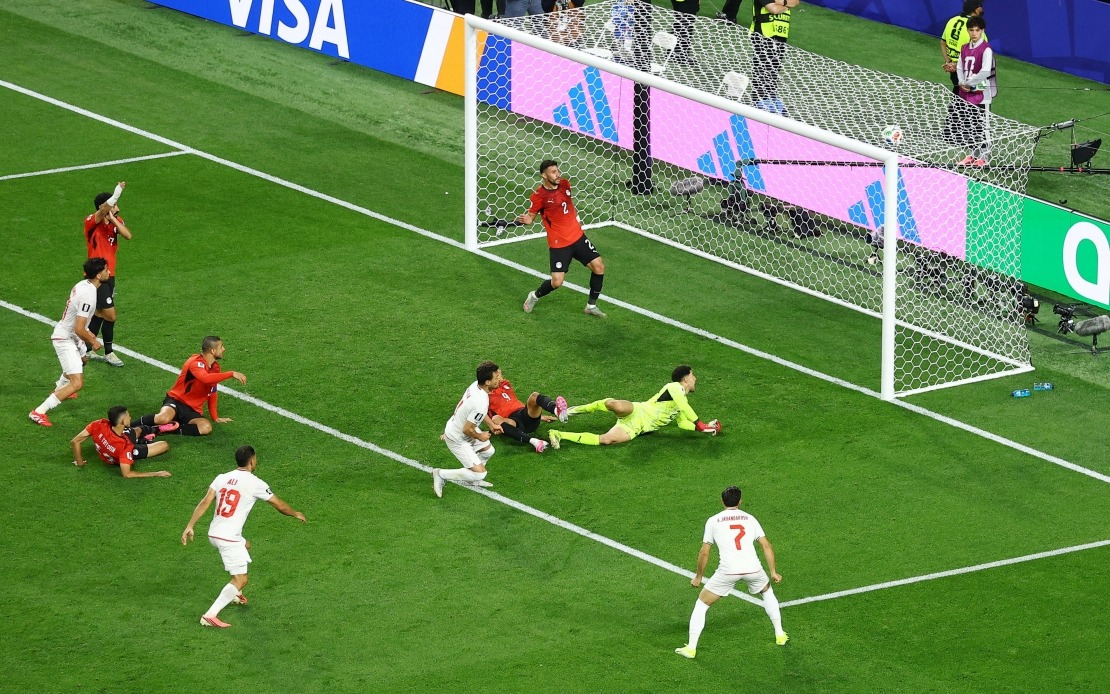
Iran's departure from the World Cup has been marked by an official statement denouncing what the nation's football federation characterizes as systemic unfairness throughout their tournament participation. The Iranian Football Federation for the Islamic Republic of Iran (FFIRI) issued a strongly-worded farewell on June 28 as the delegation prepared to leave North America, positioning their exit not merely as a sporting disappointment but as evidence of discriminatory treatment rooted in broader political tensions between Tehran and Washington.
The immediate trigger for Iran's elimination came on Saturday when their match against Egypt ended in a 1-1 draw—a result insufficient to advance beyond the group stage. The match itself became emblematic of the frustrations that have dogged Iran's campaign, as a goal was disallowed following an extended Video Assistant Referee review, adding another perceived injustice to an already contentious tournament experience. This incident crystallized mounting grievances that had accumulated across Iran's matches in the United States.
The logistical challenges Iran faced began even before their first kick of the ball. Originally scheduled to be based in Arizona, the federation was forced to relocate their headquarters to Tijuana, Mexico, a significant disruption that necessitated extensive travel for each group-stage match. This relocation, while nominally attributed to operational matters, occurred against the backdrop of Iran-US hostilities and raised questions about whether extra-sporting considerations had influenced the tournament arrangements. The team subsequently encountered multiple travel restrictions for their fixtures held within US territory, complications that no other participating nation reported facing to similar degree.
In their departing statement, the FFIRI extended gratitude toward journalists and media organizations who had documented both their sporting efforts and the impediments they encountered. The federation's acknowledgment of media coverage carries significance, suggesting they view international reporting as crucial to validating their position and ensuring the broader geopolitical dimensions of their treatment receive attention beyond football circles. By explicitly thanking the press for accuracy and integrity in covering their situation, Iran implicitly challenges the narrative that their difficulties stemmed purely from sporting misfortune or poor performance.
Beyond their formal complaints, the Iranian delegation expressed profound appreciation for Mexico's hospitality, specifically singling out Tijuana for warmth and generosity. This strategic emphasis on Mexican hospitality serves multiple purposes: it underscores the contrast between their experience in Tijuana versus their treatment in the United States, reinforces their alignment with Latin American nations often critical of US foreign policy, and acknowledges the practical assistance that Mexico provided as a refuge from the complications they faced north of the border. The federation's sentiment that leaving Tijuana proved genuinely difficult reflects both genuine gratitude and perhaps recognition that Mexico offered respite from a hostile environment.
For Malaysian and Southeast Asian observers, Iran's experience illustrates how international sports competitions increasingly become contested terrain where geopolitical rivalries and national conflicts intersect with athletic competition. The case demonstrates that even global sporting institutions struggle to remain insulated from state-level tensions, particularly when involving nations with significant diplomatic conflicts. The questions surrounding Iran's Arizona-to-Tijuana relocation and subsequent travel restrictions suggest that political considerations may have influenced logistical arrangements that ostensibly serve purely organizational purposes.
The VAR controversy specifically resonates across Asian football communities, where Southeast Asian fans have themselves experienced frustrations with video review technology and perceptions of inconsistent application. Iran's complaint about the lengthy VAR check on their disallowed goal taps into wider anxieties within the global football community about whether technological systems introduce new forms of bias rather than merely clarifying close calls. The extended deliberation itself becomes politically charged when a nation already experiences broader marginalization within international forums.
Iran's group-stage exit—coming without advancing despite their assertions of fair treatment—presents a complex narrative for international sports governance. Whether their grievances regarding travel arrangements, logistical disruptions, and refereeing decisions materially affected their on-field performance remains contested. What remains clear is that Iran's World Cup participation carried symbolic weight far exceeding typical international football fixtures, transforming their tournament into a proxy competition encompassing political, diplomatic, and sporting dimensions simultaneously.
The implications extend beyond Iranian football. As regional powers and sanctioned nations seek platforms for international engagement, sporting events become stages where political messages compete alongside athletic performance. Iran's exit statement essentially argues that structural disadvantages—whatever their official justification—undermined their capacity to compete fairly. Whether future World Cup editions will address such concerns through modified hosting arrangements or enhanced neutral oversight remains uncertain, but Iran's vocal complaint ensures this question remains part of ongoing debates about sport and international relations.

