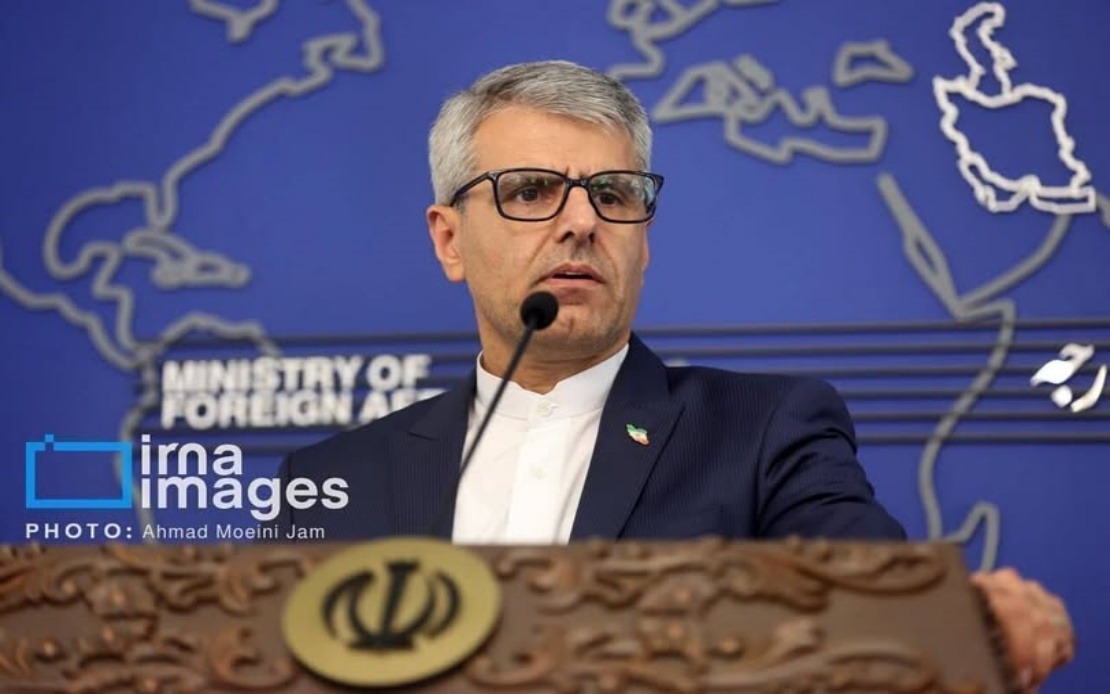
Tehran has escalated pressure on Washington to commit to a firm deadline for Israeli forces to leave Lebanese soil, positioning the demand as non-negotiable within the framework of recent agreements aimed at stabilizing the volatile region. Speaking through Foreign Ministry spokesman Esmaeil Baqaei, Iran emphasized that unconditional Israeli withdrawal from all occupied Lebanese areas represents a prerequisite for lasting peace, rather than a negotiable element that can be deferred or softened in future talks.
The Iranian position reflects growing frustration with implementation delays and what Tehran perceives as ambiguous language in existing accords. Baqaei underscored that any final and durable agreement to restore regional stability must explicitly address Lebanon's sovereignty and territorial integrity, alongside what he termed the protection of Lebanese people's dignity and security. This framing suggests Iran views the Lebanon question not merely as a bilateral Israeli-Lebanese matter, but as integral to Iran's own strategic interests and to the broader regional architecture that has dominated Middle Eastern politics for decades.
Iran's negotiating team has consistently elevated the Lebanon issue to a level of importance matching Iran's own military confrontation with Israel. According to Baqaei's statement, Tehran placed the dual demands of ending Israeli military operations in Lebanon and halting military operations against Iran at the apex of its negotiating priorities during both the April ceasefire understanding and the subsequent June 18 memorandum signed with the United States. This linkage suggests that Iran may condition further cooperation on the US ability to constrain Israeli military action in Lebanon, effectively making Lebanese security a proxy for broader Iranian strategic goals.
Furthermore, Iran has explicitly called upon Washington to enforce compliance through active pressure on what Iranian officials term the Zionist regime, rather than relying on voluntary Israeli adherence to agreements. Baqaei stated that Tehran expects the US to "take all necessary measures to force the Zionist regime to stop any aggression and military operations against all Lebanese regions." This language indicates that Iran doubts American willingness or capacity to constrain Israeli actions, positioning future disputes over implementation as highly probable.
Parliament Speaker Mohammad Bagher Qalibaf, serving as Iran's chief negotiator, reinforced these demands during a telephone conversation with Lebanese counterpart Nabih Berri, asserting that Iran is pursuing the Lebanon conflict's resolution with serious intent. Qalibaf detailed that recent talks held in Switzerland placed particular emphasis on ending Lebanon's war and restoring its sovereignty and territorial integrity, with both issues forming central elements of what Iranian officials term the Islamabad memorandum. The emphasis on constitutional restoration suggests Iran's negotiators are linking Lebanon's future governance and stability to the technical compliance mechanisms established between the three parties.
To address what Iran views as previous violations of key provisions, the negotiating parties agreed to establish a conflict-control unit comprising representatives from Iran, the United States, and Lebanon. This trilateral monitoring body would oversee implementation of withdrawal timelines and ensure compliance with agreed military restrictions. The creation of such a mechanism indicates that trust remains limited among the parties, requiring third-party oversight to verify commitments. For Malaysian policymakers and regional observers, this development illustrates the deep suspicions that continue to characterize negotiations even after provisional agreements have been reached.
Qalibaf articulated Iran's core objectives as ending warfare in Lebanon, facilitating the return of displaced persons to their homes, terminating what Iran characterizes as occupation, and securing the withdrawal of Israeli forces from Lebanese territory. By framing these goals in humanitarian and sovereignty-based language, Iranian officials attempt to position their demands as internationally reasonable rather than as expressions of geopolitical competition. However, the specificity of the withdrawal demand and the insistence on unconditional terms reveal that Iran views Lebanese territorial control as strategically significant, particularly given Lebanon's geographic proximity to Israel and its role as a locus of regional competition.
These latest statements emerge from the broader context of a 14-point understanding negotiated between Iran and the United States following weeks of regional military escalation and intensive diplomatic engagement. The apparent fragility of this agreement, reflected in Iran's current demands for clarification and enforcement mechanisms, suggests that the underlying disputes remain unresolved. Rather than representing a comprehensive settlement, the memorandum appears to constitute a temporary accommodation that requires continuous refinement and reinvestment of diplomatic energy to maintain.
For Southeast Asian readers and policymakers, the Iran-US negotiations over Lebanon carry implications extending beyond the immediate region. The pattern demonstrates how regional powers continue to compete for influence through proxy conflicts and territorial control, even when engaged in direct high-level negotiations. The insistence on monitoring mechanisms and enforcement provisions underscores the difficulty of translating diplomatic agreements into actual behavioral change, a lesson relevant to any multilateral engagement in the Indo-Pacific region.
The timing of Iran's renewed emphasis on Lebanese withdrawal demands, coupled with the establishment of compliance monitoring mechanisms, suggests that implementation challenges may have already emerged. This pattern of agreement followed by disputes over interpretation and execution could herald further negotiations or confrontations as the parties attempt to move from diplomatic text to practical military and political outcomes. The involvement of Washington as a guarantor of Israeli compliance places American credibility at stake, potentially constraining Washington's freedom of action in other regional disputes.

