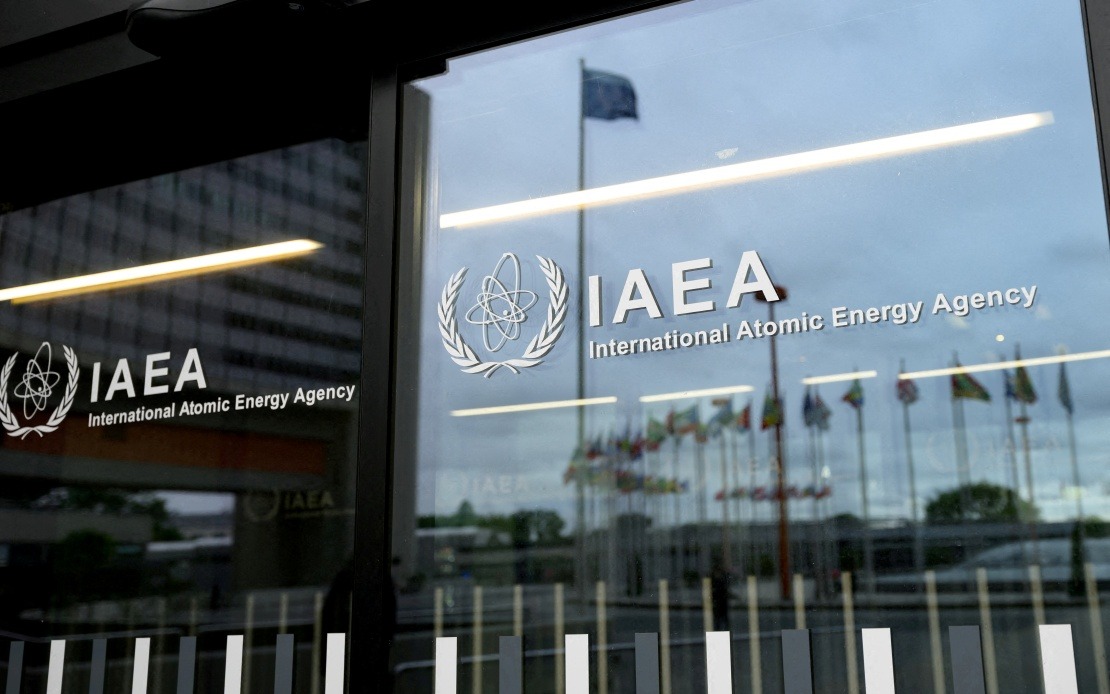
Iran has signalled it will not permit International Atomic Energy Agency inspectors to access its nuclear facilities until the United States fully dismantles economic sanctions as part of a comprehensive final accord. This hardline stance, communicated by Iranian Deputy Foreign Minister for Legal and International Affairs Kazem Gharibabadi on Wednesday, threatens to derail delicate negotiations that only recently commenced under a newly signed memorandum of understanding between Tehran and Washington.
Gharibabadi declared on social media that permission to inspect Iran's nuclear sites and materials remains contingent upon achieving what he characterised as the "other party's practical action to terminate all sanctions." The statement effectively positions nuclear transparency as a reward conditional upon American capitulation on economic pressure, rather than as an independent verification mechanism. This approach fundamentally reframes the traditional sequence of nuclear negotiations, where inspections typically precede sanctions relief rather than follow it.
The diplomatic impasse emerged even as international nuclear watchdog Director General Rafael Grossi indicated publicly that the IAEA would proceed with planned inspections in Iran, apparently assuming the recent June 18 memorandum of understanding would unlock cooperation. Grossi's optimism appears premature, as Gharibabadi simultaneously revealed that no meeting transpired between Grossi and Iran's negotiating delegation in Switzerland despite the agency director's explicit request for talks. This denial of face-to-face contact underscores Tehran's unwillingness to engage constructively on verification matters at this stage.
The memorandum of understanding signed on June 18 established a 60-day negotiation window explicitly aimed at producing a final nuclear agreement alongside sanctions removal. Substantive talks commenced over the weekend in Switzerland, with the first formal round concluding on Monday. Yet within days, Iran has already imposed preconditions that could substantially complicate reaching consensus. The timing of Iran's hardline declaration suggests the delegation may be responding to domestic political pressure from hardline factions sceptical of any agreement granting Western inspectors meaningful access.
Iran's three principal nuclear installations—Fordow, Natanz, and Isfahan—have endured repeated bombing campaigns that intensified regional tensions dramatically. During a 12-day military conflict in June 2025, American forces targeted these sites extensively. The facilities again came under coordinated strike operations initiated by both Washington and Tel Aviv following a broader escalation that commenced on February 28 this year, when the US and Israel launched waves of attacks against Iranian nuclear and military infrastructure. These bombing campaigns have left Iran's nuclear programme in compromised condition and its facilities in need of reconstruction.
The destruction of these facilities presents Iran with conflicting incentives. On one hand, the physical damage reduces the immediate proliferation risk that Western powers cite as justification for inspections. On the other hand, Iran requires sanctions relief and international economic normalisation to finance the reconstruction and modernisation of its nuclear sector. Whether Tehran will ultimately trade nuclear transparency for economic reopening remains the fundamental question underlying these nascent negotiations.
Gharibabadi's public rejection of IAEA access before a final deal reverses traditional negotiating patterns and suggests Iran has adopted a maximalist opening position. Historically, comprehensive nuclear agreements involve phased reciprocal measures: Iran commits to specific verification provisions while the international community progressively relieves sanctions in demonstrable stages. By conditioning all inspection access on complete sanctions termination, Iran attempts to preserve negotiating leverage while minimising transparency during the talks themselves. This approach prioritises tactical advantage over the confidence-building measures that typically facilitate breakthrough agreements.
For regional observers including Malaysia and other Southeast Asian nations monitoring this confrontation, the stakes extend beyond nuclear non-proliferation. American-Iranian hostilities complicate global energy markets through potential disruptions to Persian Gulf shipping and oil supplies. Extended negotiations without resolution risk prolonging economic uncertainty, while rapid escalation could trigger broader regional conflict with unpredictable consequences for Asian economies dependent on stable energy flows and maritime trade through strategically critical chokepoints.
The upcoming weeks will prove decisive in determining whether the current memorandum represents genuine progress toward de-escalation or merely another tactical pause in a prolonged standoff. Iran's explicit rejection of near-term IAEA access suggests hardliners in Tehran are testing Washington's flexibility and attempting to shift baseline expectations favouring Iranian interests. Whether American negotiators will accept Iranian conditions remains unclear, but the initial Iranian position indicates the path to a comprehensive agreement will prove substantially more complicated than the optimistic rhetoric surrounding the June 18 memorandum suggested.

