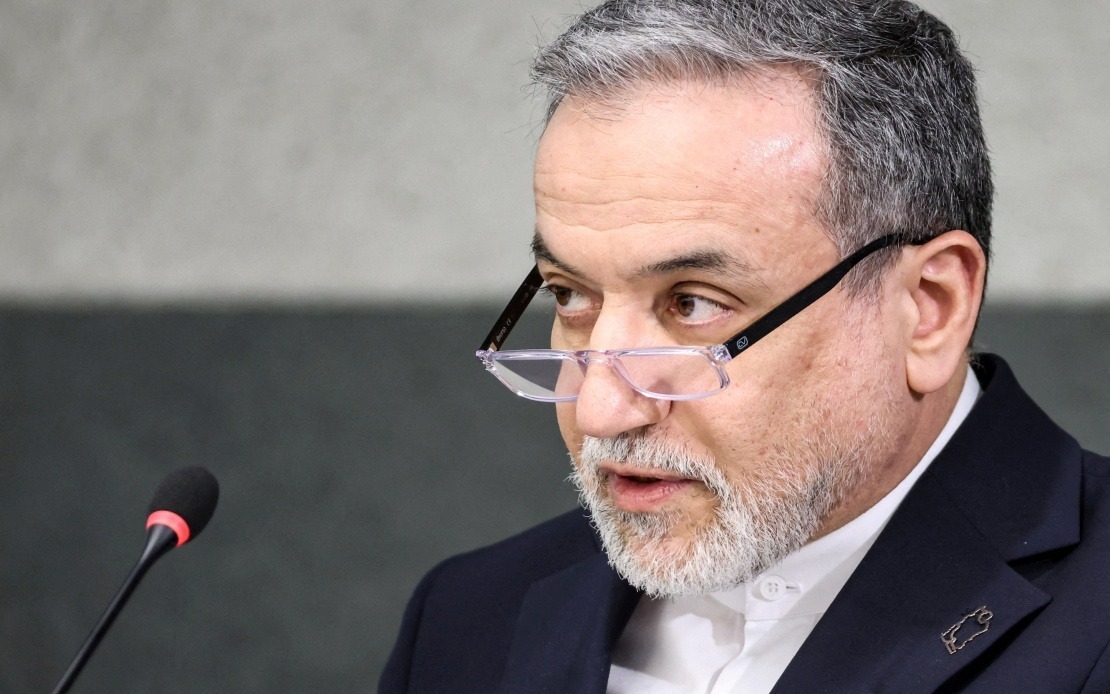
Iran's Foreign Minister Abbas Araghchi has pushed back against US President Donald Trump's announcement that America will impose a 20 per cent toll on maritime traffic passing through the Strait of Hormuz, a move that would fundamentally reshape the economics of global shipping and energy markets. Speaking on X on Monday, Araghchi framed Iran's position as one of legitimate guardianship over the strategically vital waterway, suggesting that Tehran—not Washington—holds the rightful claim to managing passage through these waters and ensuring the safety of commercial vessels.
Trump's proposal to effectively blockade Iran while simultaneously charging ships for safe passage through the Strait marks an unprecedented assertion of unilateral control over one of the world's most critical chokepoints. The US president's statement that America would charge shippers for secure passage through the waterway represents a significant escalation in rhetoric and policy posturing. For Malaysia and other Southeast Asian nations, particularly those dependent on oil imports and trade passing through this route, such a policy would carry substantial economic implications, potentially raising the cost of energy and goods flowing through global supply chains.
Araghchi's response reflected a careful rhetorical strategy, initially appearing to agree with the principle that whoever provides security through the waterway deserves compensation. By adopting this framing, the Iranian minister attempted to flip the script, positioning Tehran as the genuine provider of such services rather than the threat. However, his follow-up assertion that Iran has "always been the GUARDIAN of the Strait and will remain so FOREVER" directly contradicts the American claim to guardianship, creating a fundamental disagreement about which nation holds legitimacy in regulating passage through these waters.
The 20 per cent toll figure itself prompted Araghchi's criticism, with the foreign minister arguing that such a charge is excessive and that Iran would approach any fee structure differently. This comment suggests that while Iran may not categorically reject the principle of charging for passage, it disputes both the level and the authority by which such fees would be imposed. The implicit message is that if fees are to be charged, they should reflect a reasonable rate and derive from Iran's legitimate authority as a regional power, not from American military dominance in the area.
The Strait of Hormuz represents approximately one-third of all seaborne traded oil globally, making it indispensable to energy security across Asia, Europe, and beyond. Any disruption or the imposition of unilateral tolls would reverberate through global markets and affect the economic interests of nations far from the Persian Gulf. Malaysia, as a major trading nation and energy consumer, would face higher import costs if such a toll system were implemented. Additionally, the uncertainty created by these competing claims to authority over the waterway introduces unpredictability into supply chains that regional economies depend upon.
Tensions between the United States and Iran over the Strait of Hormuz have been escalating despite previous efforts to establish peace through international mediation. Pakistan has been instrumental in facilitating dialogue between the two adversaries, with both sides having reportedly agreed to a memorandum of understanding aimed at de-escalating conflict and achieving a lasting settlement. However, the recent exchange of attacks and competing threats suggest that these diplomatic frameworks remain fragile and vulnerable to collapse when political rhetoric shifts.
The strategic importance of the Strait extends beyond energy to broader geopolitical positioning in the Middle East. Iran's assertion of guardian status reflects its ambitions to establish itself as the primary regional power with authority over maritime security, a status that directly challenges American naval hegemony in the Persian Gulf. For Trump, the threat to impose tolls and blockade Iran appears designed to pressure Tehran on multiple fronts—economically, through toll collection, and politically, through reassertion of American dominance. This strategy, however, risks further destabilising an already volatile region.
For Southeast Asian nations including Malaysia, the implications are multifaceted. Beyond the direct economic impact of higher shipping costs, there exists broader concern about the reliability of global trade routes. Should the Strait become a contested zone where the United States and Iran engage in tit-for-tat actions, insurance premiums would likely rise, shipping companies would seek alternative routes or exact compensation, and the cost of doing business would increase across the region. The shipping industry, which forms a backbone of Malaysia's economy, would face significant headwinds under such circumstances.
Araghchi's framing of Iran as a responsible guardian willing to provide fair terms suggests a negotiating position rather than an outright rejection of the underlying concept. However, the fundamental disagreement about who holds authority to charge and regulate passage remains unresolved. The foreign minister's emphasis on fairness and his rejection of the 20 per cent figure hint that Tehran might be open to alternative arrangements, but only if conducted on terms that acknowledge Iranian sovereignty and regional authority.
The broader context reveals a struggle for influence in one of the world's most strategically important regions. As the United States seeks to maintain its post-Cold War hegemony, Iran continues to assert its regional prerogatives and challenge American dominance. For smaller nations like Malaysia, caught in the crossfire of these great power tensions, the most pressing concern is ensuring that commercial shipping remains free, safe, and economically viable. The current escalatory rhetoric from both Washington and Tehran threatens precisely that outcome.

