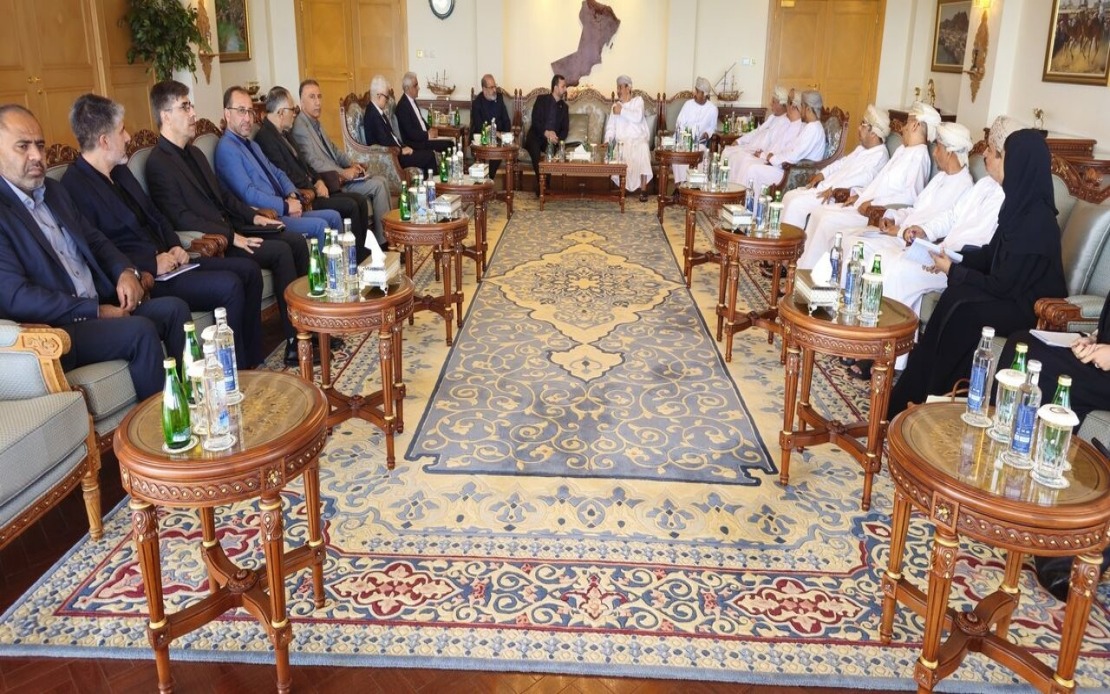
Iran and Oman have taken a significant diplomatic step by convening the inaugural meeting of their Joint Hormuz Committee, marking a formal institutional approach to managing one of the world's most strategically vital waterways. Iranian Deputy Foreign Minister for Legal and International Affairs Kazem Gharibabadi announced the historic gathering, which took place during his official visit to Oman on Monday. The meeting brought together Gharibabadi and Oman's Ambassador-at-Large Abdulaziz Al Hinai to chart the course for future cooperation on matters affecting the Strait of Hormuz, a waterway through which roughly one-third of global maritime trade passes annually.
The establishment of this joint committee represents a structured institutional mechanism for bilateral engagement on critical maritime issues. Rather than handling disputes or strategic concerns through ad-hoc diplomatic channels, both nations have opted for a formalized framework that allows regular consultation and negotiation. This approach reflects a growing recognition that the Strait's importance extends beyond bilateral relations to encompass regional and global trade, energy security, and maritime stability. The committee's creation signals that Iran and Oman are committed to managing their shared maritime interests through consistent dialogue and institutional procedures.
Central to the committee's mandate is reviewing the current state of affairs concerning the Strait of Hormuz and developing consensual frameworks for its future governance. During their inaugural session, officials engaged in substantive exchanges regarding how the waterway should be managed, what services should be provided to passing vessels, and how costs associated with these services should be allocated. These practical considerations are often obscured by broader geopolitical debates, yet they form the foundation of any functional maritime arrangement. By focusing on these operational details, the committee is attempting to build understanding on concrete issues that affect daily maritime commerce.
The legal and diplomatic foundation for these discussions rests on Paragraph 5 of the Islamabad Memorandum of Understanding and the principle that littoral states—those with coastlines bordering the Strait—possess inherent sovereign rights. Gharibabadi explicitly referenced this framework when announcing the committee's work, underscoring that Iran and Oman view their deliberations as occurring within established international legal parameters. This emphasis on sovereignty is significant in the context of regional tensions, as it suggests both nations are committed to respecting each other's legitimate authority and avoiding arrangements that might be perceived as infringing on coastal state prerogatives.
The committee's formation follows closely on a June 23 joint statement issued by Muscat and Tehran, which itself came after Iranian Foreign Minister Abbas Araghchi and negotiating head Mohammad Bagher Ghalibaf visited Oman. That statement articulated a shared commitment to ensuring that any arrangements governing the Strait would fully respect the sovereignty and rights of both littoral states. By establishing the Joint Hormuz Committee, the two countries have operationalized this commitment, creating an ongoing forum where such principles can be actively implemented and monitored. The sequential nature of these diplomatic moves—statements followed by institutional structures—suggests a methodical approach to building consensus.
For Southeast Asian readers and Malaysian observers particularly, the establishment of this committee carries implications for regional maritime security and trade flows. Malaysia, as a major maritime trading nation dependent on the Strait of Hormuz for energy imports and export routes, has a vested interest in stable governance arrangements for this critical passage. Any framework that Iran and Oman develop could influence broader regional maritime norms and potentially serve as a model for managing other contested or strategically sensitive waterways. Conversely, if the committee's work contributes to increased tensions or barriers to maritime transit, Malaysian commerce and regional stability could be adversely affected.
The committee's stated objective of reaching consensus on future governance arrangements reflects an implicit acknowledgment that the Strait of Hormuz cannot function effectively through unilateral action or military posturing alone. Sustainable arrangements must balance the legitimate interests and rights of littoral states with the practical requirements of global maritime commerce. The explicit mention of adhering to international standards suggests that Iran and Oman intend to ground their deliberations in established global maritime conventions and practices, rather than inventing entirely novel arrangements that might be viewed as departing from international norms.
The involvement of foreign ministries in establishing and overseeing the committee indicates that these discussions will remain embedded within official diplomatic structures. This institutional positioning means that the committee's work will likely proceed with careful attention to protocol, legal precedent, and official pronouncements. It also suggests that any outcomes will carry the weight of formal government commitment rather than representing exploratory or preliminary negotiations. The formality of this arrangement may slow progress on contentious issues, but it also provides assurance that agreements reached will have binding governmental authority.
Looking ahead, the success of the Joint Hormuz Committee will depend on the willingness of both parties to make tangible progress on the operational and governance questions that will occupy its agenda. Issues such as vessel routing, communication protocols, emergency response coordination, and cost-sharing mechanisms will require substantive negotiation. The committee's ability to find mutually acceptable solutions on these matters will signal whether Iran and Oman can move beyond historical tensions toward practical cooperation. Given the global significance of the Strait and its centrality to international energy markets and trade routes, any progress achieved by the committee will receive close attention from maritime powers and trading nations worldwide.

