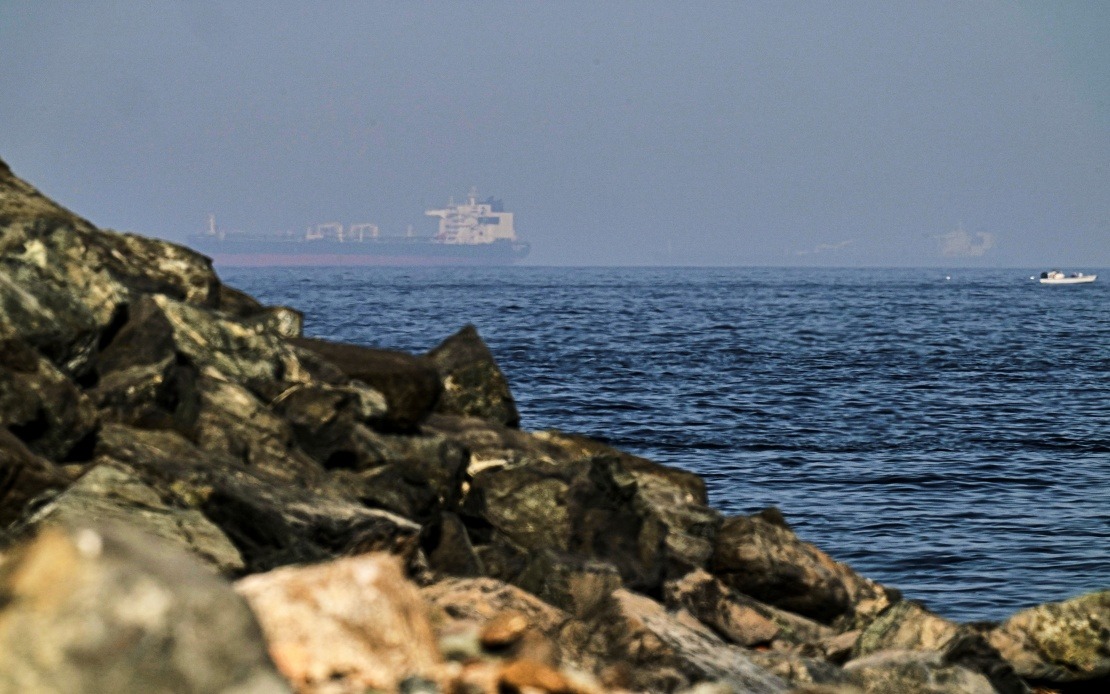
Iran and Oman have reached an agreement to establish a temporary corridor for maritime traffic through the Strait of Hormuz, according to Major General Mohsen Rezaei, secretary of Iran's Supreme National Security Council. Speaking to Al-Manar TV on Thursday evening, Rezaei provided the first official confirmation of the arrangement, which allows vessels to transit through a jointly managed passage positioned in the middle of the strategic waterway that handles roughly one-third of global seaborne petroleum trade.
The corridor represents a carefully calibrated middle ground between the two littoral states. Rezaei explained that the passage physically divides Iranian and Omani territorial waters, with both nations sharing responsibility for managing vessel movements through the designated route. The location has been precisely defined and mutually agreed, establishing a framework that accommodates maritime commerce while maintaining each country's strategic interests. This arrangement reflects Oman's traditional role as a diplomatic intermediary in the Gulf and its interest in maintaining stable shipping lanes that benefit regional economies, including those of Southeast Asian trading partners dependent on Persian Gulf oil and goods.
However, the temporary nature of this corridor carries significant political weight. Tehran has explicitly linked any permanent reopening of the Strait to American acceptance of a comprehensive list of Iranian conditions. These demands extend far beyond maritime issues, encompassing the cessation of ongoing conflicts throughout West Asia. Rezaei identified ending the war in Lebanon and halting hostilities in Gaza as primary requirements, alongside the withdrawal of Israeli forces from Lebanese territory and a cessation of Israeli military operations in Syria. This linkage transforms what might appear as a narrow maritime agreement into a broader negotiating position on regional geopolitical tensions.
The Iranian official underscored that temporary access represents a goodwill gesture by Tehran, though he emphasized that Washington must demonstrate commitment to implementing Iranian conditions before any expansion of shipping arrangements occurs. Rezaei highlighted what he termed a "deep chasm of mistrust" between the United States and Iran, suggesting that symbolic gestures alone will not suffice to rebuild confidence. The threshold for progress requires tangible American action on West Asian conflicts, not merely rhetorical commitments. This positioning allows Iran to appear flexible on maritime commerce while maintaining firm demands on geopolitical issues where its influence extends across Lebanon, Gaza, and Syria.
For Southeast Asian readers and policymakers, the implications warrant careful attention. Malaysia, Singapore, and other regional economies depend substantially on unobstructed Persian Gulf shipping lanes. Any prolonged interruption to Hormuz traffic would dramatically increase transportation costs for imported oil and goods, rippling through regional supply chains and inflation rates. The temporary corridor agreement reduces immediate closure risks but offers no guarantees of stability. The corridor's persistence depends on external political developments over which Southeast Asian nations exercise minimal influence, creating vulnerability in critical energy supply chains.
Rezaei's comments on Turkey and economic pressure introduce additional complexities. He acknowledged Turkey's historical significance as a trade corridor during the Iran-Iraq War and rejected suggestions that Ankara might impose sanctions on Tehran. This assertion carries weight given Turkey's geographic position and economic ties with Iran, though it underscores how regional relationships intersect with broader geopolitical calculations. Turkey's management of these competing pressures affects Southeast Asian trade flows through alternative routes and partnership arrangements.
The Iranian security chief articulated a doctrine of escalating but measured responses to American military actions. He disclosed that Iran has progressively expanded military operations in scope, initially exercising restraint by avoiding strikes on American bases in Gulf states before later targeting American facilities across a broader geographic area. This incremental approach, he argued, served humanitarian purposes while generating regional support for Iran's actions. The characterization reveals how Tehran frames its military decisions through legitimacy narratives aimed at diverse audiences. For the region broadly, this escalatory approach raises questions about conflict trajectory and the potential for miscalculation.
On economic statecraft, Rezaei warned that Iranian countermeasures would follow any American economic escalation targeting Tehran. He interpreted the American shift toward economic pressure as evidence that military force alone had proven insufficient, suggesting Iran perceives strategic advantages in protracted economic competition. This economic dimension creates additional uncertainty for trading partners navigating between American sanctions regimes and Iranian counter-sanctions measures. Southeast Asian businesses particularly face complications when conducting transactions through dollar-denominated systems while managing Iranian commercial relationships.
Rezaei characterized the region as an "interconnected chain" where deteriorating security in one nation raises investment costs and undermines development prospects throughout the interconnected system. This observation resonates with Southeast Asian concerns about regional stability. Investment decisions from Singapore to Indonesia consider Persian Gulf dynamics as upstream factors affecting downstream prosperity. When conflict spreads across Lebanon, Syria, and Gaza, these cumulative tensions influence capital allocation decisions and risk premiums applied to regional projects.
The Iranian official emphasized Tehran's historic relationship with Lebanon, referencing centuries-old scholarly connections between Jabal Amel and Iran. He pledged continued support for Lebanon utilizing Iran's full capabilities, language suggesting sustained military and economic assistance regardless of international pressure. This commitment signals that Iran views Lebanon not as a peripheral issue but as central to its regional strategy and identity. For Southeast Asian analysts, understanding this depth of commitment proves essential when assessing regional conflict trajectories and potential escalation scenarios.
On military realities, Rezaei asserted that Israeli forces have lost momentum in their advance toward Beirut and southern suburbs, citing Hezbollah's effectiveness over recent months combined with what he termed the Iranian threat. This assessment presents an Iranian perspective on battlefield dynamics that differs sharply from other regional actors' evaluations. The claimed incapacity of Israeli forces to advance reflects Iran's confidence in its regional position, though independent verification of these military claims remains contested. For Southeast Asian observers, such assertions require careful analysis against other available evidence and multiple sourcing.
The temporary corridor arrangement ultimately reflects the intersection of practical maritime interests with unresolved political disputes. While establishing passage through Hormuz addresses immediate commercial needs valued by global trading partners including Southeast Asian economies, the fragility of this arrangement underscores the region's deeper instabilities. The corridor persists only as long as neither party substantially escalates confrontation, and its future depends on external developments—particularly American policy choices—beyond the control of maritime users or those invested in stable shipping lanes.

