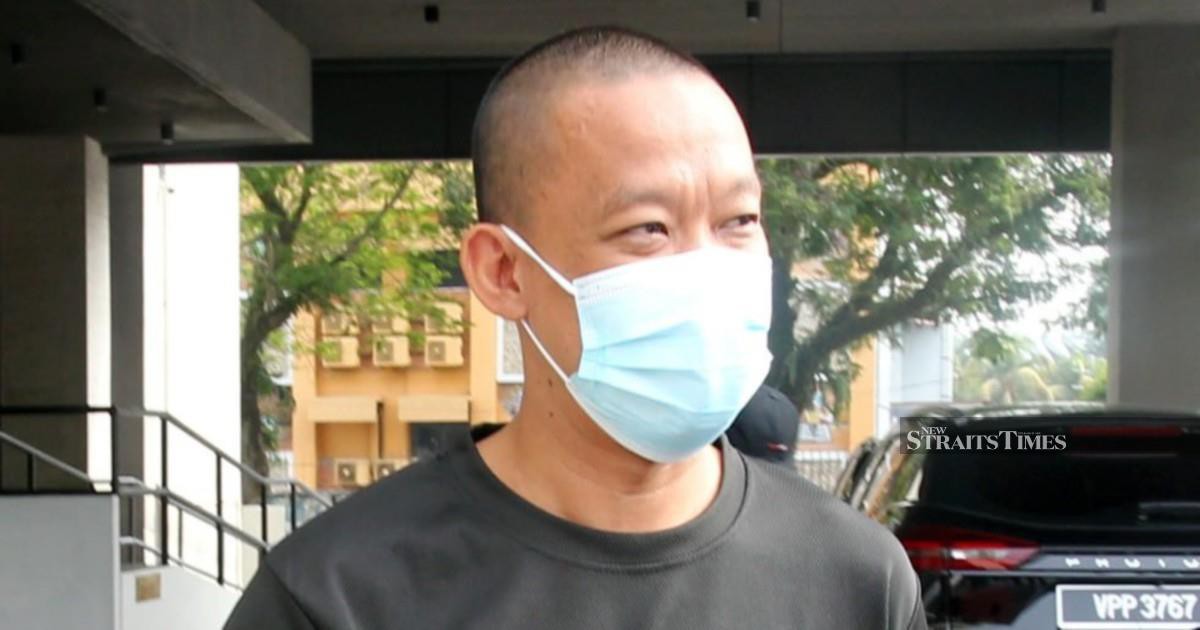
A wireman in Ipoh has won his acquittal and discharge in the Sessions Court after prosecutors were unable to establish a compelling case linking him to cannabis cultivation at his residential premises, a ruling that underscores the importance of concrete evidence in Malaysia's stringent drug laws. The case, which centred on alleged offences occurring three years prior to the court determination, highlights the substantial burden placed on the authorities to demonstrate culpability beyond reasonable doubt in narcotics-related prosecutions, even when drug plants are discovered on an accused person's property.
The presiding judge's decision to acquit and discharge the defendant signals a significant checkpoint in the Malaysian judicial system's approach to drug-related charges. Rather than accepting the mere presence of cannabis cultivation materials or plants as sufficient proof of knowledge and permission, the court required the prosecution to present more comprehensive evidence demonstrating the wireman's active involvement or tacit consent. This principle reflects established legal doctrine that possession of premises alone does not automatically translate into criminal liability for activities conducted therein without clear proof of the occupant's awareness or approval.
Drug-related prosecutions in Malaysia operate within an exceptionally stringent legal framework. The Dangerous Drugs Act imposes severe penalties for cultivation, possession, and trafficking of controlled substances, making successful convictions consequential for both defendants and the criminal justice system. The defence mounted in this case appears to have successfully challenged the prosecution's narrative by exposing weaknesses in the evidence chain, whether through lack of direct testimony, inconsistencies in witness statements, or insufficient forensic documentation linking the defendant specifically to the cultivation activities.
The ruling carries implications beyond this single case, as it reminds enforcement agencies and prosecutors of the necessity to conduct thorough investigations before preferring charges. In cannabis-related cases particularly, where plants may be cultivated without the knowledge of all household residents or where premises may be temporarily occupied by individuals unknown to the registered owner, establishing mens rea—the guilty mind—requires meticulous documentation and investigation. Simply discovering cannabis plants during a search does not automatically prove that every occupant of the premises intended them to be there.
Malaysia's position on drug enforcement remains among the harshest globally, with mandatory minimum sentences for trafficking and the potential for capital punishment in severe cases. Given this severity, the judicial system has developed corresponding safeguards to ensure that prosecutions meet exacting standards of proof. This Ipoh case exemplifies how those safeguards function in practice, protecting individuals from conviction on circumstantial evidence alone. The three-year gap between the alleged offence and final adjudication also reflects the often protracted nature of serious criminal prosecutions in Malaysian courts, where pre-trial procedures, examination of evidence, and legal arguments consume considerable time.
The acquittal underscores a fundamental tension within Malaysia's approach to drug control. While the legislative framework establishes uncompromising penalties intended to deter production and use, the judicial process demands rigorous adherence to evidentiary standards and due process protections. This balance, though occasionally frustrating to those seeking swift enforcement outcomes, serves as a safeguard against wrongful convictions and ensures that the credibility of the criminal justice system remains intact. Prosecutors must therefore invest in comprehensive investigations, securing multiple forms of evidence—forensic analysis, surveillance records, witness testimony, and expert findings—rather than relying solely on the discovery of plants.
The case also touches on a broader challenge facing Malaysian law enforcement: distinguishing between active cultivators and passive residents. In multi-occupancy dwellings, shared properties, or situations where occupants have limited awareness of all activities on premises, determining individual culpability becomes complex. The prosecution must prove not merely the existence of cannabis cultivation but the specific defendant's knowledge of and participation in or permission for those activities. Without such proof, even a successful raid yields insufficient foundation for conviction.
For the wireman involved, the acquittal and discharge provides complete exoneration, clearing his record of the serious charge and restoring his standing in the community. The discharge aspect of the order is particularly significant, as it means he faces no conviction that might otherwise affect future employment, licensing, or other civil consequences. This underscores why evidentiary rigour matters not only in principle but in the tangible outcomes for individuals caught within the criminal justice system.
The decision also carries indirect lessons for Malaysian households and property owners generally. While not offering immunity from criminal liability, it demonstrates that authorities cannot secure convictions based on presence alone at a location where drugs are discovered. This may provide some reassurance to legitimate residents concerned about the activities of others on shared premises, though it should not be misinterpreted as offering protection to those actively involved in cultivation. The judgment reflects judicial caution about extending criminal responsibility beyond what evidence can reasonably support, a principle essential to maintaining public confidence in the fairness and reliability of Malaysia's drug enforcement system.

