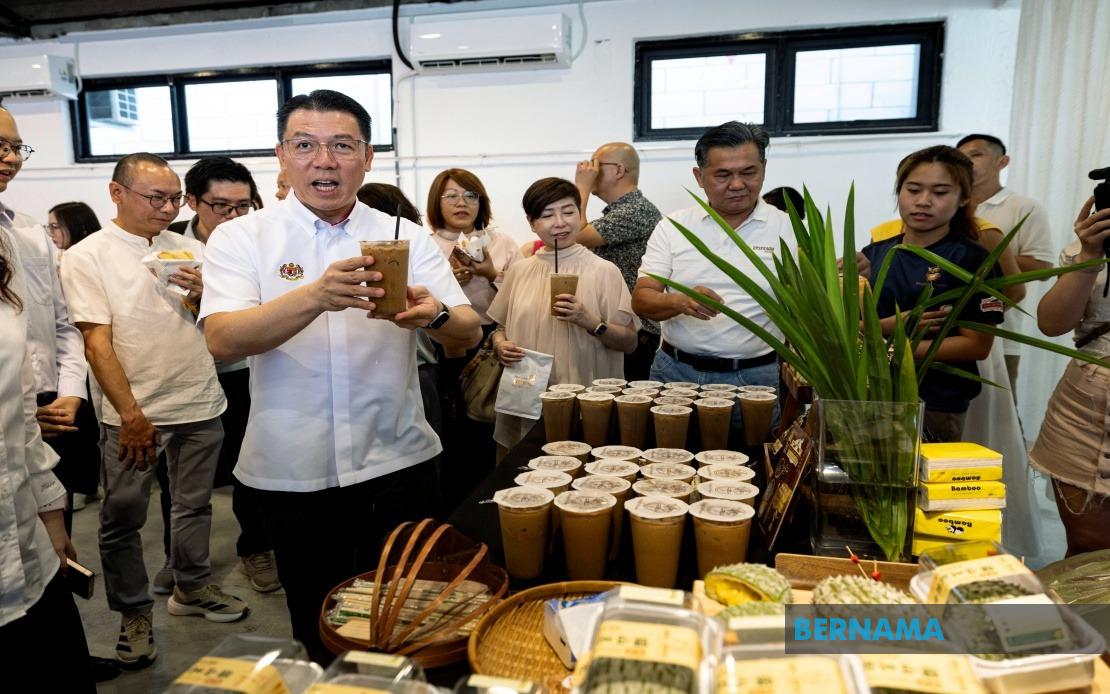
Minister of Housing and Local Government Nga Kor Ming has unveiled an ambitious festival celebrating Ipoh's culinary identity as a symbol of Malaysia's multicultural cohesion. The Jom Makan Ipoh 2026 Expo, launching from August 28 to 30, represents a strategic initiative to harness food culture as a unifying force within the nation's ethnically diverse population, aligning with the broader "Malaysia, Truly Asia" narrative that has long been central to the country's tourism and nation-building discourse.
The three-day festival, running nightly from 5 pm to 11 pm at Palo 101, has been conceived as more than a culinary showcase. According to Nga, the Kepayang assemblyman, the event integrates preservation of local food heritage with targeted city branding and tourism development objectives. This multifaceted approach reflects growing recognition among Malaysian policymakers that gastronomy constitutes a legitimate economic and soft-power tool in competitive regional tourism markets, particularly as Southeast Asian destinations increasingly differentiate themselves through authentic cultural experiences rather than generic beach-resort offerings.
The expo's architecture encompasses over 50 food and agricultural product stalls, with a curated selection emphasising twelve signature Ipoh dishes. These include regional favourites such as Laksa Buyong, the city's famous white coffee, nasi ayam with bean sprouts, and the traditional tofu pudding known as puding taufu. Beyond serving as mere menu items, these preparations carry historical weight within Ipoh's social fabric, many having evolved during the city's tin-mining prosperity and subsequent economic transitions. By institutionalising them within a formal festival framework, organisers effectively canonise these dishes as cultural assets worthy of preservation and transmission to younger generations increasingly disconnected from traditional food practices.
A distinctive component involves six dedicated Ipoh Food Culture Galleries, designed to educate visitors about the historical trajectories of local cuisines. Galleries will trace the evolution of white coffee production, the culinary innovations of the tin-mining era, and heritage snacks including kacang putih. This pedagogical dimension elevates the festival beyond casual consumption, positioning it as an informal museum of gastronomic history. For Malaysian audiences accustomed to rapid urbanisation and cultural dilution, such initiatives address anxieties about vanishing traditional knowledge and generational discontinuity in food practices.
The programming strategy deliberately incorporates cross-cultural elements throughout the three-day run. Scheduled cultural performances representing various racial communities, alongside "Food Talks Ipoh" forums featuring culinary historians and practitioners, create structured opportunities for intercommunal dialogue mediated through food discourse. This deliberate diversification acknowledges that food nationalism, improperly managed, can become divisive—positioning particular cuisines as exclusively belonging to specific ethnic groups. By explicitly framing the festival as a collective heritage space, organisers navigate this tension, emphasising shared enjoyment and mutual respect rather than ethnic territorialism.
The promotional inclusion of an Ipoh QR Digital Food Map represents digital-era infrastructure development for food tourism. This initiative enables visitors to access historical information, vendor details, and nutritional data through smartphone technology, reflecting how contemporary tourism increasingly relies upon seamless digital integration. For Malaysian readers familiar with the government's broader digital economy push, this component signals alignment with national technology adoption agendas, positioning Ipoh as a forward-thinking destination rather than a heritage-focused backwater.
Projected attendance exceeds 20,000 visitors across the three-day period, representing significant footfall that organisers anticipate will generate secondary economic activity within the Ipoh hospitality and retail sectors. This emphasis upon visitor volume and associated spending reflects the instrumentalisation of cultural events for local economic development—a pattern repeated across Malaysia as municipalities seek viable revenue diversification strategies beyond traditional manufacturing or resource extraction. The Merdeka Month timing deliberately situates the festival within nationalist calendars, framing culinary celebration as an extension of independence-day festivities and further cementing the association between food, cultural identity, and national cohesion.
Entertainment programming extends beyond food consumption itself, incorporating stage performances, lucky draws, and a closing-ceremony fireworks display. These peripheral attractions serve important functions, extending average visitor duration and appealing to demographics—particularly families with younger children—who might prioritise general entertainment over culinary education. The comprehensive experience design reflects sophisticated understanding that contemporary festival economics depend upon mixed-use programming that accommodates diverse audience motivations and spending capacities.
For Southeast Asia more broadly, the Ipoh initiative exemplifies how regional destinations increasingly leverage food culture as competitive differentiation in crowded tourism markets. As Thailand, Vietnam, and Indonesia have profitably positioned themselves around culinary tourism, Malaysian destinations have lagged somewhat, despite possessing comparable gastronomic diversity. Ipoh's initiative suggests emerging recognition that this represents a correctable market position, with individual cities rather than state or national government bodies driving innovation in food-tourism strategy.
The festival ultimately reflects contemporary Malaysian policy thinking about unity and diversity. Rather than emphasising abstract nationalist principles or institutional frameworks, the Jom Makan Expo grounds intercommunal harmony in tangible, pleasurable experience—the actual consumption of food across cultural boundaries. This experiential approach may prove more durable and authentically unifying than top-down messaging, particularly among younger Malaysians increasingly sceptical of traditional nationalist rhetoric. The success of this model could influence how subsequent Malaysian municipalities approach culture-based development initiatives.

