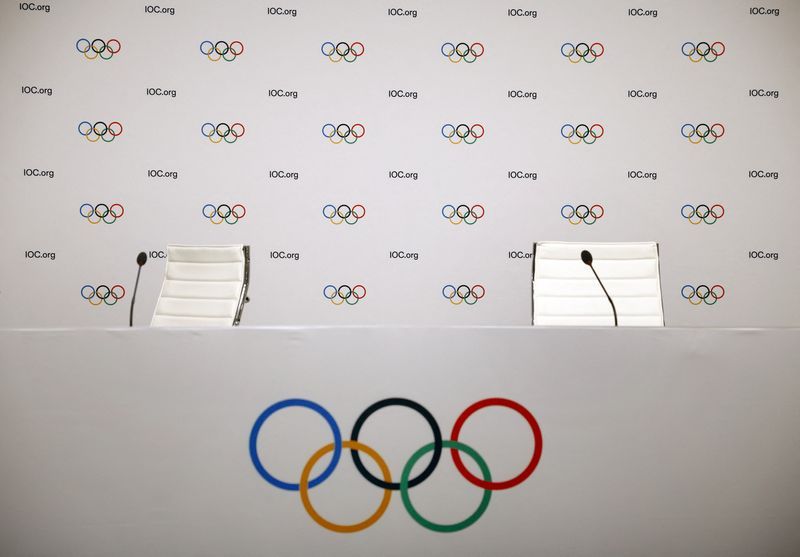
The International Olympic Committee will examine proposed amendments to the Olympic Charter this week that seek to reinforce the political independence of sports competition, in a development observers believe could fundamentally reshape eligibility rules for Russian athletes. The proposed changes would strengthen language stipulating that sport must remain insulated from political pressure of any kind, including governmental, cultural, societal or economic interference. Officials at the IOC argue these revisions are necessary to shield athletes and competitions from external manipulation and prevent the Olympic Games from becoming a platform for political disputes.
Yet the proposal has sparked considerable controversy, with critics contending that the reforms could inadvertently dismantle safeguards designed to keep Russian competitors sidelined. Rob Koehler, director general of Global Athlete, an athlete advocacy organisation, has warned that the changes send a troubling message about Olympic values. According to Koehler, the amendments suggest that "war, systematic doping and repeated violations of the Olympic Charter are no longer barriers to full participation," a statement that underscores how observers view the neutrality language as potentially undoing years of disciplinary measures against Russian sport.
Russia's complicated relationship with the Olympic movement has its roots in a state-orchestrated doping programme linked to the 2014 Sochi Winter Games, which resulted in sustained penalties for Russian athletes across multiple competitions. The situation deteriorated sharply following Russia's invasion of Ukraine in 2022, prompting the IOC to recommend outright bans for Russian and Belarusian competitors from international events. That recommendation reflected the committee's acknowledgment that geopolitical considerations—particularly the violation of another nation's sovereignty—warranted temporary exclusion from the Olympic ecosystem.
The Russian Olympic Committee itself faced suspension in October 2023 after it recognised Olympic councils operating in Russian-occupied territories of Ukraine. The IOC deemed this recognition a violation of both the Olympic Charter and Ukraine's territorial integrity, a serious breach that seemed to crystallise the committee's opposition to Russian re-entry. Yet the suspension was technically a middle-ground measure, neither a permanent ban nor a complete restoration of privileges.
Since then, the IOC has begun cautiously reversing course. In December, the committee announced that Russian and Belarusian youth athletes could return to international competitions without any restrictions, a significant symbolic gesture signalling potential flexibility. Last month, the IOC took a bolder step by lifting all restrictions on Belarusian athletes, effectively opening the pathway for them to compete in qualifiers leading to the 2028 Los Angeles Olympics. However, the committee explicitly stated that this decision would not extend to Russian athletes, leaving their status in limbo even as Belarusian restrictions fell away. Yet sports observers have begun speculating that a similar lifting of restrictions could follow for Russia within months, particularly if the IOC's ongoing legal and anti-doping investigations yield results the committee deems satisfactory.
The timing of these developments reflects broader strategic shifts within the IOC's leadership. In May, the committee's legal affairs commission announced it was reviewing information concerning the Russian Olympic Committee while simultaneously scrutinising Russia's anti-doping compliance systems. The World Anti-Doping Agency continues its own investigations, complicating the landscape. Sports Minister and ROC Chairman Mikhail Degtyarev stated in April that Russian authorities and the Olympic Committee were "doing everything possible" to facilitate the full restoration of the Russian national team to international competition under the Russian flag—not under a neutral banner, which would represent a less prestigious arrangement for Moscow.
President Vladimir Putin himself weighed in on the matter, telling media outlets in April that he hoped the IOC's newly installed leadership would take a fresh approach to Russia's participation. This statement suggests that Moscow views the leadership transition as an opportunity to reset relations with the Olympic movement and resume the role Russian sport historically occupied in global athletics. The symbolism of returning to competition under the national flag—rather than as neutral or independent athletes—matters significantly to Russian officials and reflects the geopolitical dimension underlying what might appear to be purely sporting decisions.
The proposed Charter amendments extend beyond Russian reintegration. The IOC also intends to remove the fixed list of international sports federations from the Olympic Charter, granting itself considerably greater authority to curate the Olympic programme based on practical considerations such as operational costs, logistical feasibility and worldwide popularity. This flexibility would allow the IOC to add or remove sports more dynamically, potentially reflecting contemporary athletic trends and financial realities rather than remaining bound by established precedent.
For Southeast Asian readers and governments, these developments carry several implications. The IOC's movement toward emphasising political neutrality, while well-intentioned, may weaken the principle that serious breaches of international law or systematic cheating carry lasting consequences. This principle has particular salience in a region where multiple nations have experienced territorial disputes and violations. Furthermore, if Russian restrictions are ultimately lifted, it may reshape the competitive landscape for Southeast Asian athletes training for and competing in future Olympic cycles, particularly in sports where Russian dominance has been historically strong. The decision also signals that the IOC increasingly prioritises inclusive sport over enforcement of values-based eligibility criteria, a significant philosophical shift with ramifications extending far beyond Russia itself.