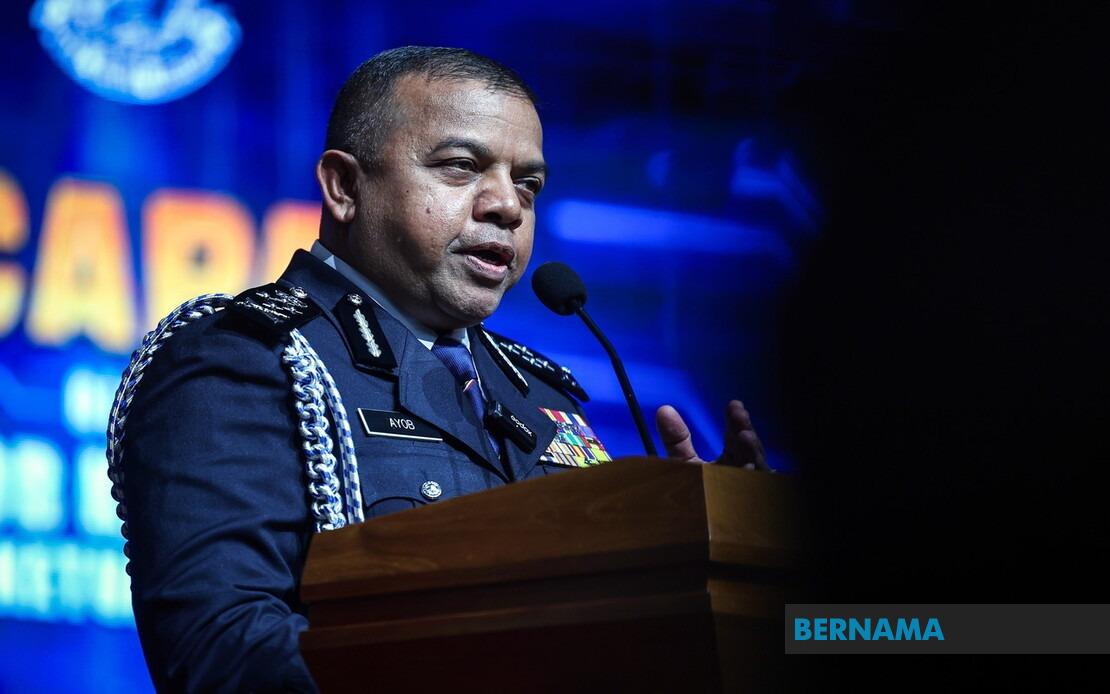
Tan Sri Ayob Khan Mydin Pitchay used his final moments as Deputy Inspector-General of Police to deliver a parting message centered on institutional integrity, as he handed over his position at a ceremony held at the Police Training Centre (PULAPOL) here on July 26. The veteran police officer, who officially retired today after nearly 35 years of service, addressed the gathering with a moral appeal that transcended the typical bureaucratic farewell, underscoring the ethical challenges facing Malaysia's law enforcement establishment.
During the handover ceremony, witnessed by Inspector-General of Police Tan Sri Mohd Khalid Ismail, Ayob Khan transferred his responsibilities to Datuk Seri Ibrahim Darus, the Bukit Aman Special Branch Director, who assumes the role of Acting Deputy Inspector-General effective immediately. The transition marks a significant moment in the police hierarchy at a time when public confidence in the force remains a pressing concern. Ayob Khan's departure comes as the institution navigates ongoing scrutiny regarding accountability and ethical conduct among its personnel.
The retiring deputy inspector-general articulated a forceful critique of behaviors that undermine public trust in law enforcement. In his remarks, he cautioned officers against allowing personal ambition to corrupt their professional duty, stating explicitly that members should not compromise their dignity for financial gain or exploit their authority to victimize vulnerable citizens. His words reflected an awareness of the institutional vulnerabilities that have periodically surfaced in Malaysian policing, where corruption and abuse of power remain perennial challenges that erode public confidence and operational effectiveness.
Ayob Khan emphasized that the badge worn by each officer represents not merely a symbol of authority but a covenant with the public that expects fair treatment and genuine justice. This framing places individual conduct within a broader social contract, suggesting that every act of dishonesty or misuse of power constitutes a breach not just of departmental regulations but of fundamental obligations to the communities being served. His invocation of this principle carries particular weight given ongoing debates in Malaysia about police accountability mechanisms and the adequacy of oversight structures.
A cornerstone of his message centered on the distinction between behaving ethically when observed versus maintaining integrity in isolation. Ayob Khan argued that true character emerges not in moments of scrutiny but in the spaces where institutional oversight is absent. This perspective aligns with contemporary discussions in law enforcement reform about intrinsic motivation versus external enforcement, suggesting that sustainable institutional excellence requires cultivation of internal moral compasses rather than reliance on surveillance and punishment alone. His appeal to divine accountability alongside human accountability reflects Malaysia's Muslim-majority context while addressing universal principles of professional conduct.
Throughout his career, Ayob Khan occupied several positions of considerable responsibility and sensitivity. His postings included roles within the Special Branch Counter-Terrorism Division, provincial command as Johor Police Chief, leadership of the Narcotics Crime Investigation Department, and directorship of the Bukit Aman Criminal Investigation Department, before his appointment as Deputy Inspector-General in June 2023. These positions provided exposure to diverse operational challenges, from terrorism prevention to drug trafficking suppression and criminal investigations, lending credibility to his observations about institutional vulnerabilities and the temptations officers encounter.
Ayob Khan's personal reflections acknowledged the sacrifices inherent in police work, referencing the emotional toll of separating from family to fulfill operational demands and the professional strain of working under constant pressure. His candid admission that dedicated service sometimes goes unrecognized demonstrates awareness of morale challenges within the force and the psychological pressures that can drive officers toward unethical shortcuts. By acknowledging these difficulties, he positioned his ethical exhortations not as naive idealism but as hard-won wisdom derived from lived experience.
The retiring officer's invocation of religious principle—his reference to divine omniscience and the ultimate judgment of Allah—positioned ethical conduct within a framework extending beyond institutional or legal consequences. This approach resonates culturally within Malaysia's Islamic context and provides an alternative motivational framework to bureaucratic enforcement. For a Muslim-majority nation, the integration of religious principle into professional ethics discourse carries particular resonance and reflects how values education in the Malaysian police force often incorporates spiritual dimensions alongside professional training.
Ayob Khan's farewell remarks arrive at a moment when Malaysian law enforcement faces sustained pressure regarding operational legitimacy and public trust. Recent years have witnessed high-profile cases involving police misconduct, from allegations of brutality to corruption investigations, prompting broader discussions about reform priorities and accountability mechanisms. Against this backdrop, an outgoing senior officer's explicit call for integrity assumes heightened significance, suggesting that institutional leadership recognizes reputational challenges and feels compelled to articulate fundamental values more forcefully than might be required in periods of unchallenged public confidence.
The symbolic weight of this transition also merits attention. The handing over of authority from a 35-year veteran to a successor represents generational change within police leadership, raising questions about whether incoming commanders will prioritize the ethical emphasis articulated by their predecessors. The effectiveness of Ayob Khan's message ultimately depends not on the eloquence of his delivery but on whether succeeding generations of officers internalize and demonstrate these principles through consistent conduct.
For Malaysian society broadly, the retirement of senior police figures and their parting messages offer glimpses into how institutional leaders conceptualize their organization's future. Ayob Khan's emphasis on integrity above advancement and justice above personal benefit presents an alternative vision to the caricature of self-serving bureaucracy that sometimes dominates public discourse about law enforcement. Whether such visions translate into sustained institutional change or remain aspirational statements depends on systemic factors beyond individual leaders' control, including recruitment standards, training curricula, promotion mechanisms, and accountability structures.
The Police Training Centre ceremony where these remarks were delivered serves as the natural venue for transmitting institutional values to the next generation of officers in training. That Ayob Khan chose this setting to articulate his ethical vision suggests deliberate intention to ensure his message reaches those entering the profession at a formative stage. His words thus function simultaneously as personal farewell, institutional reminder, and pedagogical intervention aimed at shaping professional culture among incoming personnel who will carry forward the institution's mandate across coming decades.

