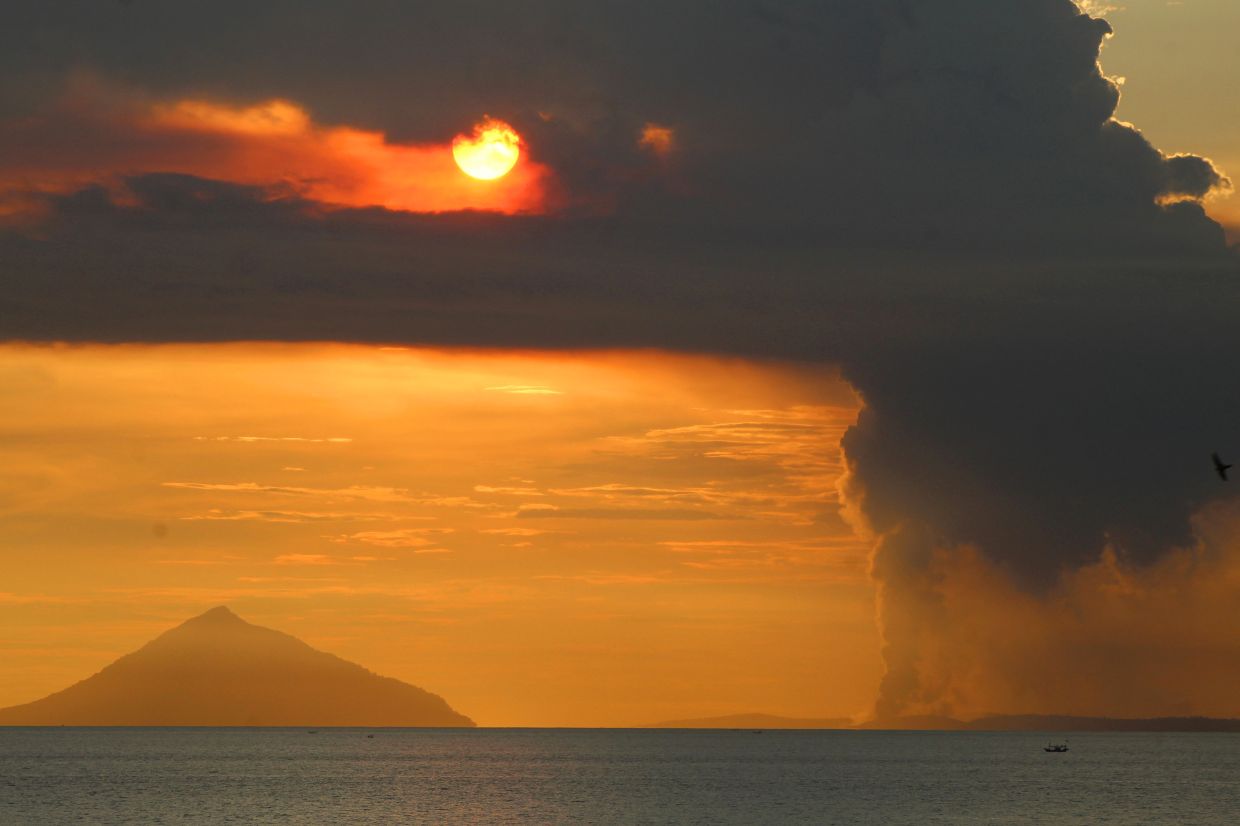
Mount Anak Krakatau, the restless volcanic offspring situated in the Sunda Strait between Java and Sumatra, erupted on Tuesday morning in what marks the fifth explosive episode since heightened activity resumed last month. The eruption at 8:21 a.m. sent a dense gray ash column soaring 100 metres skyward, drifting north-westward as recorded by monitoring systems operated by Indonesia's Geological Agency of the Energy and Mineral Resources. Seismic instruments detected a maximum amplitude of 11 millimetres during the 15-second blast, underscoring the volcano's continued restlessness after a deceptively quiet period.
The escalation represents a dramatic shift in the volcano's behaviour, having remained relatively dormant until June 10 when activity suddenly rebounded. Since that date, seismic frequencies have climbed steeply, with tremor and low-frequency earthquake events averaging more than 50 daily occurrences between mid-June. By early July, this frequency had nearly doubled to an average of 97 events per day, signalling an unmistakable intensification in magmatic processes beneath the volcano's crater. The mounting seismic energy culminated on Friday when Indonesian authorities elevated Mount Anak Krakatau's alert classification from Level II to Level III—the second-highest tier in the nation's four-stage volcanic monitoring system.
This promotion to Level III status triggered the imposition of a three-kilometre exclusion zone encompassing the crater area, effectively cordoning off the volcano from public access. Andi Suwardi, head of the Mount Anak Krakatau Observation Post situated in South Lampung, noted that despite the escalating eruptions, the volcano's overall alert designation had not been adjusted from its previous standing at the time of his statement. His clarification suggests authorities maintain a measured approach, distinguishing between specific eruptive episodes and broader hazard assessments. Round-the-clock surveillance teams at the observation post continue tracking critical parameters including ash column height, seismic amplitudes, and ground deformation patterns to detect any sudden changes warranting further response escalation.
Local officials have issued increasingly urgent appeals to both civilians and commercial operators to vacate the volcano's vicinity, yet enforcement remains imperfect. Fishermen and tourism operators, economically dependent on waters surrounding Mount Anak Krakatau, continue venture ing into restricted zones despite prohibitions, attempting to circumvent observation post monitoring to maintain income streams. South Lampung Regent Radityo Egi Pratama publicly urged these workers to prioritise personal safety over short-term economic gain, acknowledging the genuine hardship imposed by volcanic hazard restrictions whilst emphasising that no revenue could justify the catastrophic consequences of a major eruption. His statement reflects the difficult position confronting regional administrations balancing livelihoods against disaster prevention responsibilities.
The volcano's contemporary threat profile derives partly from its geological pedigree. Mount Anak Krakatau, literally "Child of Krakatau," materialised from the sea in 1927 within the caldera vacated by the catastrophic 1883 eruption of its parent volcano—an event ranking among recorded history's most violent and deadly volcanic disasters. The 1883 explosion generated tsunamis and pyroclastic flows that collectively claimed approximately 36,000 lives across the Indonesian archipelago, whilst ejecting such prodigious quantities of aerosols into the stratosphere that global weather patterns became noticeably disrupted. This apocalyptic precedent contextualises current concerns about Mount Anak Krakatau, which occupies the identical geological setting where such devastation previously occurred.
Whilst the volcano has erupted repeatedly since its 1927 emergence, the most proximate reminder of its destructive potential occurred on December 22, 2018, when a partial structural failure of the volcano's flank destabilised the overlying water column and generated a tsunami. This comparatively recent disaster struck coastal communities across southern Sumatra and western Banten province, killing at least 429 individuals and injuring more than 7,200 others—casualty figures underscoring the compound hazards that volcanism in maritime settings presents. The 2018 event demonstrated that even partial collapses, rather than full-scale explosions, can trigger secondary phenomena equally catastrophic as the primary eruption.
For Southeast Asian observers, particularly those in Malaysia's maritime zones, Mount Anak Krakatau's behaviour warrants attentive monitoring given the Sunda Strait's proximity to Malaysian waters and shipping lanes. The volcano's location astride major international maritime routes means that significant eruptions could disrupt regional commerce and potentially generate trans-boundary tsunami hazards affecting Malaysian coastlines. Historical eruptions have demonstrated atmospheric and oceanic transport mechanisms capable of reaching far beyond the immediate eruption site, making this primarily an Indonesian concern with genuine regional implications requiring coordinated early-warning protocols across Southeast Asian nations.
Indonesian officials have calibrated their response to avoid triggering unnecessary panic whilst maintaining stringent safety protocols. The distinction between elevated alert levels and specific eruption events allows authorities to communicate evolving risk without triggering wholesale evacuation orders that would economically devastate communities already constrained by access restrictions. However, this measured approach creates inherent tensions: fishermen and tourism entrepreneurs, facing income losses from exclusion zone prohibitions, increasingly perceive regulatory warnings as economically motivated rather than scientifically grounded, eroding compliance and complicating disaster mitigation efforts.
The resumption of volcanic activity at Mount Anak Krakatau illustrates the dynamic character of Indonesia's volcanic landscape, wherein extended quiescence frequently precedes renewed eruption cycles. Scientists recognise that dormant periods provide misleading impressions of stability; underground magma chambers may be slowly filling even when surface manifestations remain subdued. The June 10 eruption resumption, following months of relative calm, exemplifies how volcanic systems can rapidly transition from tranquillity to heightened activity without obvious warning signs perceptible to casual observers. This unpredictability justifies the permanent observation posts and continuous monitoring networks that Indonesia maintains across its proliferation of active volcanoes.
Moving forward, the volcano's trajectory remains uncertain. Escalating seismic frequencies could presage either continued intermittent eruptions of manageable scale or potentially catastrophic larger events, or conversely could represent a phase that gradually subsides back toward quiescence. Seismologists and volcanologists emphasise that no established methodologies reliably forecast the transition between these outcomes with sufficient advance warning to permit preventative evacuation of large populations. This uncertainty necessitates precautionary approaches prioritising continuous monitoring and strict access controls, even when evidence remains ambiguous regarding imminent major eruption risks.
The broader lesson for regional policymakers concerns the perpetual tension between disaster preparedness and economic necessity in volcanically active zones. Indonesian authorities face legitimate pressure from communities seeking to maintain livelihoods whilst simultaneously bearing responsibility for preventing casualties that could result from inadequate hazard awareness or enforcement. Malaysia, as a neighbour with adjacent maritime territories and historical experience with regional disasters, benefits from carefully observing Indonesian protocols and remaining alert to potential cross-border impacts should Mount Anak Krakatau's activity escalate further.

