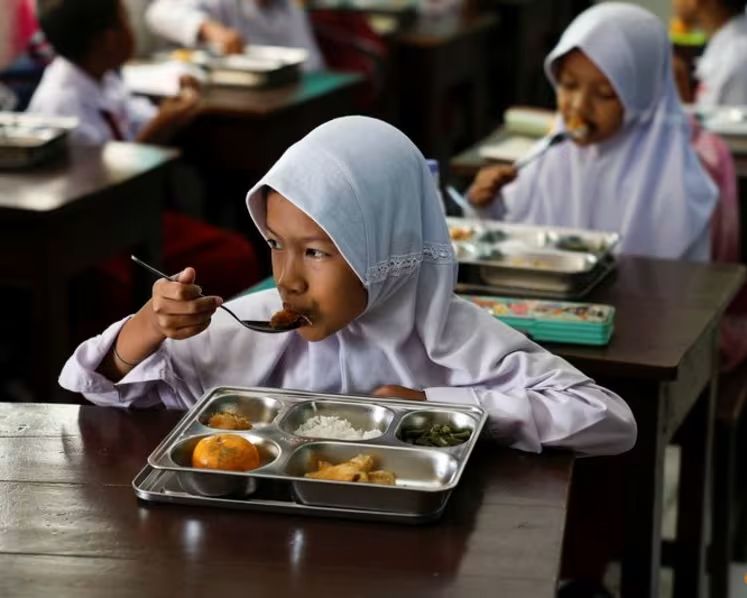
Indonesia's ambitious free meals programme has been dealt another significant blow with the resignation of National Nutrition Agency chief Nanik Sudaryati Deyang, who cited serious health complications as her reason for stepping down. Her departure on Wednesday represents the second major leadership upheaval at the agency in little more than a month, underscoring the mounting pressures facing what President Prabowo Subianto has positioned as his government's most vital and costly policy commitment. The succession of leadership crises at the agency reveals fractures in the implementation of a programme that has captivated public attention and consumed considerable fiscal resources since its commencement in January 2025.
Nanik, who assumed the agency's top position only five months earlier in June, attributed her departure to urgent medical requirements, stating publicly that she required overseas treatment for cardiac concerns. In posts on Facebook, she elaborated that her physician had warned her of severely restricted blood vessels stemming from the immense stress of managing the initiative. While framing her resignation as a matter of personal wellbeing, the timing cannot be separated from the intensifying institutional pressures surrounding the programme's execution and the broader political scrutiny it has attracted across Indonesia.
The leadership transition occurs against a backdrop of deteriorating circumstances at the agency. Nanik's immediate predecessor was removed from office by President Prabowo roughly four weeks prior and subsequently arrested on corruption-related allegations directly connected to the multibillion-dollar scheme. The criminal investigation and arrest represented a watershed moment for the nascent administration, signalling the president's willingness to pursue accountability but also exposing vulnerabilities in oversight structures and programme management. The swift removal and arrest sent reverberations through the bureaucracy, creating an atmosphere of uncertainty that may have contributed to conditions prompting Nanik's health crisis.
Since the programme's January inception, it has confronted a cascade of operational difficulties that have eroded public confidence and drawn critical scrutiny. Logistical bottlenecks in sourcing, preparation, and distribution have compromised the schedule of meal provision to intended beneficiaries. More troublingly, quality assurance deficiencies have sparked public health alarms, with multiple episodes of mass food poisoning documented among recipients. These incidents have forced the agency to confront difficult questions about supply chain management, food safety protocols, and the adequacy of its infrastructure to manage a programme of such unprecedented scale. The accumulated difficulties have created a perception problem that extends well beyond mere administrative challenges.
Budgetary constraints now threaten to compound existing implementation challenges. The agency announced yesterday that its 2026 allocation had been slashed for a second consecutive round, declining from 268 trillion rupiah to 229 trillion rupiah, equivalent to approximately $12.79 billion. This reduction represents a dramatic departure from the original allocation of 335 trillion rupiah, leaving the programme more than 100 trillion rupiah short of its initial funding envelope. Significantly, the agency has signalled that additional reductions remain within the realm of possibility pending ongoing fiscal reviews, creating a precarious outlook for programme expansion and operational quality.
The budgetary retrenchment carries profound implications for the initiative's reach and efficacy. The scheme originally targeted provision of complimentary meals to 83 million Indonesians, encompassing schoolchildren and expectant mothers in vulnerable demographics. Before the latest budget reduction, the agency reported successfully delivering meals to 62.5 million individuals, suggesting substantial progress but also indicating that millions of intended beneficiaries remained outside the programme's current scope. With fiscal resources contracting rather than expanding, the prospect of attaining the original coverage targets appears increasingly remote, raising questions about whether the government can deliver on the full scope of Prabowo's electoral commitment.
The programme has emerged as a flashpoint in broader discussions concerning Indonesia's fiscal trajectory and budgetary sustainability. Critics have questioned whether the scale of expenditure is compatible with the nation's medium-term macroeconomic objectives and debt management requirements, particularly at a time when global interest rates remain elevated and capital market conditions are uncertain. The repeated budget cuts suggest that fiscal planners harbour genuine doubts about the initiative's financial sustainability at its originally envisioned scale. The tension between political ambition and fiscal discipline has thus become an increasingly visible feature of the early Prabowo administration's governance.
Nanik's stated role transition reflects the administration's apparent acknowledgement of institutional fragility at the agency. The president has indicated his intention to establish a supervisory board for the National Nutrition Agency and has requested that Nanik chair this oversight mechanism, even as she vacates the chief executive position. This restructuring suggests an attempt to introduce additional layers of governance and accountability into an institution that has demonstrably experienced coordination failures. Whether such structural modifications will prove sufficient to remedy the underlying operational and management difficulties remains an open question requiring observation during implementation.
The programme's defenders have worked to reframe emerging controversies in terms of immediate policy objectives rather than political calculation. Nanik herself asserted that the initiative represents fundamentally an intervention to address nutritional deficiencies among vulnerable populations, explicitly rejecting characterisations that it functions primarily as a political instrument. This framing endeavours to elevate the programme beyond partisan contestation and emphasise its humanitarian dimensions. However, the sheer magnitude of fiscal commitment and the president's repeated references to his electoral pledge during campaigns mean that the initiative's ultimate success or failure carries undeniable political weight.
Uncertainty regarding Nanik's successor creates additional instability in the programme's management structure. While she indicated that her replacement would be drawn from among junior agency personnel, the National Nutrition Agency had not formally announced the appointment at the time her resignation was confirmed. The absence of immediate clarity regarding continuity in leadership compounds the challenges facing an institution already struggling with reputation damage and fiscal constraints. Observers across Indonesia and the broader region will scrutinise closely whether the incoming leader can stabilise the programme's operations and restore public confidence in its management.
The succession of crises afflicting the free meals initiative carries implications extending beyond Indonesia's borders. Throughout Southeast Asia, governments have pursued similar large-scale nutrition and food security programmes, often encountering comparable implementation difficulties and fiscal pressures. Indonesia's experience offers cautionary insights regarding the technical complexity of delivering meals at population scale, the importance of supply chain resilience, and the fiscal trade-offs inherent in maintaining generous social programmes amid competing budgetary demands. The trajectory of Prabowo's flagship initiative will likely influence policy discussions about social protection and nutrition security across the region.

