President Prabowo Subianto's flagship free nutritious meal programme has become a flashpoint for national debate, with mounting public demonstrations revealing sharp divisions over the initiative's value and cost. The competing protests—ranging from university students demanding comprehensive audits to kitchen workers and farmers mobilising in defence of the scheme—expose fundamental tensions about Indonesia's fiscal priorities and the effectiveness of government spending at a time when economic pressures are mounting across the archipelago.
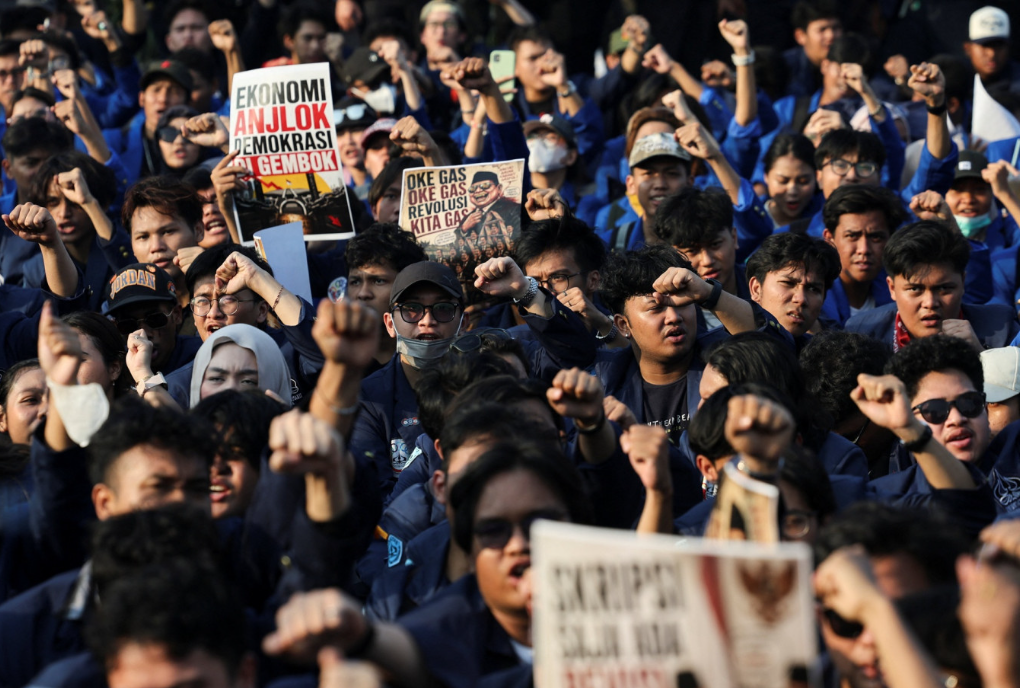
The latest wave of demonstrations began in earnest last week, with university students across multiple regions questioning both the programme's financial sustainability and its actual impact on food safety and nutrition outcomes. In Bali, hundreds of students gathered outside the Regional Legislative Council building in Denpasar on Monday to voice concerns that extended well beyond the meal scheme itself. The protesters called for a comprehensive audit by the Supreme Audit Agency, arguing that such a massive budget allocation cannot be justified when the government is simultaneously imposing broad spending cuts across other sectors. This contradiction lies at the heart of much of the criticism: the government's simultaneous promotion of austerity measures while maintaining a programme costing at least Rp 335 trillion annually appears inconsistent to many observers.
In Jakarta, the scale of student mobilisation has been particularly notable, with thousands of participants affiliated with the Indonesian Islamic Student Movement staging demonstrations outside the House of Representatives complex. These protests intensified following the arrest of three senior officials from the National Nutrition Agency, the body responsible for overseeing the programme's implementation. The corruption allegations have crystallised concerns that were previously more diffuse, providing specific evidence that the administration's oversight mechanisms may be inadequate. Students from Trisakti University, Mercu Buana University, and Esa Unggul University coordinated their efforts, suggesting that opposition to the programme transcends individual institutional boundaries and reflects a broader student movement position.
The scale of budgetary commitment is difficult to overstate. Launched in January last year, the free meal programme targets approximately 83 million beneficiaries across schoolchildren and pregnant women. The current allocation of at least Rp 335 trillion represents one of Indonesia's largest discretionary spending commitments, and critics argue this figure is unjustifiable given other pressing fiscal needs. In response to mounting pressure, government officials announced a reduction to Rp 228.4 trillion and introduced efficiency measures including suspending distribution during school holiday periods and eliminating meal provision in 76 schools in affluent areas. Yet these adjustments have themselves become controversial, as they directly affect different constituencies.
The food safety dimension has added significant urgency to the criticism. Multiple food poisoning incidents linked to the programme's meals have raised legitimate questions about supply chain management and quality control across the vast network of kitchen operations. Combined with the corruption allegations, these safety concerns suggest that the programme's scale may have outpaced the government's administrative capacity to manage it effectively. Students have specifically demanded full investigations into both the safety lapses and the suspected corruption, viewing these issues as symptoms of deeper structural problems in programme implementation rather than isolated incidents.
Yet the opposition narrative masks a more complex economic reality that has mobilised competing constituencies in defence of the scheme. In Batam, Riau Islands, approximately 1,500 kitchen workers employed under the programme staged their own rally at the local legislative council building, arguing that the proposed efficiency measures would directly harm their livelihoods. Many of these workers are paid daily wages and depend entirely on continued meal distribution to support their families. The government's decision to reduce meal provision from six days to five days weekly, combined with holiday suspensions, would eliminate their income during these periods. This highlights an often-overlooked dimension of such large social programmes: they generate employment throughout supply chains and local economies, not merely at the point of direct beneficiary service.
The agricultural sector has emerged as an unexpected constituency supporting programme continuation. In Bandar Lampung, residents including local farmers rallied to defend the scheme, noting that the programme's massive purchasing power creates steady demand for local commodities including rice, corn, cassava, fruits and vegetables. The stable market this creates has reportedly improved prices for agricultural products and supported the rural economy more broadly. This argument resonates in regions where agricultural income remains crucial to household welfare, and it reflects the reality that large-scale government procurement programmes generate multiplier effects throughout the economy beyond their immediate programmatic objectives.
Similar pro-continuation demonstrations have emerged in Jakarta, West Nusa Tenggara and East Java, indicating that support for the programme extends well beyond Batam and Bandar Lampung. These rallies suggest that messaging around the scheme has deeply polarised public opinion along lines reflecting economic interests, regional development patterns, and different assessments of government competence. Urban students primarily focused on fiscal rectitude and programme integrity clash with rural and working-class constituencies who depend economically on the programme's continuation.
Government responses have remained firm despite the mounting pressure. Muhammad Qodari, head of the Government Communications Agency, has consistently maintained that the programme will continue rather than be suspended, arguing that reform rather than termination represents the appropriate response to identified problems. This position reflects an administration commitment to the initiative's foundational objectives: addressing malnutrition and child stunting, which remain significant public health challenges in parts of Indonesia despite the country's economic development. Officials view the corruption arrests and efficiency measures as evidence that accountability mechanisms function and that the government takes concerns seriously.
The debate reflects deeper questions about programme design and administrative capacity in a developing economy. The sheer scale of the free meal initiative—serving 83 million people daily—creates unprecedented logistical and oversight challenges. Corruption vulnerabilities inevitably accompany programmes of this magnitude, particularly when implemented rapidly across diverse regions with varying administrative capacity. The student protests may therefore be diagnosing a real problem: not that the programme's objectives are misguided, but that its implementation structure may be inadequately equipped to deliver consistent results across such a vast operating environment.
For Malaysia and other Southeast Asian nations observing Indonesia's experience, the case offers instructive lessons about balancing social programme ambitions against fiscal constraints and administrative capacity. Large-scale nutritional interventions have genuine merit in addressing stunting and malnutrition, persistent challenges across the region. Yet Indonesia's experience suggests that the speed of rollout, scale of operations, and oversight mechanisms must align carefully to prevent both corruption vulnerabilities and food safety failures. As Indonesia navigates these competing pressures, the outcome will likely influence how other regional governments approach similar expansive social spending proposals.
The programme's trajectory remains uncertain. While government officials maintain commitment to continuation with improvements, the student movement shows no signs of diminishing its pressure campaign. The competing rallies will likely continue, with workers and farmers defending economic interests while students advocate for fiscal responsibility and programme integrity. How the Prabowo administration balances these pressures—whether through more substantial reform, partial suspension, or strengthened oversight while maintaining current operations—will significantly shape both the programme's future and broader perceptions of the government's responsiveness to public concerns about spending efficiency and administrative competence.