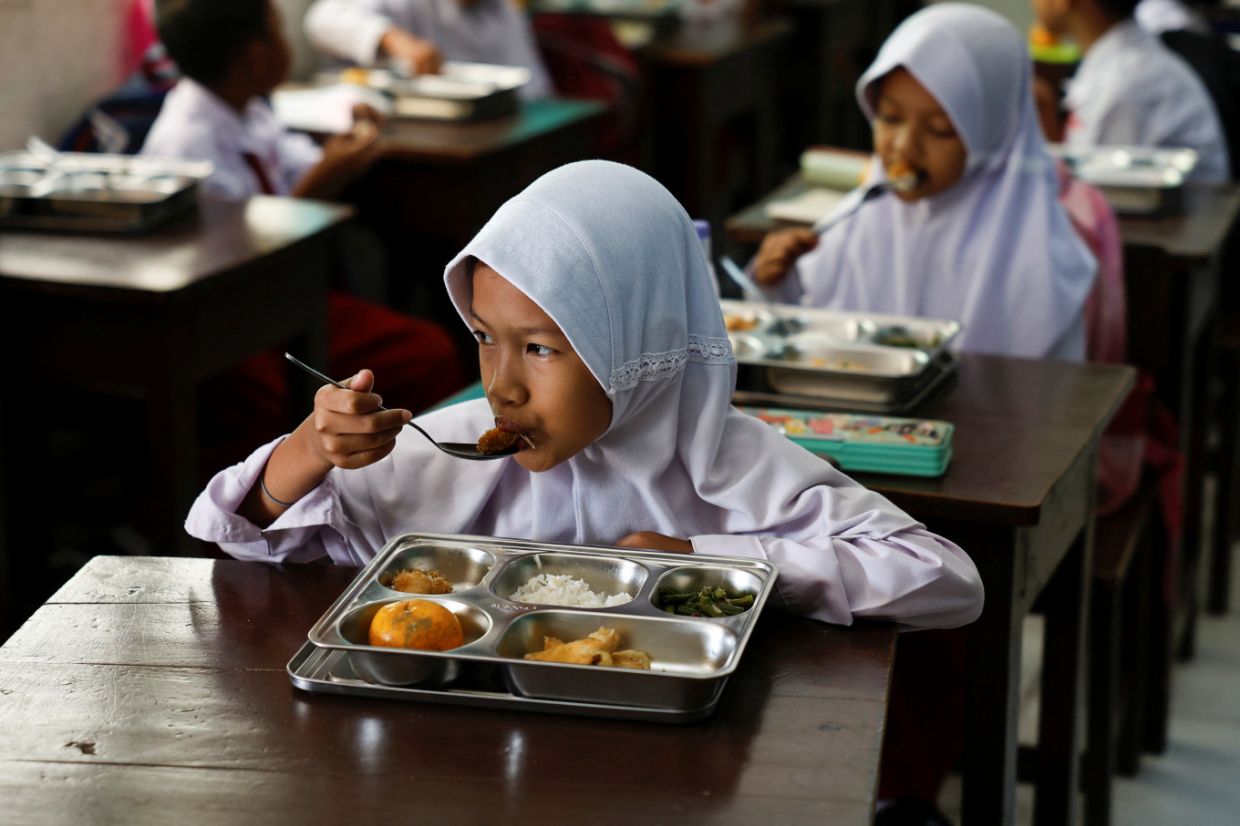
The Indonesian government faces growing scrutiny over proposed changes to the National Education System Law, with education advocacy groups expressing alarm that the revisions could provide a legal pathway to resume funding the nation's expensive free meals program through education budgets. The Indonesian Teachers Association (P2G) has flagged language in the draft legislation that it fears could be exploited to recharacterise health services—including the meals initiative—as a core education responsibility, potentially reversing the implications of a significant July Constitutional Court decision that deemed the program outside education's scope.
The controversy centres on ambiguous wording in a draft bill dated July 8 that instructs governments and civil society to "provide health services, including those concerning mental health, at educational institutions in a manner that is integrated with the national health policies as well as the national education goals." P2G national coordinator Satriwan Salim contends that this formulation creates dangerous interpretive flexibility, arguing the free meals program—described as a manifestation of national health policy—could be repackaged as an educational component and thus eligible for education funding.
The timing is significant because Indonesia remains bound by constitutional principles requiring that at least 20 percent of annual state budget allocations go to education. In the current fiscal year, approximately Rp 223 trillion (US$12.5 billion) of the Rp 769 trillion education budget was directed toward the free meals program, consuming nearly one-third of mandated education expenditure. This allocation became increasingly contentious as educators argued the spending diverted critical resources from classroom quality, teacher compensation, and learning infrastructure.
The Constitutional Court's July 30 ruling addressed precisely this concern, determining that nutritional programs fall outside education's constitutional definition and therefore cannot draw from education budgets. The court ordered removal of meals funding from the education line item for the 2028 state budget, though it suggested the government adjust its current spending to comply with this principle. This decision represented a significant constitutional check on President Prabowo Subianto's flagship social program, which had enjoyed prominence in his administration's policy agenda.
Constitutional law experts caution that any legislative manoeuvre to circumvent the ruling would violate fundamental constitutional principles. Feri Amsari, a constitutional law specialist, emphasises that the court's norms apply universally to all legislation and cannot be sidestepped through creative legal redrafting. "Under constitutional principles, it does not matter which law it is placed in, the program cannot be funded from the education budget again under any name or in any other form," Amsari stated, underscoring that relabelling or restructuring cannot override constitutional constraints.
Civil society monitors have expressed corresponding concerns. The MBG Watch coalition, which supported the original petitioners challenging the meals program's budget classification, explicitly warns against what it terms "budget engineering" or "regulatory adjustments" designed to circumvent the ruling. Agus Sarwono of Transparency International Indonesia, a coalition member, characterised such attempts as "a denial of the ruling" and urged parliament to respect the Constitutional Court's authority. These groups point to Indonesia's mixed history of implementing court decisions, suggesting vigilance is warranted.
Previous delays in enforcing Constitutional Court rulings lend credibility to these concerns. A December 2025 ruling that banned active-duty police officers from holding concurrent government positions has faced implementation challenges, illustrating how binding court decisions sometimes encounter institutional resistance. This precedent has heightened awareness among education advocates that legislative remedies might be needed to protect the spirit of the meals-funding ruling from bureaucratic or legislative circumvention.
House Commission X, which oversees education matters and is leading the bill revision, has acknowledged receiving these concerns. Commission chair Hetifah Sjaifudian, a Golkar Party lawmaker, stated that the bill "was not yet ready for publication" and emphasised the commission's commitment to careful drafting that eliminates interpretive ambiguity and respects constitutional boundaries. She pledged that every provision would be scrutinised to ensure the education budget serves "the education sector's primary needs, particularly improving learning quality, teacher welfare and education service, and not to fund programs outside the main function of education."
The revision process offers an opportunity to strengthen Indonesia's education framework beyond the meals debate. The planned amendments address mandatory funding levels for teacher salaries and allowances, critical issues given chronic undercompensation in the profession. The bill also proposes enhanced protections for students against violence, responding to documented instances of abuse in educational settings. These substantive education improvements could help redirect resources toward systemic quality improvements rather than external programming.
For Malaysia and other Southeast Asian nations observing Indonesia's budgetary and constitutional struggles, the case illustrates broader challenges in balancing social welfare initiatives with constitutional frameworks governing education finance. Indonesia's experience suggests the importance of clear constitutional definitions and robust civil society monitoring to prevent fiscal drift. As education remains a development priority across the region, the ability to ring-fence education budgets for genuine pedagogical needs—rather than allowing fungibility for other government objectives—remains contested territory in emerging democracies navigating competing social demands.
The deliberation over Indonesia's education law revision underscores deeper questions about institutional checks on executive power and legislative integrity in Southeast Asia. How parliaments handle civil society concerns about constitutional compliance, and whether courts' rulings ultimately shape actual budget practice, will indicate the maturity of Indonesia's democratic institutions. Public participation in the legislative process, as Commission X has invited, represents the mechanism through which these questions can be properly adjudicated before the bill advances toward final passage.

