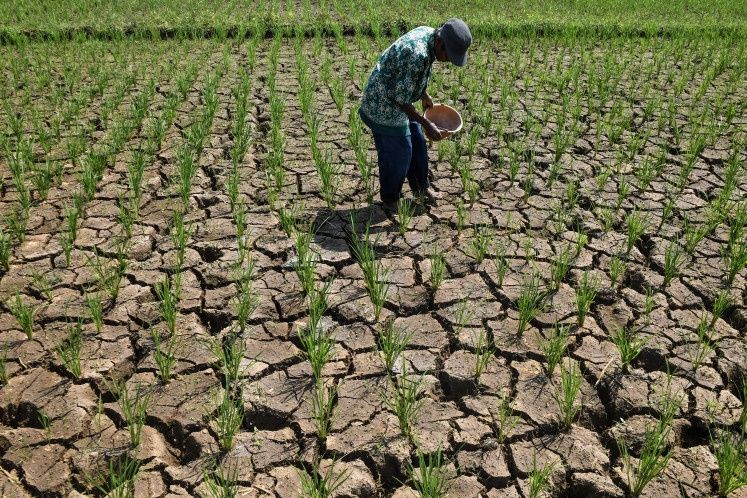
The grip of drought across Indonesia is tightening as El Niño conditions drive the archipelago into what meteorologists warn could become an exceptionally severe dry season. Multiple regions stretching from Java to the eastern islands are now grappling with acute water shortages, prompting national authorities to mobilise emergency response measures and sound increasingly urgent calls for long-term infrastructure investment. The scale of the crisis is expanding daily, with officials adding fresh areas to the growing list of drought-affected zones even as emergency water deliveries struggle to meet demand in regions already designated as crisis areas.
The National Disaster Mitigation Agency has documented a rapidly expanding humanitarian challenge, with more than 7,100 households already lacking reliable access to clean water across multiple provinces. Recent additions to the crisis list include Gunungkidul in Yogyakarta, Semarang in Central Java, and Jember in East Java, where a further 700 households have recently been cut off from adequate water supplies. The affected regions paint a sobering geographic picture: coastal and inland areas alike in Central Java—including the districts of Cilacap, Klaten, and Jepara—face emergency conditions alongside communities in West Java's Karawang, Tasikmalaya, and Sukabumi. The eastern reaches of the country are not spared, with Seram in Maluku also caught within the drought's expanding footprint. In response, authorities in the hardest-hit zones have activated emergency protocols, deploying tanker trucks to distribute water and positioning water reserves for rapid distribution.
Several regional governments have formally declared 90-day drought alert status, a designation that accelerates official responses and mobilises resources more swiftly than standard procedures. Gunungkidul entered alert status in June, while West Java issued its declaration this month as conditions deteriorated. West Nusa Tenggara's authorities moved even further, declaring a full drought emergency in West Lombok on June 15 as approximately 3,600 households faced severe deprivation. Banten Province was still evaluating its situation but appeared likely to follow suit with a province-wide alert that would unlock additional resources for water distribution across its territory.
The underlying climatic driver is El Niño, the Pacific Ocean warming phenomenon that disrupts global weather patterns. The event, characterised by elevated sea surface temperatures across the Pacific, has begun exerting its characteristic influence on Indonesian weather systems. Meteorologists at the Meteorology, Climatology and Geophysics Agency warn that this year's dry season could prove exceptionally punishing. By mid-June, roughly one-third of Indonesia's climate zones had entered the official dry season, yet nearly half the nation was already experiencing rainfall levels well below historical averages. The agency's projections for the critical July-to-September window are particularly alarming: more than 80 per cent of the archipelago is forecast to receive below-normal precipitation during these three months, precisely the period when water demand peaks and agricultural needs are most acute.
The threat to Indonesia's agricultural sector—and by extension, national food security—looms large. Officials and independent analysts alike have warned that prolonged drought could trigger significant crop failures and potentially drive rice prices to levels not previously recorded. The Meteorology, Climatology and Geophysics Agency has specifically called for immediate adaptive measures, including modifications to planting schedules that align with expected rainfall patterns, expanded cultivation of drought-resistant crop varieties with shorter growing cycles, and deliberate diversification of food production to reduce reliance on water-intensive staples. Agriculture Minister Amran Sulaiman indicated the ministry had prepared contingency strategies, including accelerated deployment of irrigation pumps to maintain water availability for critical growing areas. The government has sought to reassure consumers through repeated assertions that national rice reserves stand at historically elevated levels sufficient to meet demand through the following year, an attempt to forestall panic purchasing and price speculation.
Yet even as emergency measures address immediate crises, policy analysts and water security specialists argue that Indonesia confronts a deeper structural challenge. Bagas Yusuf Kausan, a researcher at the water policy think tank Yayasan Amerta Air Indonesia, contends that recurring drought impacts demand solutions extending far beyond emergency water trucking and short-term agricultural adjustments. The persistence and severity of water shortages in particular regions reflects not merely climatic variation but also decades of environmental degradation driven by human activity. Land conversion, particularly the transformation of watersheds and water catchment zones for agricultural, industrial, or urban development, has compromised the natural systems that historically sustained water availability during dry periods. Equally problematic, intensive groundwater extraction for agricultural and industrial purposes has depleted aquifers in drought-prone areas, leaving communities increasingly vulnerable to seasonal variation.
Kausan argues that a sustainable resolution demands substantial investment in piped water distribution networks operated by regional water utilities, known locally as PDAM. These systems, he contends, should be subsidised as a demonstration of government commitment to communities chronically exposed to drought risk. Such infrastructure would provide reliable, affordable access to clean water independent of seasonal rainfall patterns—a fundamental requirement for both household security and agricultural resilience. Without such investment, affected regions face a perpetual cycle of crisis followed by temporary relief, followed inevitably by crisis again.
The House of Representatives' Commission IV, responsible for oversight of agriculture and food production matters, has similarly urged accelerated support for vulnerable regions. The commission has called for government action to expand distribution of drought-resistant seeds, fertiliser supplies, farming equipment, and livestock feed—recognising that current emergency measures, while necessary, do not address the underlying vulnerability of agricultural communities. These calls reflect recognition that Indonesia's agricultural sector, which remains central to employment and food security for hundreds of millions of people, cannot weather repeated severe droughts without systemic strengthening.
Government officials have repeatedly emphasised their efforts to strengthen drought preparedness and mitigate impacts. BNPB spokesperson Abdul Muhari urged all regional administrations and citizens to intensify preparedness measures against the interconnected hazards of drought, water scarcity, and forest fires—recognising that dry conditions create explosive conditions for uncontrolled fires that compound environmental damage and public health threats. Citizens have been urged to conserve water actively and avoid any burning of land or waste that could trigger catastrophic fires during the vulnerable dry season.
Yet observers note a tension between emergency response operations and longer-term structural solutions. Kausan's emphasis on tightening restrictions against land conversion in water catchment areas reflects a conviction that climate events should catalyse not merely short-term crisis management but fundamental shifts in how Indonesia approaches land use and environmental stewardship. The researcher argues that El Niño should serve as an impetus for strengthened protections against the conversion of critical watersheds, recognising that such conversion multiplies Indonesia's vulnerability to precisely the climatic stresses now materialising across the archipelago.
For Malaysia and other Southeast Asian nations, Indonesia's unfolding drought crisis carries significant implications. Economic disruptions affecting Indonesia's agricultural output could influence regional food prices and availability. Supply chain disruptions in one of Asia's largest economies inevitably reverberate through interconnected trade networks. Additionally, the environmental degradation underlying Indonesia's drought vulnerability—deforestation, watershed damage, and aquifer depletion—reflects pressures and development trajectories affecting much of the region. The policy responses Indonesia adopts, or fails to adopt, may influence how other Southeast Asian governments approach the tension between short-term development gains and long-term climate resilience.
As the dry season enters its projected peak phase, Indonesia confronts a critical moment. The immediate humanitarian challenge of ensuring water access for millions remains urgent. Yet beneath this acute crisis lies a fundamental question about whether the archipelago will respond only to current emergency or whether policymakers will recognise in this drought an opportunity to pursue the infrastructure investment and environmental protections that climate science indicates will become increasingly essential in coming decades.

