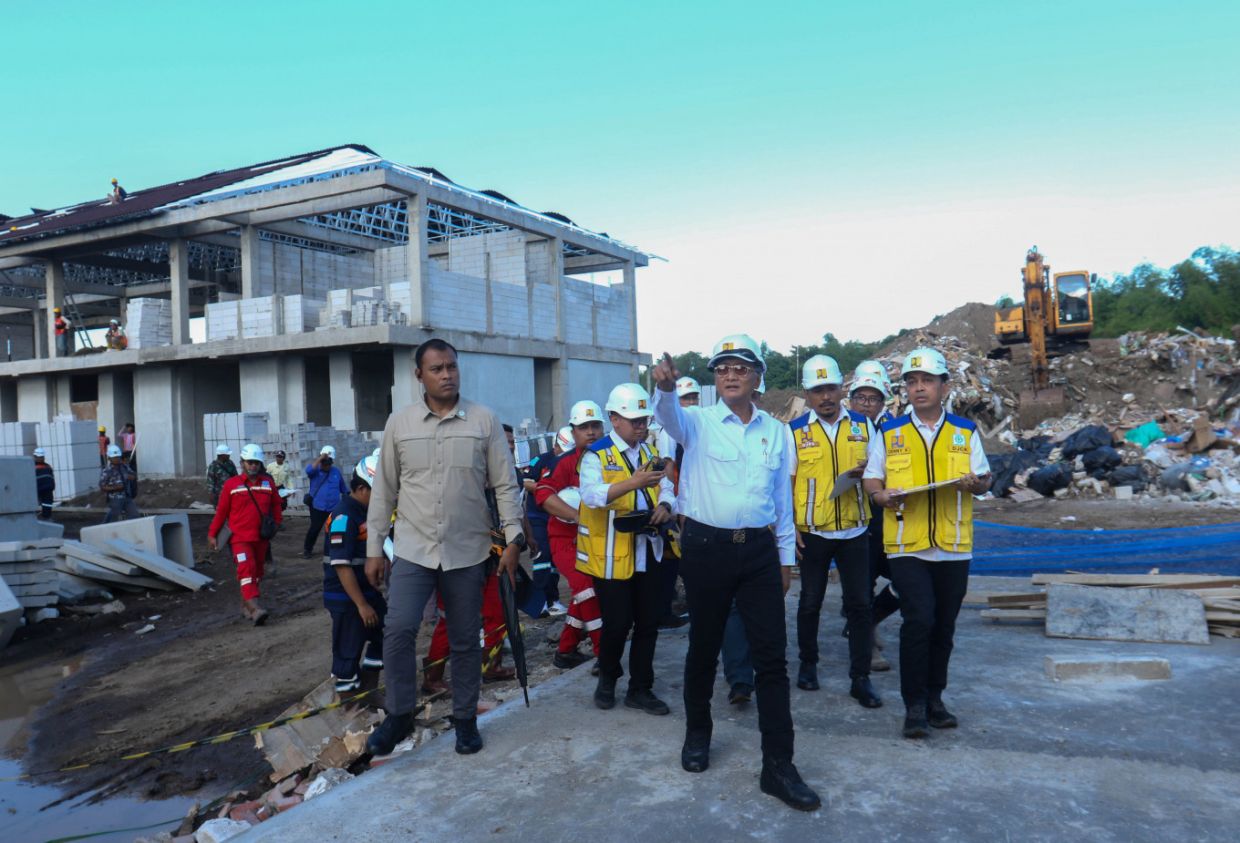
Indonesia's Public Works Minister Dody Hanggodo faces mounting pressure following revelations that his wife and daughter were included on official documentation for a planned delegation to the United States, igniting fresh questions about ministerial accountability and the appropriate use of government resources at a time when the administration has pledged fiscal restraint.
The controversy centres on a Public Works Ministry letter dated June 29 and signed by Ministry Secretary-General Apri Artoto that named eight individuals scheduled to travel to New York between July 13 and 19. The document explicitly listed Irma Hermawati, identified as Dody's wife, and Aurellia Tsabitha Meidirama, his daughter, among the delegation members. According to the paperwork, Irma would travel holding a diplomatic passport while Aurellia would use a standard passport.
The delegation's stated purpose involves participation in a high-level United Nations meeting focused on reviewing implementation of the New Urban Agenda. Coordinated through the UN General Assembly and administered by UN-Habitat, the gathering is scheduled for July 16 and 17 in New York. Such international forums provide Indonesia opportunities to engage with global urban development policy discussions and contribute to regional positioning on housing and settlement issues.
The decision to include family members in official travel documentation has triggered widespread criticism across social media platforms and among civil society observers. Many commentators have questioned whether the participation of the minister's relatives serves any legitimate governmental function, particularly given that President Prabowo Subianto's administration has publicly committed itself to an austerity agenda aimed at reducing wasteful expenditure and improving fiscal efficiency. The optics of ministerial family members joining international trips sit uncomfortably with such messaging.
When confronted with the controversy, ministry officials sought to provide clarification. Apri stated that Irma and Aurellia's inclusion had been confirmed, but he emphasised that no government budget allocations would finance their participation. He asserted that all expenses for family members would be met through personal funds rather than the state treasury. The Secretary-General further explained that the delegation list had been prepared primarily to streamline visa processing procedures through the Foreign Ministry, and he defended the diplomatic passport issuance for the minister's wife as consistent with existing regulatory frameworks governing such matters.
However, these assurances have failed to satisfy observers and oversight institutions. Maneger Nasution, a member of Indonesia's Ombudsman Commission, has called for substantially greater transparency from the ministry regarding both the rationale for including Dody's family members and the concrete mechanisms that would prevent state facilities or budgets from being misused to support their travel. Nasution emphasised that beyond financial transparency, the ministry must demonstrate that family participation poses no conflict of interest and involves no abuse of official authority for personal advancement or advantage.
The minister's background adds another dimension to these concerns. Prior to his political career with the Democratic Party, Dody maintained business relationships with prominent South Kalimantan entrepreneur Andi Syamsuddin Arsyad, known colloquially as Andi Haji Isam, whose corporate portfolio includes stakes in ventures connected to President Prabowo's ambitious food estate development initiative in Merauke, South Papua. Such business ties, while not necessarily improper, can invite additional scrutiny regarding potential conflicts of interest when ministerial decisions or overseas travel allocations come under examination.
Dody himself has previously claimed to be the target of what he characterised as a "deep state" effort to undermine his position. This assertion emerged after an internal audit document prepared by his ministry was leaked publicly, containing allegations that powerful behind-the-scenes actors were working to involve him in a corruption investigation. Whether substantiated or not, such claims reflect the increasingly contentious political environment surrounding several government officials.
For Malaysian observers, the Indonesian controversy offers useful perspective on governance challenges that transcend borders throughout Southeast Asia. Questions surrounding ministerial family involvement in official delegations, the blurred lines between personal and public benefit, and the mechanisms available to civil society and independent ombudsman institutions for holding executives accountable resonate across the region. Indonesia's Ombudsman Commission, despite its limited enforcement powers, continues attempting to inject standards of transparency and propriety into ministerial operations, a role that reflects broader regional efforts to strengthen democratic institutions.
The unfolding situation also illustrates ongoing tensions between executive discretion and accountability mechanisms within Indonesia's government structure. While cabinet ministers retain considerable latitude in organising delegations and determining participation, the existence of public scrutiny and institutional oversight—however imperfect—creates pressure for at least nominal adherence to standards of transparency and conflict avoidance. The test now lies in whether the ministry will provide the additional information demanded by the Ombudsman and whether such disclosure will satisfy civil society concerns or merely deepen them.
Moreover, the episode reflects President Prabowo's broader governance challenge: translating rhetorical commitments to austerity and good governance into consistent practice across a sprawling bureaucracy. Cabinet ministers respond to mixed incentives, and the gap between presidential messaging and ministerial behaviour remains a persistent feature of Indonesian administration. How senior government figures like Dody navigate such pressures—and how effectively watchdog institutions can enforce accountability—will significantly influence public confidence in the administration's reform agenda.

