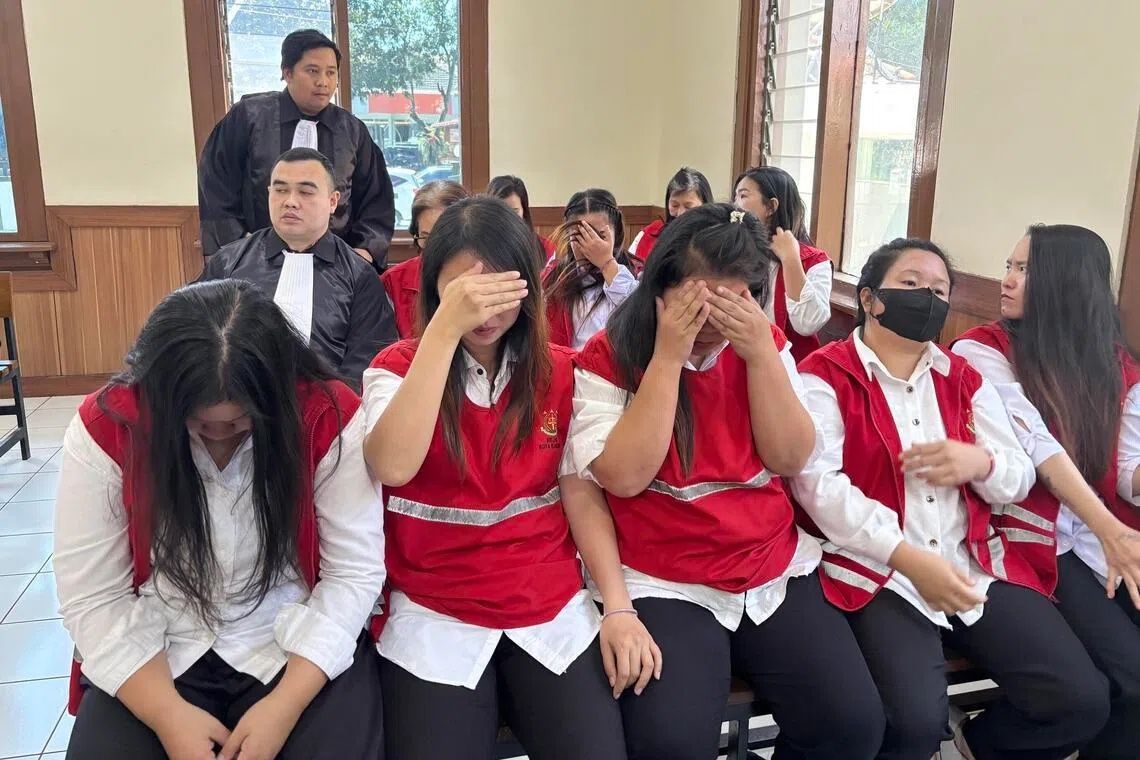
Indonesian prosecutors on Tuesday sought prison sentences of up to 10 years for 19 defendants accused of operating a sophisticated baby trafficking syndicate that sold at least 34 infants, including numerous victims sent to Singapore, in what authorities describe as one of the country's most significant cross-border trafficking operations in recent memory. The case has exposed alarming vulnerabilities in adoption procedures across Southeast Asia and raised urgent questions about how organised criminal networks exploit desperate families and vulnerable pregnant women.
The 19 accused—comprising 18 women and a single male defendant—have stood trial since April on charges related to trafficking babies during the period from 2023 through 2025. According to prosecutors, the syndicate systematically sold infants for between 200 and 250 million rupiah, equivalent to approximately S$18,110 per child, with documented evidence showing that at least 12 babies were transported to Singapore. The systematic nature of the operation, coupled with the involvement of international networks, underscores how trafficking rings have adapted to exploit loopholes in regional adoption frameworks.
At the helm of the alleged network stands 70-year-old Lie Siu Luan, known colloquially as Lily or Popo, whom investigators have identified as the criminal enterprise's orchestrator. Court documents reveal that Lie coordinated virtually every stage of the trafficking process, from identifying and recruiting pregnant women and mothers willing to part with their children, to preparing fraudulent documentation and arranging international transfers of infants. Her alleged central role in managing operational details suggests a high degree of planning and organisational sophistication that transcended mere opportunistic criminality.
During proceedings at Bandung District Court on June 30, Prosecutor Cucu Gantina presented formal arguments contending that Lie has been proven guilty of recruiting, harbouring, dispatching, transferring, and receiving persons for purposes of exploitation within Indonesia's jurisdiction. The legal framework invoked reflects Indonesia's comprehensive human trafficking statutes, which criminalise not only the physical movement of victims but also the full spectrum of facilitatory activities that enable such movement. Beyond Lie, prosecutors specifically targeted three additional defendants as principal architects of the scheme: Astri Fitrinika, identified as a primary recruiter of infants and pregnant women; Djaka Hamdani, another central recruiter; and Elin, who played a similar recruitment function. A fourth defendant, Lai Su Hua, faced distinct charges related to document falsification, specifically preparing forged adoption-related paperwork required for processing transfers across borders.
The prosecution applied differential sentencing recommendations reflecting perceived culpability within the hierarchy. Those deemed architects—Astri, Djaka, Elin, and Lai—faced demands for 10-year sentences, while the remaining 14 defendants, characterised as caretakers who provided childcare while infants awaited transfer, received recommendations for five-year terms. This graduated approach suggests prosecutors recognised varying degrees of agency and responsibility within the criminal structure, distinguishing between those who orchestrated the scheme and those who participated in subordinate roles.
The courtroom atmosphere during sentencing arguments proved emotionally charged, with both Lie and Astri visibly breaking down as prosecutors outlined their demands. However, their emotional responses have not swayed the legal strategy adopted by their defence counsel. Lie's attorney, Sendi Sanjaya, openly challenged the foundational legal element underpinning the trafficking charges—the concept of exploitation. He argued strenuously that evidence presented during trial failed to demonstrate exploitation, contending instead that the adopted children remained in good health and that their whereabouts were consistently known, thereby negating the supposed harm characterising trafficking victims. This defence strategy attempts to reframe the case as irregular adoption rather than trafficking, a distinction that carries profound legal implications given trafficking's heightened culpability and mandatory sentencing considerations.
Astri's defence team, led by attorney Hendri Samuel Tampubolon, pursued a differentiated strategy emphasising her subordinate role beneath Lie's authority. Tampubolon expressed dissatisfaction that prosecutors sought identical sentences for both Lie and Astri, arguing that Lie, as the mastermind and ultimate authority figure, bore significantly greater responsibility for the criminal enterprise's conception and execution. He further highlighted Astri's cooperation with police and prosecutorial authorities, suggesting mitigating circumstances meriting reduced sentences compared to those sought for higher-ranking conspirators. These defence arguments set the foundation for presentations of evidence and legal argument scheduled for subsequent hearing sessions.
The case's emergence into public consciousness occurred in July 2025 when Indonesian authorities arrested approximately a dozen suspects in West Java following a tip from a local resident named Dani Hidayat. Hidayat's involvement in the investigation proved instrumental in unravelling the network—his decision to join a Facebook adoption group whilst his wife was pregnant led to direct contact from Astri, who explicitly offered him 8 million rupiah in exchange for a newborn. This solicitation provided the initial evidence triggering official investigation and marking the beginning of authorities' penetration of the trafficking network.
The international dimensions of the case attracted official diplomatic attention, prompting Singapore and Indonesian governments to issue a joint statement on January 9 announcing coordinated investigative cooperation. During trial testimony, Lie herself identified four Singaporean nationals whom she claimed functioned as adoption agents facilitating placements within Singapore: individuals identified only as "Petter", "John", "Mr Tan", and "Mr Chew". These named individuals represent the Singaporean nodes within the transnational trafficking network, though their legal status and potential prosecution remain undisclosed in current court filings.
The implications of this case extend far beyond the immediate criminal culpability of the 19 defendants. The syndicate's apparent operational success over multiple years suggests that both Indonesian and Singaporean adoption authorities failed to implement adequate verification procedures, document authentication protocols, and cross-border communication mechanisms that could have detected irregular placements earlier. Southeast Asian nations collectively face mounting pressure to strengthen institutional safeguards protecting vulnerable populations from trafficking exploitation, particularly given the region's ongoing challenges with human trafficking across multiple domains.
Legal proceedings will advance with scheduled defences from all defendants at upcoming hearing sessions, providing opportunities for comprehensive presentation of exculpatory evidence and legal argument. The trial's progression carries significance extending beyond criminal accountability, potentially catalysing broader policy reforms affecting adoption frameworks, border controls, and inter-agency cooperation throughout Southeast Asia. For Malaysian observers, the case demonstrates how trafficking networks exploit cross-border vulnerabilities and inadequate information-sharing between nations, underscoring the necessity for enhanced regional coordination in protecting vulnerable populations from exploitation.

