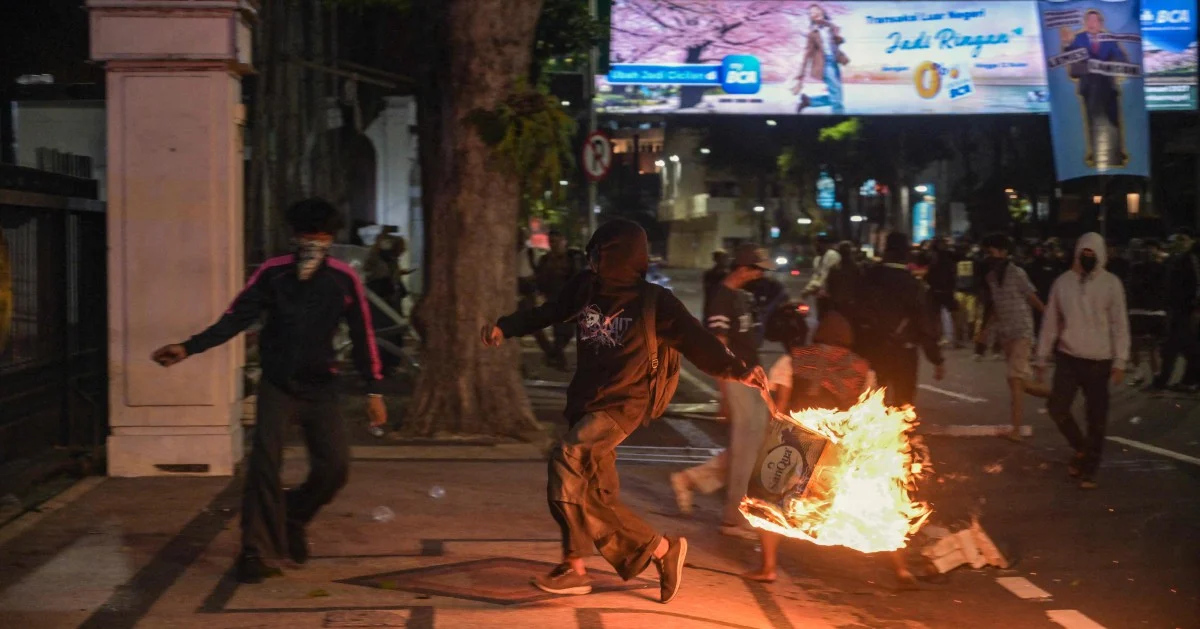
A mass detention of protesters has unfolded in Surabaya, Indonesia's second-largest city, after police moved in on demonstrators gathered to voice concerns about the policies being pursued by President Prabowo Subianto. Rights monitoring organisations confirmed the scope of the operation on Saturday, marking an escalation in tensions between authorities and segments of the public opposing the current government's direction.
The arrests underscore deepening divisions within Indonesian society over Prabowo's administration, which has pursued controversial initiatives since taking office. The demonstration in Surabaya reflects broader discontent among activists and civil society groups who view the government's trajectory with alarm. Such protests have become increasingly common across major urban centres as citizens exercise their democratic right to voice opposition, though police responses have grown more assertive in recent months.
Surabaya, home to approximately 2.9 million people and a historically significant centre of nationalist thought and activism, has long served as a bellwether for political sentiment outside Jakarta. The city's role as a hub of student movements and labour activism makes it a natural flashpoint for demonstrations against national policies. That police chose to conduct mass arrests there suggests authorities view the protest movement with particular seriousness, despite Indonesia's constitutional protections for freedom of assembly.
Human rights monitors and advocacy groups have become increasingly vigilant in documenting police conduct during demonstrations, having raised concerns about restrictions on protest freedoms and the treatment of detained persons. The involvement of rights groups in publicising Saturday's arrests indicates they view the incidents as part of a concerning pattern warranting international attention. Documentation efforts by these organisations serve as a crucial counterbalance to official police narratives and help establish an independent record of events.
The detention of dozens simultaneously raises questions about the proportionality of police response and whether the demonstrators engaged in conduct justifying mass arrests. Indonesian police regulations and international standards governing crowd control and detention practices require that security forces distinguish between lawful protest and unlawful conduct, and employ force only when necessary to maintain order. The scale of arrests suggests authorities treated the gathering as a significant public order threat, though protesters' specific actions and police justifications remain subject to scrutiny.
For Malaysian observers and the broader Southeast Asian region, developments in Indonesia's domestic political sphere carry implications for regional stability and democratic norms. Indonesia, as the world's largest Muslim-majority democracy and a key regional power, sets precedents that other nations monitor closely. When police conduct mass arrests at opposition demonstrations, it sends signals about the health of democratic institutions and the space available for political dissent. Given Malaysia's own contested history with protest management and concerns about press freedom and civil liberties, the Indonesian situation offers a cautionary case study.
The timing of this crackdown appears significant within Indonesia's political calendar and governance trajectory. Prabowo's administration has already proved controversial among certain constituencies, particularly regarding labour policies, environmental concerns, and perceived authoritarianism. Student and youth movements, traditionally drivers of social change in Indonesia, have mobilised around these grievances. That authorities have responded with mass detentions rather than dialogue suggests tensions between government and opposition forces may intensify rather than abate.
The role of civil society and independent monitoring institutions becomes crucial when governments move to restrict dissent. International observers including the United Nations, regional human rights bodies, and diplomatic missions will likely scrutinise how Indonesian authorities treat the detained protesters and whether legal processes respect due process protections. The response of international bodies could influence whether the government faces diplomatic consequences or international pressure regarding its handling of demonstrations.
Indonesia's security forces operate within a complex institutional framework shaped by the country's transition from authoritarian rule to democracy. Whilst the military's direct political role has diminished significantly since the 1998 reform movement, police institutions retain considerable power and discretion in managing public order. Training and oversight mechanisms theoretically constrain how forces respond to protests, yet gaps between policy and practice persist. Observers have documented inconsistencies in how different regional police commands handle demonstrations, suggesting variable standards across the archipelago.
The detained protesters themselves now face the Indonesian criminal justice system, which has been criticised for slowness and inconsistency. Many may face charges under broad public order laws that critics argue are weaponised against legitimate dissent. The specific charges authorities choose against demonstrators will signal whether they are targeting genuine public disorder or attempting to suppress ordinary political expression. Legal support organisations and international observers will monitor court proceedings closely to assess whether trials meet international fairness standards.
Moving forward, the incident highlights enduring tensions in Indonesia between security imperatives and democratic freedoms. Sustainable governance requires finding pathways through which public grievances can be aired without descending into disorder, and through which authorities can maintain public order without resorting to blanket suppression of dissent. Whether Prabowo's government develops such mechanisms, or whether confrontational approaches escalate, will shape Indonesia's political trajectory in coming months and have reverberations across Southeast Asia.

