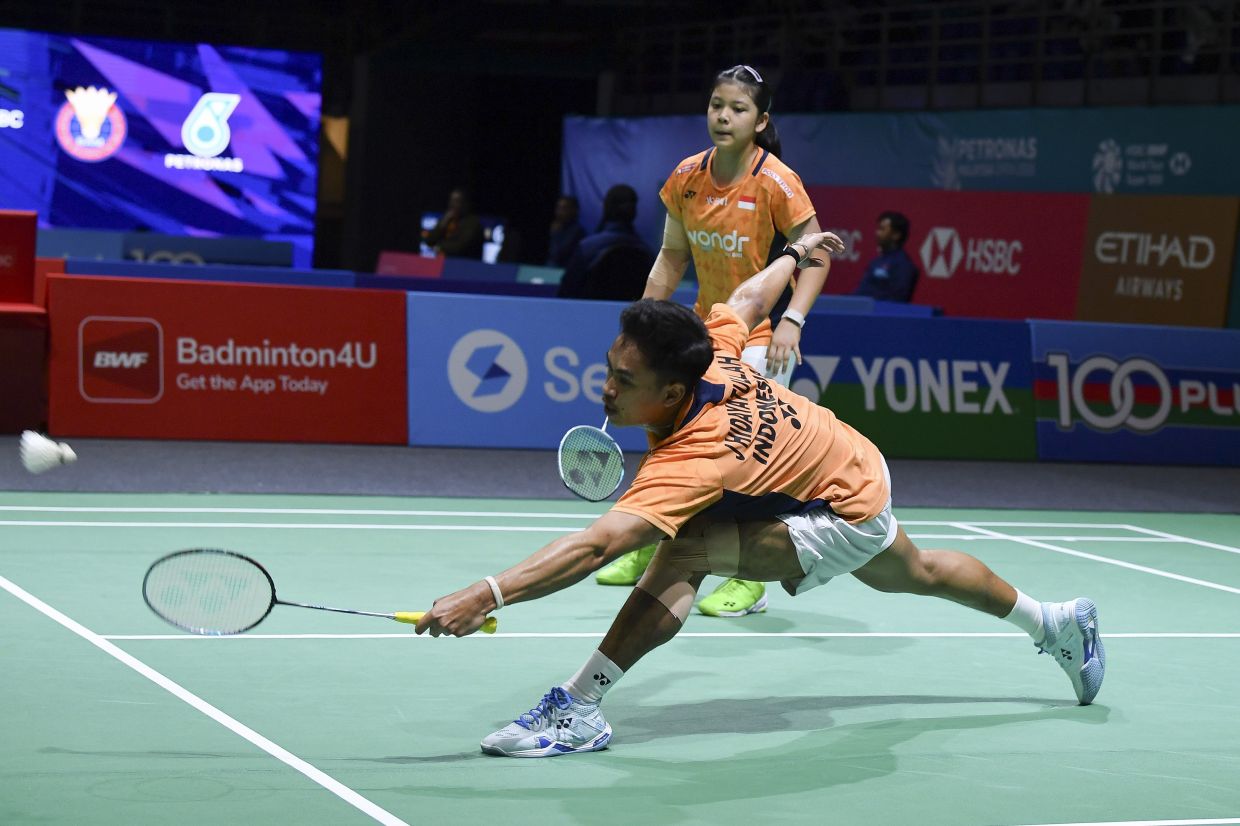
Two prominent Indonesian mixed doubles pairs have withdrawn from the World Badminton Championships in what appears to be a significant development in an ongoing integrity investigation that threatens to damage the sport's reputation in Southeast Asia's badminton powerhouse. The Badminton World Federation is conducting judicial proceedings into alleged match-fixing involving multiple Indonesian players, an investigation that has prompted the Indonesian Badminton Association to make sweeping squad adjustments as the tournament approaches.
The withdrawals centre on Jafar Hidayatullah-Felisha Pasaribu, the nation's 13th-ranked mixed doubles pair, and a second pairing of Adnan Maulana and Indah Cahya Sari Jamil. While the Indonesian Badminton Association has stopped short of explicitly linking the players to the match-fixing allegations, the timing and sequence of their exits from the tournament schedule has generated immediate speculation across the badminton world. Adnan-Indah withdrew on July 13, with Jafar-Felisha following two weeks later on July 29, suggesting a phased administrative process rather than a sudden crisis response.
Ricky Soebagdja, the Indonesian Badminton Association's secretary-general, presented the departures as routine squad management in an official statement, describing them as part of necessary adjustments to Indonesia's delegation for the prestigious World Championships. However, his accompanying acknowledgement that the Badminton World Federation has launched independent judicial proceedings against several Indonesian players created an unmistakable context that readers were quick to interpret. The association deliberately withheld specific reasons for the changes, citing the ongoing nature of the investigation and the need to respect the independence of the Badminton World Federation's evaluation process.
The Badminton World Federation's involvement signals that the integrity concerns extend beyond Indonesia's domestic regulatory framework. The federation, which oversees professional badminton globally, has triggered independent hearings under its governance structure to examine what it characterises as alleged integrity breaches—a formal term covering everything from match manipulation to failure to report suspicious approaches. This parallel process means that while Indonesia's own governing body has taken immediate action to protect the sport's reputation domestically, a separate international investigation continues in parallel, creating uncertainty about potential sanctions or further revelations.
Indonesia's response demonstrates the delicate balance required when managing integrity crises in sport. By removing the pairs from competition without officially confirming their involvement in wrongdoing, the association has attempted to demonstrate decisive governance while preserving the legal presumption of innocence and respecting the independence of the Badminton World Federation's proceedings. Soebagdja explicitly stated that PBSI would not offer further commentary until the federation's Independent Hearing Panel reaches its conclusions, effectively silencing public debate and preventing the association from either defending or condemning the implicated athletes.
The withdrawal of both pairs raises broader questions about the scale of the investigation's scope. If the alleged integrity breaches involve multiple players across different pairings, as suggested by the federation's language, then the match-fixing problem may be more systemic than a isolated incident. This pattern reflects global trends in badminton and other racquet sports, where spot-fixing and match manipulation have periodically threatened competitive integrity. Southeast Asia, home to some of the world's most talented players and largest fan bases, has been particularly vulnerable to such schemes because of the region's substantial gambling markets and the economic pressures faced by athletes.
Despite the controversy, Indonesia retains substantial representation at the World Championships through two replacement mixed doubles pairs. Amri Syahnawi-Nita Violina Marwah will lead Indonesia's mixed doubles challenge, while Rehan Kusharjanto-Gloria Widjaja have been elevated from the reserve list to fill one of the vacancies. This continuity ensures that Indonesia maintains a competitive presence at the tournament while the investigation proceeds, allowing the sport to move forward without appearing to collapse under the weight of the allegations. The promotion of reserve players also demonstrates that the association had contingency planning in place, suggesting that these withdrawals were not entirely unexpected.
For Malaysian badminton enthusiasts and the broader Southeast Asian badminton community, the Indonesian developments carry significant implications. Indonesia and Malaysia are longstanding rivals in mixed doubles competition, and any structural weakness in Indonesia's program creates opportunities for Malaysian pairs to advance in regional rankings and tournament seeding. More substantially, however, the investigation underscores that match-fixing concerns transcend national boundaries and demand regional cooperation in safeguarding the sport's integrity. If Indonesian players have engaged in match manipulation, Malaysian authorities and the Badminton Association of Malaysia must remain vigilant about protecting the integrity of their own programs and tournaments.
The Badminton World Federation's independent hearing process will ultimately determine whether the withdrawn players face bans, fines, or other sanctions. The timeline for that decision remains unclear, but the federation's process typically involves thorough investigation, evidence review, and the opportunity for the implicated players to respond to allegations. Until the Independent Hearing Panel issues its findings, the badminton world will operate with incomplete information about the scope and nature of the alleged integrity breaches, creating a period of uncertainty that tests the patience of fans, sponsors, and the sport's governance bodies alike.
The episode serves as a reminder that while badminton's technical and athletic standards remain exceptionally high in Indonesia and across Southeast Asia, the sport's integrity depends on robust governance structures and the willingness of national associations to act decisively when evidence of corruption emerges. The Indonesian Badminton Association's decision to withdraw the pairs, despite the reputational cost of implying involvement in wrongdoing, suggests that the federation prioritises long-term credibility over short-term tournament results. Whether that judgment proves justified will become clear once the Badminton World Federation completes its investigation and renders its verdict.

