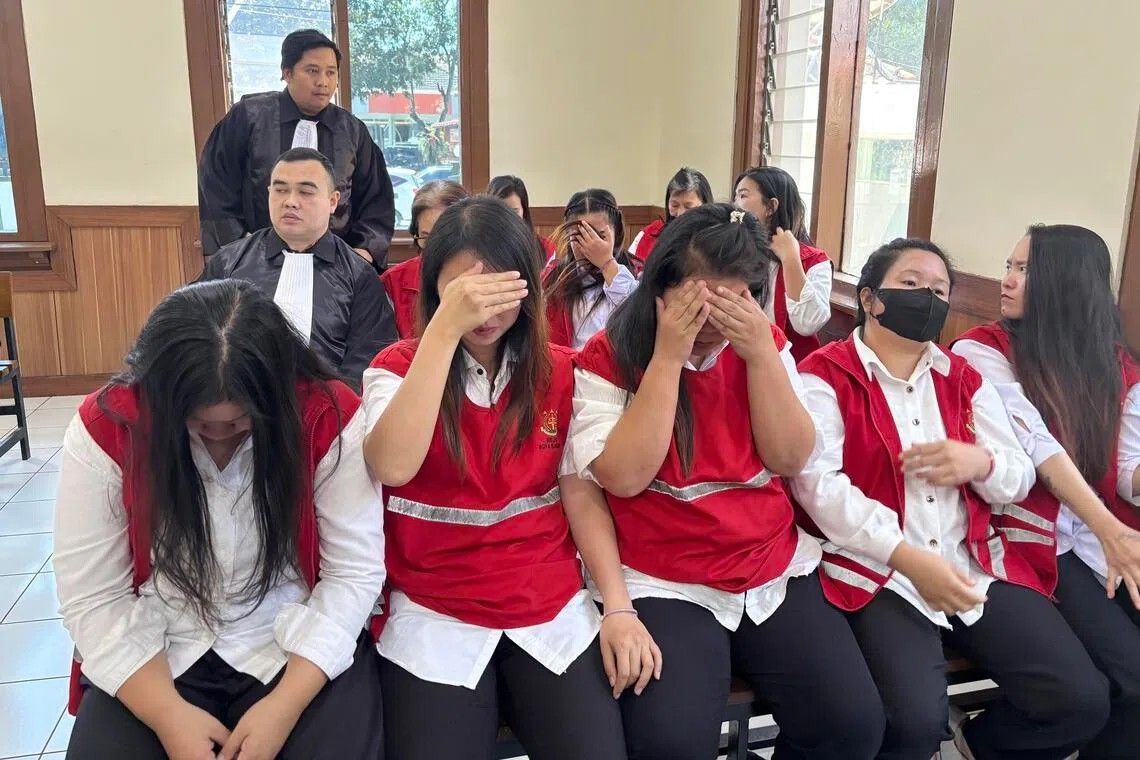
A Bandung District Court in West Java has concluded a significant human trafficking case by convicting all 19 members of an international baby-smuggling operation that sold infants across Southeast Asia. The judgment, delivered on July 21, marks the culmination of a trial that began in April and exposed a sophisticated criminal network operating across borders. The conviction delivers a rare outcome in such cases — the prosecution of every accused defendant — signalling the Indonesian judiciary's determination to tackle transnational crimes involving vulnerable children.
Lie Siu Luan, the 70-year-old ringleader known by aliases Popo and Lily, received a seven-year prison sentence for orchestrating the entire operation. Presiding Judge Gatot Ardian Agustriono declared Lie guilty of recruiting, harbouring, transferring and receiving persons for exploitation, according to the formal indictment read at the Bandung courthouse. The sentence fell short of prosecutors' recommendation of ten years, reflecting judicial discretion in assessing culpability and evidence. Lie's central role involved coordinating the identification of vulnerable infants, arranging the creation of forged adoption documentation, and executing international transfers to waiting buyers across the region.
The scale of the trafficking operation underscores the vulnerability of Indonesia's child welfare systems. Between 2023 and 2025, the syndicate trafficked a minimum of 34 babies, though investigators acknowledge the true figure may be substantially higher. Prosecutors documented at least 12 infants being sent specifically to Singapore, where wealthy families and individuals paid between 200 to 250 million rupiah — roughly SGD 18,110 per child — for the infants. This pricing structure reveals an organised commercial operation with established buyer networks and logistics chains, rather than opportunistic criminal activity. The syndicate's ability to operate for nearly two years before detection raises questions about gaps in child protection mechanisms across Indonesia and its trading partners.
Among the 18 remaining defendants, predominantly women, sentences varied according to their roles within the hierarchy. Astri Fitrinika, identified as the chief recruiter responsible for locating and securing infants from vulnerable families, received six years and seven months imprisonment. Fellow recruiters Djaka Hamdani and Elin Marlina received identical sentences, reflecting their comparable culpability in the supply chain. Lai Su Hua, the document forger whose false adoption paperwork enabled the transfers, also drew six years and seven months, acknowledging the critical importance of her role in facilitating overseas placement. The remaining 14 caregivers, who provided temporary accommodation and care for the infants before handover, received reduced sentences of three years and four months, signalling the court's recognition of their peripheral involvement compared to core operatives.
The disparity in sentencing reflects a structured prosecution strategy that distinguished between organisers, facilitators and supporting personnel. The three-judge panel considered not only the statutory offences but also the aggravating circumstances of child trafficking and the transnational dimensions of the crimes. The sentences imposed carry mandatory review periods and the possibility of appeal, creating opportunities for legal challenges that may extend proceedings into 2026. Indonesian courts rarely achieve conviction rates approaching 100 per cent in trafficking cases, making this outcome statistically significant for law enforcement outcomes in the region.
During investigation and trial proceedings, Lie and Astri, the two most senior defendants, offered partial cooperation by admitting to most charges while maintaining that no children were abducted and that parents willingly surrendered infants. They further contended that all babies received appropriate care and suffered no abuse. These claims lack independent verification and contradict child protection principles, as legitimate adoption processes require extensive safeguarding procedures and parental consent must be informed and voluntary. The syndicate's assertion regarding parental consent becomes questionable when considering the economic desperation that may compel impoverished families to surrender children, raising ethical concerns about whether true voluntariness existed.
The case exposes systemic vulnerabilities in Indonesia's child protection and adoption regulatory frameworks. Forged documents proved sufficiently convincing to facilitate international transfers, suggesting inadequate verification protocols at borders and receiving countries. The syndicate's operational longevity indicates that intelligence sharing between Indonesian and Singaporean authorities was insufficient to identify trafficking patterns until the network reached a critical scale. Malaysia, as a regional neighbour and potential transit country, faces similar vulnerabilities, with porous borders and informal adoption networks potentially facilitating child trafficking. Regional law enforcement agencies have intensified cooperation mechanisms since 2023, but implementation gaps persist.
For Singapore, the discovery that 12 infants were trafficked into the city-state raises uncomfortable questions about adoption and childcare sectors. Authorities must determine whether buyers knowingly participated in trafficking or were misled by fraudulent documentation. Some receiving families may constitute unwitting victims exploited by false promises of legitimate adoption, complicating both prosecution and victim support strategies. The Malaysian context differs given Malaysia's distinct adoption laws and social welfare systems, yet similar vulnerabilities exist. Organised trafficking networks in one jurisdiction inevitably affect neighbouring countries through spillover effects and operational redundancy.
The broader Southeast Asian implications extend beyond legal consequences to institutional reform. Intra-regional cooperation frameworks established through ASEAN require strengthening with dedicated funding, shared intelligence platforms, and harmonised child protection standards. Indonesia's conviction outcome should encourage similar prosecutions elsewhere, yet resource constraints in many jurisdictions limit capacity for complex, protracted investigations. Malaysia's involvement, whether as a transit route or source jurisdiction, warrants internal audit of adoption procedures and enhanced border screening for suspected trafficking victims. The case demonstrates that transnational crime networks exploit regulatory gaps between jurisdictions, necessitating coordinated regional responses.
Looking forward, the sentences imposed carry symbolic weight beyond individual punishments, signalling zero tolerance for child trafficking within the Indonesian justice system. However, conviction alone fails to address root causes — poverty, limited legitimate adoption pathways, and insufficient child welfare infrastructure — that enable such networks to flourish. Prevention requires concurrent investment in family support services, rural economic development, and accessible legitimate adoption procedures that reduce desperation-driven family separations. The 19 convictions represent initial accountability, yet sustainable protection demands systemic transformation across Southeast Asia's child welfare ecosystems.

