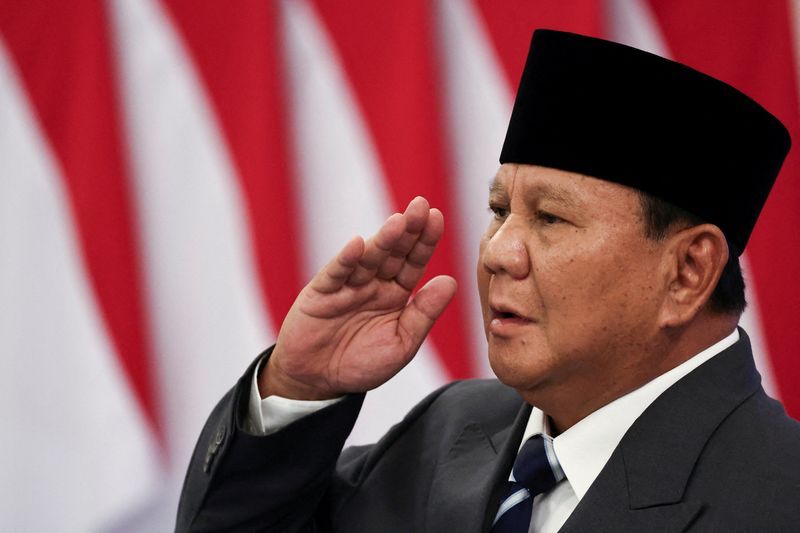
Indonesia is moving to harness artificial intelligence across its most significant government programmes, including its flagship $15 billion free meals initiative, according to a draft presidential regulation that signals Jakarta's determination to catch up with regional peers in the digital economy race. The regulation, which remains unsigned by President Prabowo Subianto, charts a pathway for ministries and regional governments to adopt AI technologies between 2026 and 2029, with the overarching objective of achieving economic growth and enhanced competitiveness in Asia's increasingly AI-driven landscape.
The strategic document frames AI adoption as essential to lifting Indonesia's gross domestic product by an estimated 12 percent—equivalent to $366 billion—by the end of the decade. This ambitious projection reflects the government's confidence that intelligent automation across public services can unlock significant productivity gains and reduce operational inefficiencies that have historically plagued Indonesia's sprawling bureaucracy. The timing is deliberate: as Southeast Asia's largest economy seeks to maintain its growth trajectory amid slowing global demand, policymakers view AI deployment as a critical lever for modernisation.
The regulation reveals that tech giants including Meta Platforms, IBM and Microsoft have contributed to shaping Jakarta's AI roadmap, underscoring the private sector's influence on Indonesia's digital governance strategy. Microsoft alone committed $1.7 billion in 2024 to expand cloud services and artificial intelligence infrastructure across the archipelago, signalling multinational confidence in Indonesia's potential as a digital market. However, the involvement of foreign technology corporations also raises questions about whose interests the regulation ultimately serves and whether Indonesia's governance framework can effectively manage the risks associated with delegating critical decision-making to AI systems developed abroad.
The free meals programme, which has become emblematic of President Prabowo's social welfare agenda, represents the most tangible near-term application of this AI strategy. According to the draft, artificial intelligence will be deployed to customise regional menus based on local preferences and nutritional requirements, continuously monitor hygiene standards within kitchens, forecast food demand patterns to minimise waste, and flag operational irregularities in real-time. Additionally, AI systems will integrate health data to provide early warning signals for potential public health emergencies, a capability that becomes particularly valuable given the programme's scope and scale.
The rationale for AI integration in the meals scheme is understandable given its recent troubles. The programme has faced persistent criticism regarding its transparency mechanisms, with the head of the initiative dismissed and arrested earlier this month following allegations of irregularities. Last year, tens of thousands of children suffered food poisoning incidents, exposing critical gaps in safety monitoring and emergency response protocols. Kitchen infrastructure has been plagued by setup failures and substandard conditions. In this context, the government's pivot towards algorithmic oversight represents an attempt to establish institutional safeguards through technological means, replacing human oversight with computational systems designed to identify violations before they escalate into public crises.
Yet sceptics within Indonesia's academic technology community harbour serious doubts about whether this approach can deliver meaningful improvements. Derwin Suhartono, an artificial intelligence professor at Bina Nusantara University in Jakarta, argues that Indonesia currently lacks the foundational prerequisites to function as a genuine AI developer. The nation's chip production capacity remains underdeveloped, the workforce suffers from severe shortages of AI expertise, and the broader technological infrastructure required to support advanced computational systems remains inadequate. Suhartono's assessment suggests that Jakarta may remain confined to the role of importing and implementing foreign-developed AI solutions rather than cultivating homegrown innovation capacity.
The gap between policy ambition and implementation capacity represents a persistent challenge in Indonesia's digital transformation journey. While the presidential regulation articulates sophisticated objectives around AI adoption and regional competitiveness, Suhartono contends that execution at the operational level has been lacking. The government's stated commitment to structured, organised implementation may dissolve into rhetorical flourishes once confronted with the practical complexities of integrating AI into sprawling bureaucratic systems staffed by personnel with limited digital literacy. This pattern—whereby ambitious policy frameworks fail to translate into sustained institutional change—has characterised Indonesia's previous technology initiatives.
Beyond the free meals programme, the regulation envisions deploying AI to analyse health screening data and tuberculosis testing results across Indonesia's public health infrastructure. These applications promise to accelerate diagnostic processes and identify disease patterns at scale. The government simultaneously proposes establishing a "sovereign AI fund" administered through the country's newly created wealth fund, Danantara Indonesia, alongside fiscal incentives designed to attract AI researchers and address critical talent shortages. Such measures acknowledge that Indonesia's AI ambitions cannot succeed without domestic human capital development and sustained financial commitment.
Complementing the adoption roadmap is a parallel regulation addressing AI-related risks, requiring government bodies to report and mitigate potential harms including biometric data misuse, intellectual property violations, and deepfake creation. This regulatory framework suggests the government recognises that AI deployment introduces novel vulnerabilities alongside efficiency gains. In a country with documented concerns about surveillance, data protection, and digital rights, the establishment of clear accountability mechanisms for AI-related harms becomes particularly important. However, whether these safeguards will prove sufficient or genuinely enforceable remains an open question.
Indonesia's situation illustrates the broader Southeast Asian challenge of balancing ambition with capacity. While Singapore has positioned itself as a regional AI development hub and Malaysia pursues advanced technology investments with considerable success, Indonesia's larger population and more constrained fiscal space create different dynamics. The archipelago's economic scale offers market opportunities that attract multinational investment, yet its infrastructure deficits and skills gaps mean that much AI deployment will necessarily depend on foreign technology and expertise. The presidential regulation, once signed, will test whether Jakarta can effectively manage this dependency whilst building domestic capability for future autonomy.
For Malaysian observers, Indonesia's AI strategy offers instructive lessons about regional competition and complementarity in digital infrastructure development. As both nations vie for multinational tech investment and attempt to position themselves as innovation hubs within ASEAN, Indonesia's approach demonstrates how even the region's largest economy must navigate significant structural constraints. The regulatory pathway outlined in Jakarta's draft suggests that Southeast Asian governments are increasingly viewing AI not as an optional capability but as essential infrastructure for maintaining economic relevance. This competitive dynamic will likely accelerate investment across the region whilst simultaneously raising stakes around governance, risk management, and ensuring that technological advancement serves broader development objectives rather than narrow corporate or political interests.