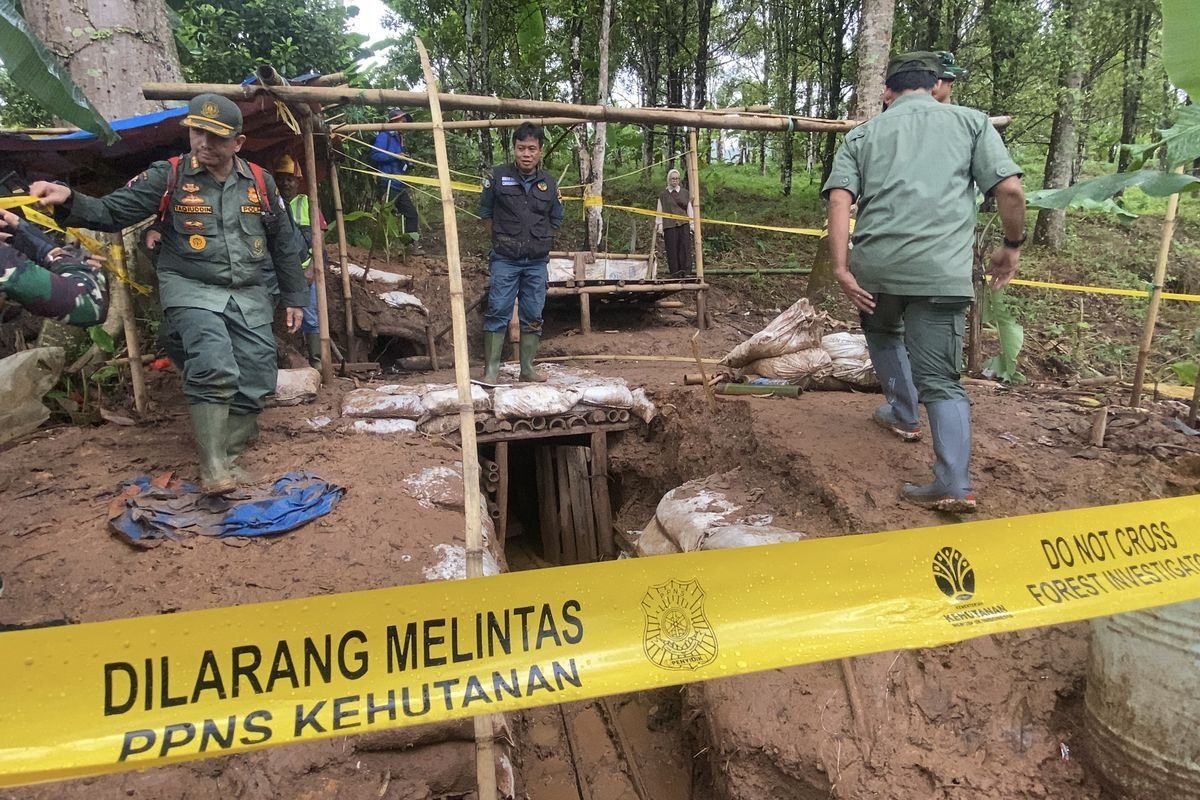
Indonesia's energy ministry has moved to prosecute 24 foreign nationals implicated in an extensive illegal gold mining enterprise discovered in the Gunung Botak district of Maluku province, marking another significant enforcement action against foreign-run mining operations within the Southeast Asian nation's borders. The charges represent a notable escalation in authorities' response to what appears to have been a sophisticated, well-organised mining infrastructure that operated with locally-connected business backing.
According to energy ministry official Jeffri Huwae, the foreign suspects are accused of establishing and maintaining critical infrastructure that enabled the unlicensed mining operation to function. This allegedly included constructing access roads, building processing and refining facilities, and deploying equipment across the Gunung Botak mining zone. The scale and nature of these activities suggest operations requiring significant capital investment and coordination—hallmarks of international criminal mining enterprises that exploit Indonesia's vast mineral resources while circumventing regulatory frameworks.
The charges carry substantial legal consequences for those convicted, with Indonesian law prescribing maximum prison sentences of five years for violations related to illegal mining operations. This sentencing threshold reflects Indonesian authorities' determination to deter foreign participation in unlicensed extractive activities, though enforcement remains inconsistent across the sprawling archipelago. The severity of potential penalties may influence plea negotiations and cooperation arrangements that defendants might pursue through Indonesia's legal system.
Measuring the precise scope of illicit extraction remains challenging, as the ministry has withheld critical operational details. The nationalities of the accused individuals remain officially unconfirmed, though state news agency Antara reported last month that the detained group comprised 24 Chinese nationals working under the sponsorship of local company PT Harmoni Alam Manise. This arrangement—foreign workers operating through an Indonesian corporate entity—represents a common organisational structure that allows international mining operations to maintain apparent local legitimacy while foreign capital and technical expertise drive actual production.
A critical enforcement gap underscores the ongoing challenge confronting Indonesian regulators: only half the accused suspects remain in custody within Indonesian jurisdiction. The ministry confirmed that 12 foreign nationals have been detained, whereas the other 12 remain at large and have departed Indonesian territory. This split suggests the operation may have been discovered during an active extraction phase, with senior operators potentially fleeing before authorities could secure comprehensive arrests. The location and current whereabouts of the fugitive suspects remain undisclosed, complicating any potential extradition efforts.
Beyond the 24 foreign defendants, Indonesian authorities have also identified two local nationals as criminal suspects in connection with the same operation. Their involvement likely pertains to facilitation, logistical support, or legal cover—essential services that foreign mining enterprises require to navigate Indonesia's complex permitting landscape and avoid detection. The identification of domestic accomplices suggests the operation possessed influential local connections, raising questions about regulatory oversight and possible institutional corruption that enabled years of unsanctioned activity.
This prosecution reflects a broader pattern of transnational illegal mining affecting Indonesia's eastern regions. In Papua, the nation's easternmost territory, police arrested four Chinese nationals in the Senggi district during the previous year in connection with separate unauthorised mining activities. These repeated incidents involving foreign nationals point to international criminal networks viewing Indonesia's archipelago as a particularly accessible jurisdiction for resource extraction despite formal prohibition. The technical capacity, financial resources, and organisational structure these operations demonstrate suggest sophisticated operations rather than opportunistic prospecting.
Maluku's position as a mineral-rich zone with significant gold deposits makes it inherently attractive to illicit mining enterprises. The region's geographical characteristics—dense vegetation, limited infrastructure, and relative isolation from central oversight mechanisms—create practical advantages for clandestine operations. Additionally, the economic vulnerabilities of local communities in remote mining districts can facilitate local recruitment and reduce the likelihood of community reporting to authorities.
For Malaysia and other Southeast Asian nations, Indonesia's enforcement efforts carry important implications. Transnational illegal mining networks often operate across multiple jurisdictions, sometimes relocating operations when pressure intensifies in one country. Malaysian authorities monitoring cross-border criminal activities, particularly in maritime zones, must remain alert to the possibility that foreign mining enterprises disrupted in Indonesia might seek alternative operating bases. Enhanced regional intelligence-sharing arrangements and bilateral cooperation frameworks could improve detection and prosecution of these mobile criminal enterprises.
Indonesia's ability to prosecute these cases effectively depends on several factors beyond securing initial arrests. Gathering evidence of gold production volumes, tracing financial flows to international recipients, and identifying command-and-control structures all require sophisticated investigative work. The ministry's decision to withhold information about gold quantities suggests either ongoing investigations or incomplete evidence gathering—a common challenge when authorities move to public prosecution before achieving comprehensive understanding of operational scope.
The prosecution also signals Indonesia's commitment to enforcing its mining regulations and protecting national natural resources from unauthorised extraction by foreign operators. Yet the persistence of such large-scale illegal operations, sometimes running for extended periods before detection, indicates that regulatory frameworks and enforcement capacity remain inadequate relative to the scale of illicit activity. Strengthening monitoring mechanisms, increasing penalties, and improving intelligence-gathering capability could yield more effective deterrence.
Moving forward, observers will watch whether Indonesian courts achieve convictions in this case and what sentences result, information that could influence international criminal mining networks' risk calculations regarding Indonesia operations. The fate of the 12 fugitive suspects—whether they are eventually apprehended, whether their home governments cooperate with Indonesian extradition requests, or whether they simply disappear into international criminal enterprises—will likely determine whether this prosecution generates meaningful deterrent effect beyond symbolic enforcement action.

