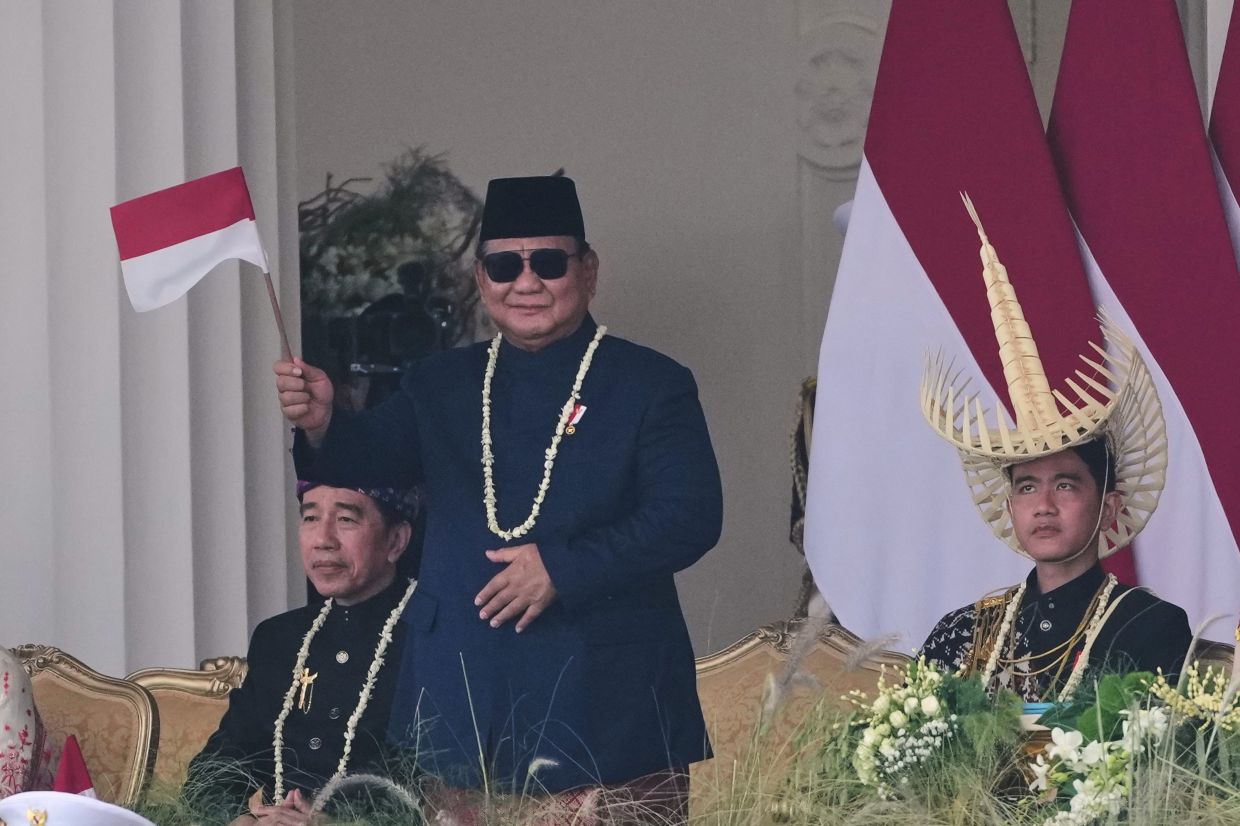
President Prabowo Subianto led Indonesia's 81st Independence Day commemoration in Jakarta on Monday, August 17, as the nation reflected on its historical significance amid an ongoing humanitarian crisis unfolding simultaneously on the distant island of Flores. The ceremony proceeded with deliberate solemnity, as government leaders balanced the nation's patriotic observances with urgent disaster response efforts being mounted across East Nusa Tenggara province.
Atired in formal traditional dress—a navy beskap paired with a black peci and adorned with a jasmine garland—Prabowo presided over the flag-hoisting ceremony at Merdeka Palace in Central Jakarta, fulfilling his ceremonial role as the day's principal dignitary. The carefully choreographed proceedings commenced with artistic performances and a processional parade that transported replicas of Indonesia's iconic red-and-white flag alongside the original Proclamation of Independence document from the towering National Monument to the presidential palace. The procession moved under escort from 114 cavalry troops and 45 military police officers on motorcycles, representing the security apparatus of the state.
The symbolic centrepiece of any Independence Day in Indonesia is invariably the hoisting of the national flag and the moment of collective remembrance that follows. This year proved no exception, as Prabowo called for silence to honour the nation's founders and heroes, before directing attendees to extend their prayers toward fellow Indonesians confronting immediate physical and emotional hardship from natural disaster. The juxtaposition of these two moments—one rooted in historical memory, the other addressing present suffering—underscored the complexity of governing a sprawling archipelago vulnerable to geological upheaval.
The earthquake that struck Flores in the early hours of Saturday morning delivered devastating force across the island, measuring 7.7 on the Richter scale and generating approximately 1,000 aftershocks of variable strength over subsequent days. Official figures reported by the National Disaster Mitigation Agency recorded 53 confirmed deaths, with more than 130 individuals sustaining injuries, many involving fractures requiring medical intervention. The tremors dislodged countless residential structures and public buildings, forcing some 5,400 residents to evacuate their homes and seek temporary shelter.
The disaster's reach extended beyond the immediate seismic event. On the very morning of the Independence Day ceremony in Jakarta, another significant earthquake measuring 5.8 magnitude struck offshore north of Flores, occurring at a depth of 10 kilometres roughly 39 kilometres from the island's coast. The Meteorology, Climatology and Geophysics Agency noted this secondary quake's characteristics, contributing to the overall pattern of seismic instability that has kept residents anxious and emergency response teams mobilised.
The political response from Jakarta reflected an administration attempting to manage competing demands on its attention and resources. State Secretary Prasetyo Hadi revealed that several senior cabinet ministers had either skipped or departed from the Independence Day ceremony to personally oversee relief coordination in the affected region. The Human Development Minister Pratikno, Home Minister Tito Karnavian, Public Works Minister Dody Hanggodo, and Deputy Health Minister Benjamin Paulus Octavianus all left the capital to assess conditions firsthand and supervise the implementation of disaster response protocols.
This administrative choice carried symbolic weight beyond mere operational necessity. By visibly redirecting governmental capacity toward the earthquake zone, the Prabowo administration signalled to affected populations that their welfare remained a priority despite the nation's broader commemorative obligations. Prasetyo articulated this balance explicitly, stating that while Indonesians celebrate Independence Day, the government remains obligated to ensure that disaster victims receive adequate care and support.
Regarding the possibility of a presidential visit to Flores to inspect conditions and demonstrate solidarity with affected communities—a common practice following major disasters—Prasetyo remained noncommittal. He indicated that the administration would assess the evolving situation before determining whether Prabowo should travel to the disaster zone personally. The cautious approach suggested either logistical considerations regarding ongoing aftershock risks or a calculation that ministerial presence on the ground might suffice for the immediate phase of response.
The timing of this seismic crisis carried particular poignancy for Indonesia's broader geopolitical context. Flores and East Nusa Tenggara occupy strategic positions in the eastern reaches of the Indonesian archipelago, a region where territorial sovereignty and national integration remain perpetual concerns. The earthquake and its aftermath demonstrated the extent to which natural disasters can overwhelm local and provincial capacity, necessitating rapid centralised mobilisation of resources from Jakarta.
For regional observers, Indonesia's handling of this dual challenge—maintaining national ceremonial traditions while managing acute humanitarian needs—illustrated the complexities facing any large developing nation. The earthquake's occurrence during Independence Day celebrations created a narrative that captured both Indonesia's historical resilience and its contemporary vulnerabilities. The initial death toll and housing damage placed this event among Indonesia's more consequential seismic events in recent years, comparable to other major earthquakes that have tested the archipelago's disaster preparedness systems.
The disaster unfolded against a backdrop of broader Indonesian vulnerabilities. As an equatorial archipelago straddling multiple tectonic plates, Indonesia faces endemic earthquake risk that requires sustained investment in early warning systems, building codes, and emergency response infrastructure. The scale of this week's disaster underscored the ongoing gap between current preparedness capacity and the magnitude of potential geological threats.
Moving forward, the Prabowo administration faces the dual challenge of conducting comprehensive disaster relief while maintaining governance continuity and addressing other pressing national issues. The distribution of ministerial attention between Jakarta's ceremonial requirements and East Nusa Tenggara's emergency needs will likely shape public perception of the administration's priorities during its early months in office.

