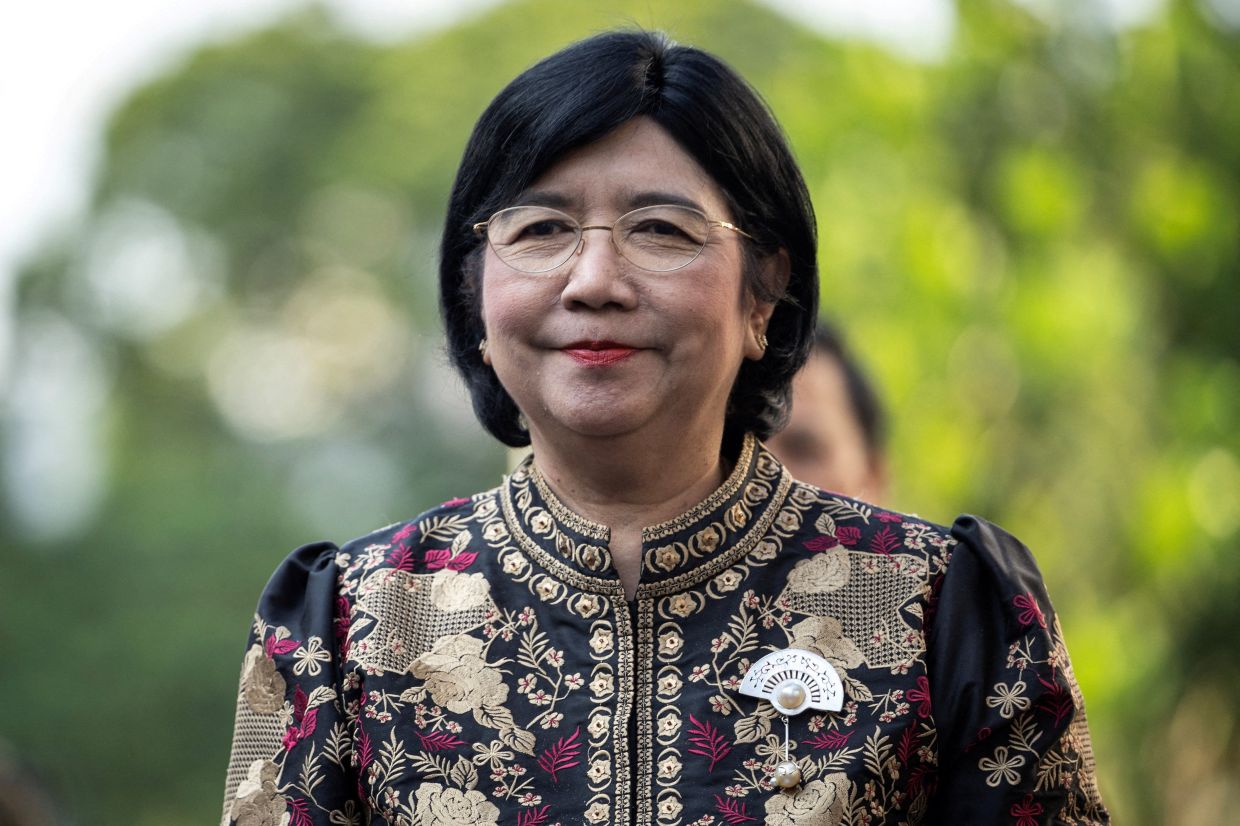
Indonesia's President Prabowo Subianto has chosen Destry Damayanti as his sole nominee for the position of central bank governor, according to an announcement made through the presidential office on Monday. The move comes as the institutional leadership at Bank Indonesia undergoes significant transition following the unexpected departure of Perry Warjiyo, who cited personal reasons for his exit from the helm late last month. Damayanti, who has been serving as the institution's second-ranking officer and has taken on interim responsibilities since Warjiyo's exit, brings extensive experience from her tenure as senior deputy governor beginning in 2019.
Financial markets have been watching the succession process with considerable intensity, reflecting deeper concerns about the trajectory of Indonesia's macroeconomic management. The rupiah responded positively to word of Damayanti's nomination, climbing to its strongest position against the US dollar since mid-June, a signal that market participants view the appointment as a stabilizing choice. This currency movement underscores the interconnection between perceptions of central bank leadership and investor confidence in Indonesia's ability to manage its economic challenges.
Warjiyo's abrupt departure opened a period of uncertainty that weighed on investor sentiment towards Indonesia, a member of the Group of Twenty economies. The timing of his resignation coincided with broader anxieties about the country's fiscal trajectory, with observers questioning the sustainability of government spending plans. Beyond fiscal matters, doubts have accumulated regarding the independence of monetary policy institutions, the governance standards applied to equity market operations, and regional geopolitical risks stemming from Middle Eastern tensions. These factors combined to create a challenging environment for attracting foreign investment.
The nomination process now enters its formal phase, with the nation's parliament holding the formal authority to confirm or reject the presidential choice. Parliament, which is dominated by Prabowo's expansive coalition arrangement, has been granted thirty days to reach a decision on Damayanti's candidacy. Historical precedent suggests routine approval is likely, as the legislative body has not rebuffed a sitting president's gubernatorial nominee since 2008, a sixteen-year track record that indicates strong executive deference on central bank appointments.
Damayanti's elevation to the governor position carries implications for how Bank Indonesia will navigate competing pressures in the coming period. The institution faces mounting expectations to support the administration's ambitious growth agenda, which targets an acceleration of economic expansion to 8 percent annually from the current pace of approximately 5 percent. Achieving such acceleration while maintaining price stability and managing currency pressures represents a complex balancing act that will define her tenure.
Under Warjiyo's leadership, the central bank deployed multiple instruments to defend the rupiah and attract foreign capital inflows. The institution increased its benchmark interest rate by a full percentage point over the course of this year, a significant tightening of monetary conditions. Additionally, Bank Indonesia introduced incentive programmes to encourage hedging of rupiah exposure, while simultaneously issuing high-yielding short-term securities designed to appeal to foreign investors seeking attractive returns. These measures reflected the institution's determination to stabilize the currency despite underlying economic pressures.
The question of central bank autonomy will likely feature prominently in assessments of Damayanti's governorship. Prabowo's administration has signaled its desire for monetary policy to contribute more directly to growth objectives, potentially placing her in situations requiring careful judgment about institutional boundaries. She will need to maintain credibility with international financial markets, which value predictability and independence in central banking, while remaining responsive to government policy objectives. This delicate positioning mirrors challenges faced by central banks throughout Southeast Asia as they navigate between supporting national development agendas and preserving the institutional integrity that attracts global capital.
The broader context shaping Bank Indonesia's agenda extends beyond domestic considerations. Regional economic integration, currency competition from other developing markets, and the structural shifts in global trade patterns all create external pressures on Indonesian monetary management. Damayanti's experience in the institution's senior ranks suggests familiarity with these complexities, though her actual policy direction will only become clear once she assumes formal office following parliamentary approval.
Investors will scrutinize Damayanti's early statements and actions for signals about her stance on key questions, particularly the appropriate pace and scope of interest rate adjustments going forward, the strategies for maintaining currency stability, and her approach to managing relationships with the executive branch. The rupiah's immediate positive reaction suggests market optimism, yet sustained confidence will depend on demonstrated commitment to sound monetary principles and clear communication about policy frameworks. Her appointment represents both continuity—given her established position within the institution—and potential for policy evolution under new leadership.

