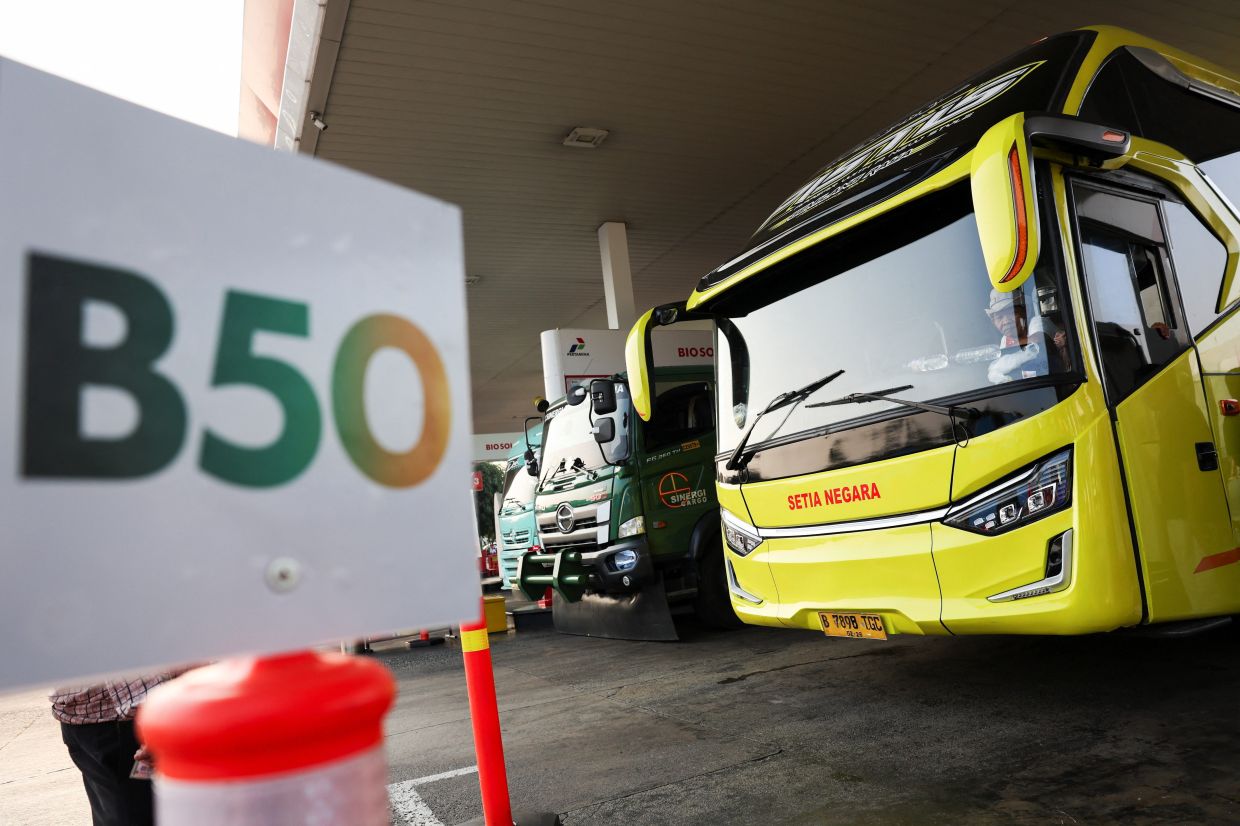
Indonesia, the world's dominant palm oil producer, has formally activated an ambitious biodiesel blending programme that will substantially increase consumption of its signature commodity while cutting reliance on imported diesel. Energy Minister Bahlil Lahadalia announced the B50 mandate during a ceremony in Karawang, West Java, attended by President Prabowo Subianto, revealing that the initiative will drive crude palm oil use upward to between 16.3 million and 17 million metric tons annually, compared with the current 15.2 million tons.
The shift from the existing B40 scheme—which mandates 40% palm oil-based biodiesel blending—represents a significant intensification of Indonesia's strategy to leverage its agricultural dominance for economic and energy security gains. The government projects substantial fiscal benefits, estimating that the B50 transition will trim this year's import expenditure by 170 trillion rupiah, equivalent to approximately $9.41 billion. Such savings underscore the financial calculation underlying the policy, though comparative projections suggest somewhat lower gains of 133 trillion rupiah anticipated for 2025, indicating that benefits may moderate as the programme matures.
President Prabowo framed the biodiesel expansion within a broader climate narrative, contending that Indonesia is spearheading global decarbonisation efforts. His positioning carries particular weight given his administration's early prioritisation of energy self-sufficiency. Notably, Prabowo disclosed that he had initially championed an even more aggressive B100 mandate—requiring pure biodiesel—but accepted ministerial advice that a 50% blend would suffice to eliminate diesel imports entirely. This compromise reveals internal policy tensions between climate ambitions and practical economic constraints, with the president signalling continued appetite for further escalation toward a 60% blend in future iterations.
The administrative architecture supporting B50 remains incomplete, creating near-term uncertainty for participating businesses. The energy ministry has not yet distributed expanded production quotas necessary for the new mandate, despite the formal programme launch. Current allocations under B40 stood at 15.64 million kilolitres this year, representing a 4.68% increase over 2024's consumption of 14.94 million kilolitres. Under B50, demand for fatty acid methyl ester (FAME), the key component in biodiesel production, will climb to between 16.7 million and 18 million kilolitres, necessitating a substantial upward adjustment in government-assigned production permits.
For Malaysian stakeholders, the Indonesian initiative carries important implications. As a major regional competitor in palm oil markets, Malaysia faces the prospect of intensified price pressure if Indonesian domestic consumption rises while global export supplies tighten. The B50 programme effectively reserves a growing portion of Indonesian production for domestic fuel blending, reducing volumes available for international sale. This dynamic could modestly support global palm oil prices and potentially create opportunities for Malaysian producers to capture displaced demand, though the magnitude depends on whether Indonesian expansion constrains overall production growth or merely reallocates existing output.
The transition timeline requires operational coordination across Indonesia's refining and distribution infrastructure. Businesses have been granted until the end of September to exhaust remaining B40 stocks, providing a six-month window for supply chain adjustment. However, the absence of finalised quota allocations creates practical difficulties for refineries and biodiesel producers attempting to plan procurement and production schedules. Industry participants have signalled their readiness to proceed but remain dependent on government clarification regarding allocation mechanics and timelines.
The B50 programme positions itself among the world's most ambitious mandatory biodiesel blending mandates by volume, reflecting Indonesia's determination to weaponise its resource endowments for strategic advantage. Few countries mandate blending ratios exceeding 50%, making Indonesia's approach exceptional in scope and ambition. The policy intersects multiple strategic objectives: reducing foreign exchange outlays through import substitution, supporting domestic palm oil farmers and processors, and advancing stated climate commitments by promoting renewable energy adoption.
Yet the environmental calculus underlying B50 remains contested within international sustainability circles. While biodiesel produces lower greenhouse gas emissions than conventional diesel in combustion, palm oil cultivation has been repeatedly linked to deforestation, peatland degradation, and biodiversity loss across Southeast Asia. Expanding palm oil demand through government mandate, even for fuel purposes, may inadvertently incentivise agricultural expansion into environmentally sensitive areas. Indonesia's enforcement of its own forest protection regulations will substantially determine whether B50 delivers genuine climate benefits or merely displaces environmental costs.
The government's stated intention to pursue a 60% blend indicates that B50 functions as an intermediate step rather than a final destination in policy trajectory. This escalatory stance suggests confidence in Indonesia's capacity to expand production while absorbing higher domestic demand. Whether such expansion can occur within existing agricultural footprints or requires additional land conversion remains a critical sustainability question that Malaysian observers and regional environmental advocates monitor closely.
Looking forward, the success of B50 hinges on resolving current administrative gaps and ensuring transparent quota distribution to participating companies. The energy ministry's research agenda regarding a potential 60% blend signals continued policy evolution, though officials have not specified timelines or technical prerequisites for such transition. For regional energy markets, Indonesia's biodiesel expansion represents a significant structural shift in palm oil allocation patterns, with ripple effects extending to commodity prices, production investment decisions, and the competitive positioning of alternative fuel sources across Southeast Asia.

