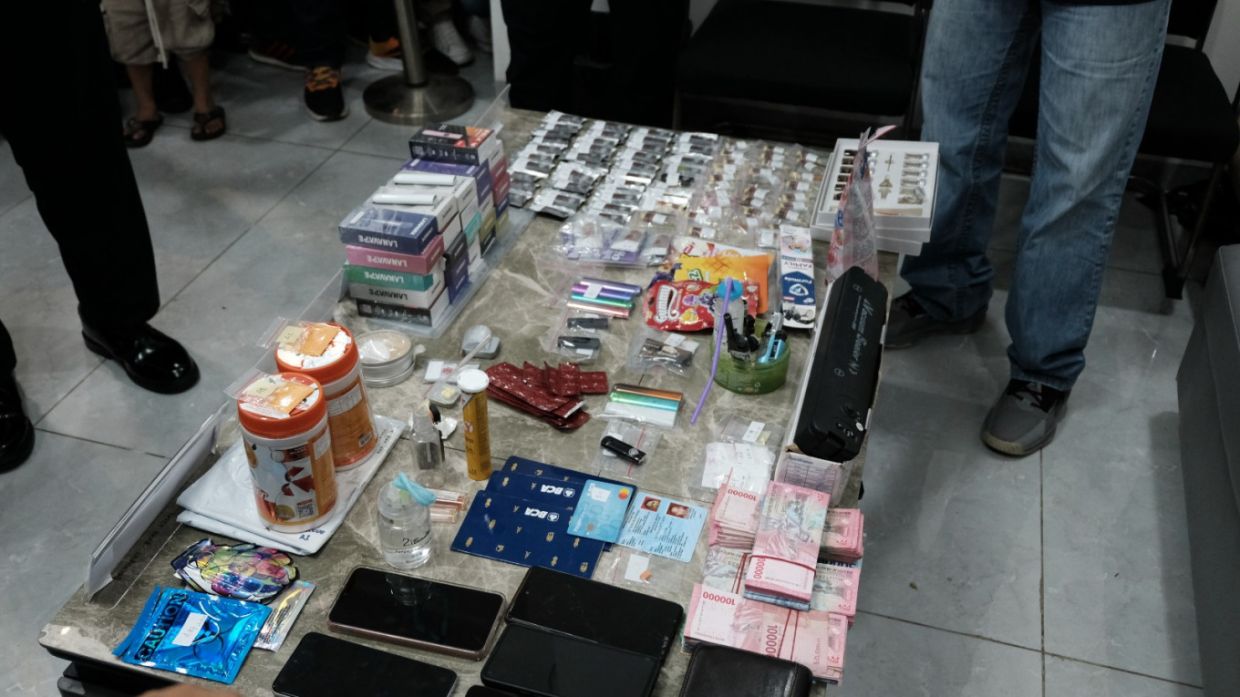
Indonesian authorities have successfully dismantled a sophisticated cross-border drug syndicate with alleged Malaysian leadership, resulting in the arrest of six Indonesian nationals across multiple raids in Batam. The National Narcotics Agency (BNN) and Customs and Excise Directorate General jointly conducted the operation, announcing their findings at a press conference held at one of the crime scenes—a shophouse in Batu Ampar's Sakura Garden district. The investigation represents a significant enforcement victory for Indonesian agencies combating the organised narcotics trade that continues to plague the strategically important Riau Islands region, situated directly across from Malaysian waters.
The syndicate's operations revealed a carefully orchestrated smuggling network that exploited multiple entry points into Indonesian territory. According to BNN deputy for enforcement Insp. Gen. Aswin Sipayung, the organisation exhibited hallmarks of professional criminal enterprise, encompassing drug procurement and transportation through informal maritime routes, systematic repackaging operations, and strategic distribution channels across the island region. This multi-layered approach allowed the network to disguise its activities and maintain operational continuity across several months before law enforcement intervention.
The investigation's genesis traced back to a routine customs inspection at Soekarno-Hatta International Airport, where vigilant officers discovered a package originating from Malaysia and mislabelled as Orange Fiber Xtra food supplement. Subsequent laboratory analysis conducted by the Customs and Excise Laboratory in Jakarta revealed the package contained MDMA, ketamine, and additional controlled substances. This discovery, seemingly routine in scope, triggered a comprehensive joint investigation that would ultimately unravel the entire supply network.
The enforcement action commenced when officers apprehended BAP, who was attempting to collect the suspicious package in Batam on Wednesday. His subsequent interrogation provided investigators with critical intelligence, enabling rapid identification and detention of three additional suspects at a Baloi hotel: ED, identified as the person who ordered the shipment, along with NC and TFS. Within hours, officers expanded operations to raid an apartment associated with TFS in Teluk Tering and a boarding house in Sakura Garden occupied by AJ and DA. The rapid succession of arrests prevented any opportunity for the network to relocate materials or destroy evidence.
The material contraband seized during raids demonstrated the scale of the operation's activities. Officers confiscated over 1,076 grams of MDMA, 50 grams of methamphetamine (sabu), 25.6 grams of ketamine powder, 86 Happy Five tablets, 10 ecstasy pills, and 170 vape cartridges containing etomidate—a pharmaceutical anaesthetic increasingly diverted for recreational use. Additionally, investigators recovered 12 vials of pure etomidate weighing 226 grams collectively, 88 vape devices, nine bongs, three plastic sealing devices, and six digital scales used for drug preparation. Law enforcement also secured four vehicles, including a Toyota Alphard van and multiple motorcycles, suspected of facilitating distribution activities.
The syndicate employed deceptive concealment techniques designed to evade detection at border checkpoints and during inter-agency inspections. Operatives systematically packaged narcotics and etomidate cartridges inside dried food containers and food supplement sachets, then carefully resealed packaging using specialised equipment to restore a legitimate commercial appearance. This modus operandi exploited the volume of food imports crossing Malaysian-Indonesian borders daily and the challenges customs agencies face in inspecting all packages thoroughly. The methodology also reflected awareness of enforcement priorities and inspection protocols.
A parallel interdiction further illustrated the network's scope. Customs officers stationed at Batam Centre International Ferry Terminal intercepted PS, a Malaysian national arriving from Stulang Laut International Ferry Terminal in Johor Bahru, who was transporting 48 etomidate-filled vape cartridges. This separate seizure, occurring simultaneously with the shophouse raids, suggests either the network maintained multiple supply channels or other independent smuggling operations were attempting to exploit the same cross-border route. Investigators continue examining potential connections between these incidents and a recently raided drug production facility in Batam.
The two primary targets remain at large. Malaysians identified as SL and WKC, designated as the syndicate's principal suppliers, have been placed on the wanted list by Indonesian authorities. Their continued freedom presents operational challenges, as they allegedly orchestrated procurement of bulk narcotics and arranged logistics for shipment across the Strait of Malacca. The apparent ease with which these individuals continued operations across maritime borders highlights persistent vulnerabilities in cross-border law enforcement coordination, despite Indonesia's sophisticated maritime surveillance infrastructure.
The identified suspects face severe Indonesian penalties under Law No. 35/2009 on Narcotics. Charges under Article 114(2) in conjunction with Article 132(1) and/or Article 112(2) carry sentences ranging from five years' imprisonment to capital punishment, alongside fines reaching Rp10 billion (approximately USD 599,000). Such penalties reflect Indonesian law's particularly stringent approach to narcotics trafficking, especially cases involving sophisticated organised crime structures or large-scale operations affecting multiple jurisdictions.
Batam Customs and Excise Office head Agung Widodo emphasised the public health dimension of the enforcement action, estimating that the seized drugs could have affected approximately 6,770 individuals while imposing potential rehabilitation costs of Rp10.8 billion on Indonesia's healthcare system. This calculus underscores why Southeast Asian governments increasingly prioritise narcotics interdiction—beyond law enforcement considerations, drug trafficking creates substantial public health and economic burdens that drain government resources and destabilise communities.
The operation illuminates broader patterns in Malaysia-Indonesia narcotics dynamics. The Riau Islands' proximity to Malaysian ports, combined with Batam's status as a free trade zone with relatively permeable borders, creates persistent opportunities for smuggling operations. The involvement of Malaysian nationals as alleged suppliers reflects Malaysia's unfortunate position within regional drug trafficking networks—simultaneously a source and transit territory for synthetic drugs destined for Indonesian and other Southeast Asian markets. Enhanced border cooperation between Malaysian and Indonesian authorities remains essential for disrupting these networks.
Indonesia's successful dismantling of this particular syndicate demonstrates capacity for effective enforcement when agencies coordinate and when intelligence-led operations replace reactive responses. The investigation's progression from airport discovery to comprehensive network elimination within days exemplifies how modern customs protocols and forensic laboratory capabilities enable authorities to identify high-value targets. However, the continued freedom of Malaysian nationals SL and WKC suggests that international cooperation mechanisms require strengthening to prevent wanted persons from exploiting cross-border mobility.
The case underscores the evolving sophistication of narcotics syndicates operating throughout Southeast Asia. Modern criminal organisations increasingly employ pharmaceutical products like etomidate and employ seemingly legitimate commercial channels for transportation. These adaptations challenge law enforcement agencies accustomed to traditional contraband profiles. For Malaysia, the revelation of nationals' alleged involvement in organised drug trafficking to Indonesia carries diplomatic and domestic policy implications, potentially influencing bilateral discussions regarding border security and mutual legal assistance frameworks that remain foundational to regional drug control efforts.

