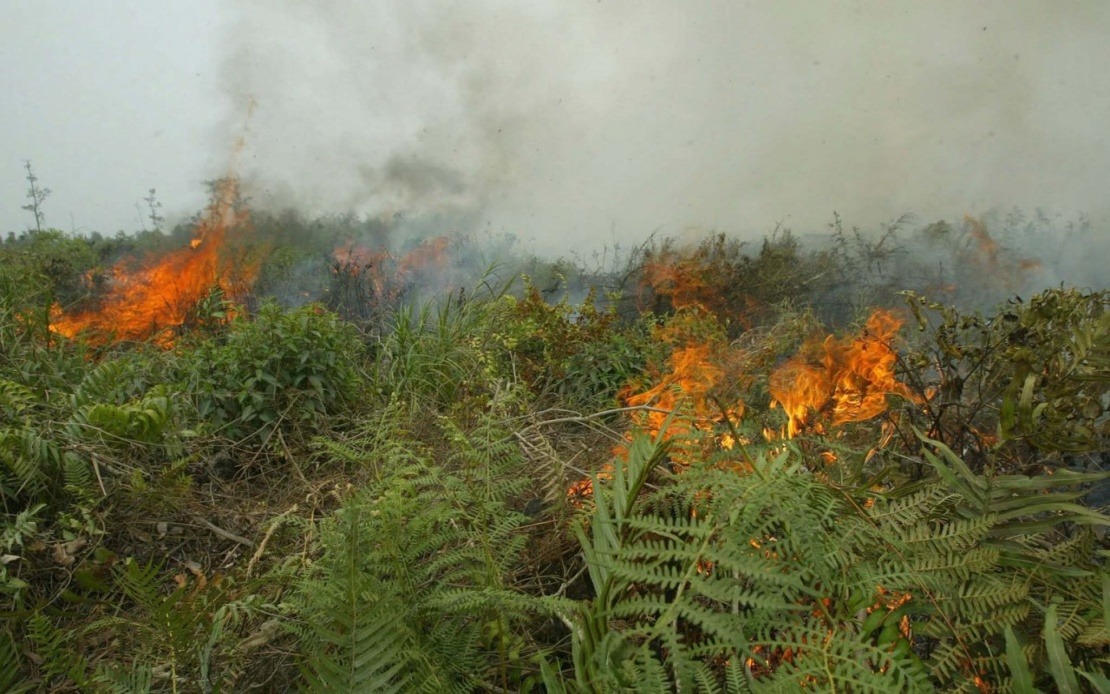
Indonesia is confronting an intensifying forest and land fire emergency concentrated across Kalimantan and Sumatra, with official data revealing alarming escalation in fire-prone zones during late August. The National Disaster Mitigation Agency reported that West Kalimantan experienced dramatic surge, with thermal hotspots nearly doubling to 7,377 on a single Monday, accompanied by 104 active fire spots and visibility plummeting below one kilometre in affected areas. Speaking through an online briefing, Berton Panjaitan, Acting Head of the Data, Information and Disaster Communication Centre, disclosed that the province saw hotspot increases of 3,553 in just one reporting cycle, underscoring the velocity of fire spread across the region.
The fire situation across the broader Borneo archipelago presents a mixed but predominantly concerning picture. Central Kalimantan registered a marginal improvement with hotspots declining by 147 to reach 5,244, yet paradoxically fire spots themselves climbed by 16 to reach 72, suggesting fires were becoming more concentrated and intense despite fewer overall heat signatures. South Kalimantan similarly showed decreased hotspot counts falling by 405 to 504, but experienced rising fire spot activity, jumping by 33 to 55. This counterintuitive pattern indicates that fewer but more active combustion zones may prove more destructive and harder to manage than dispersed hotspots, complicating firefighting strategies across the region.
Sumatra's northeastern provinces revealed a divergent trend in fire activity. South Sumatra bucked the regional pattern with hotspots increasing by 209 to reach 1,013, marking a significant expansion of fire zones in that province. By contrast, both Riau and Jambi demonstrated meaningful declines in hotspot activity, alongside corresponding decreases in active fire spots across all three provinces. The varied geographic distribution of fires across Indonesia's major forest regions suggests that fire dynamics remain volatile and unpredictable, requiring adaptive response strategies rather than uniform approaches.
The humanitarian dimension of these fires has escalated into a public health emergency affecting millions across both archipelagos. Deputy Health Minister Prof Dante Saksono Harbuwono identified approximately 5.5 million people residing in fire-affected zones across Sumatra and Kalimantan, placing a substantial portion of Indonesia's population at direct risk from smoke inhalation and air quality degradation. Cumulative data from July and August documented nearly 13,500 cases of acute respiratory infection (ISPA), with 4,082 individuals still suffering active respiratory symptoms as of late August.
The respiratory health crisis has intensified compared to the previous year, indicating that fire seasons are becoming progressively more severe and damaging to public health outcomes. Government health authorities have escalated monitoring protocols and established coordination mechanisms with local health offices across affected provinces, attempting to manage the surge in respiratory cases through targeted response and resource allocation. This year-on-year worsening suggests that without fundamental changes to fire prevention and land management practices, health systems will face mounting pressure during future fire seasons.
Accountability mechanisms have become central to Indonesia's firefighting strategy, with the Environment Ministry identifying 42 companies potentially responsible for fires detected within their licensed concession areas. Environmental Law Enforcement Deputy Rizal Irawan explained that companies were flagged through sophisticated satellite analysis overlaid with official concession mapping, creating a definitive database linking corporate operations to thermal anomalies. Of these identified entities, 19 are undergoing intensive field verification to establish culpability, while remaining companies face scheduled inspections during a second enforcement phase.
Indonesian environmental law imposes strict liability frameworks on concession holders regardless of fire causation. Under these provisions, companies bear legal responsibility for fires occurring within their operational zones, whether deliberately ignited or accidentally initiated, with potential administrative penalties or civil sanctions serving as enforcement mechanisms. This approach theoretically incentivizes corporate investment in fire prevention infrastructure and personnel training, though implementation effectiveness depends on consistent enforcement and adequate corporate compliance. The legal framework represents an attempt to shift responsibility from government agencies toward the private sector entities profiting from land use.
Regional cooperation represents another dimension of Indonesia's fire management response, particularly addressing the transboundary haze affecting neighbouring Malaysia and Singapore. Recent diplomatic engagement through ASEAN mechanisms, including a ministerial-level meeting held in Bali involving Indonesia, Malaysia and Singapore environment officials, aimed to coordinate cross-border responses to smoke impacts. The framework acknowledges that Indonesian forest fires do not respect national boundaries and that regional air quality degradation requires coordinated diplomatic and technical responses transcending individual national governance structures.
Community-based fire prevention programmes constitute a grassroots component of Indonesia's fire management strategy. The Environment Ministry has established 95 Fire Care Community (MPA) groups across six high-risk provinces in Sumatra and Kalimantan, comprising 1,425 trained personnel mobilized for prevention and rapid response activities. An additional 35 community groups are planned for establishment during the current year, expanding localized fire management capacity beyond government resources. These community organizations function as early warning networks and immediate response units, potentially reducing fire spread during critical early-stage combustion.
Corporate preparedness requirements represent a preventive regulatory approach targeting companies operating in fire-prone concessions. The Environment Ministry issued compliance notices to 2,226 companies during the previous year, mandating preparation of personnel and facilities specifically designed for fire prevention and suppression activities. Approximately 80 percent of targeted companies subsequently reported readiness compliance, though roughly 20 percent remained unresponsive to government requirements. The remaining non-compliant companies represent ongoing regulatory challenges and potential liabilities should fires occur within their operational territories.
These coordinated but incomplete fire management efforts reflect the complexity of Indonesia's fire crisis, which encompasses natural climatic factors, corporate land-use practices, community vulnerability, and transnational environmental impacts. While prevention programmes and accountability mechanisms have expanded, the escalating hotspot counts and health impacts suggest current approaches remain insufficient to match the scale and intensity of fire emergence during peak seasons. The year-on-year deterioration in fire conditions points toward structural challenges requiring long-term landscape management reforms beyond immediate suppression activities.

