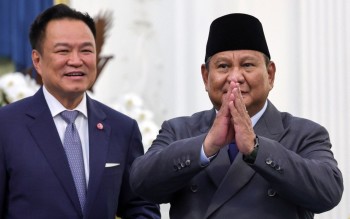
Indonesia and Thailand are setting their sights on a substantially expanded trade relationship, with both nations committing to reach US$20 billion in bilateral commerce by 2030 following the formal adoption of a comprehensive strategic roadmap. The Indonesia-Thailand Strategic Partnership Roadmap 2026-2030 was endorsed during the second Leaders' Consultation between President Prabowo Subianto and Thai Prime Minister Anutin Charnvirakul at Jakarta's Merdeka Palace on Monday, marking a significant milestone in the two nations' deepening economic integration and establishing a clear framework for enhanced bilateral cooperation across multiple sectors.
The roadmap represents far more than symbolic gestures; it embodies a concrete commitment to remove structural barriers hindering trade flows between Southeast Asia's two largest economies by population. President Prabowo characterised the partnership as a shared mechanism to systematise and accelerate cooperation that has historically remained fragmented across different government agencies and industries. The ambitious trade target reflects both nations' recognition that their current commercial relationship substantially underperforms relative to their combined economic weight and geographic proximity, suggesting significant untapped potential that can be unlocked through coordinated policy reform and business-to-business engagement.
A centrepiece of the new framework is the establishment of the Joint Trade Commission, which both leaders agreed will operate at the commerce minister level. This inaugural body, marking the first such formal mechanism in bilateral history, will function as a dedicated platform for identifying trade opportunities and systematically addressing the tariff and non-tariff barriers that have historically constrained commerce. The JTC's creation signals recognition that ad-hoc diplomatic engagement has proven insufficient to tackle the complex regulatory and logistical challenges that impede significant trade growth, suggesting both governments are willing to institutionalise their commitment to trade expansion.
Thai Prime Minister Anutin's visit represented his first official journey to Indonesia since assuming office as Thailand's 32nd prime minister in September 2025, and notably constituted the first visit by a Thai premier to Jakarta in fifteen years—a gap underscoring how regional diplomatic attention has become dispersed across multiple competing relationships. Anutin's characterisation of Indonesia as Thailand's fourth-largest trading partner within ASEAN, coupled with his assertion that both nations should accomplish considerably more given their respective economic scale, implicitly critiques the current state of commerce between them. This framing provides political cover for both sides to implement potentially disruptive reforms to protectionist trade policies, by positioning expanded trade as a natural consequence of their countries' size rather than as a favour granted to one party.
Food security emerged as a priority domain for deepened collaboration, reflecting both nations' vulnerabilities and complementary capabilities. Thailand positioned itself as a dependable supplier of premium-quality rice to Indonesia while simultaneously seeking enhanced market access for Thai agricultural goods, meat products, dairy items, and farming machinery. Simultaneously, Anutin announced Thailand's willingness to substantially expand its importation of Indonesian urea fertiliser from the present annual volume of approximately 60,000 tonnes to several hundred thousand tonnes annually. This mutual dependency—with Indonesia requiring rice security and Thailand needing fertiliser supplies—creates powerful incentives for both governments to facilitate agricultural trade, as supply chain disruptions carry political risks for incumbent administrations.
The energy cooperation framework underscores both nations' transition imperatives as they navigate mounting climate pressures and energy security concerns. The two countries committed to establishing the Indonesia-Thailand Energy Forum as a mechanism for strengthening energy security while simultaneously accelerating the transition toward sustainable energy systems through collaborative partnerships between public and private sectors. This dual emphasis—on security alongside sustainability—reflects the reality that neither nation can afford prolonged energy shortages or excessive dependence on volatile global markets, making strategic energy cooperation a non-negotiable element of national development strategy rather than merely an aspirational environmental objective.
Digital economy cooperation represents an emerging frontier for bilateral engagement, with both governments agreeing to expand collaboration in this rapidly transforming sector. Notably, both sides committed to promoting the use of local currencies in bilateral transactions to reduce foreign exchange costs and improve operational efficiency for businesses engaged in cross-border commerce. This technical adjustment carries broader implications: reduced reliance on dollar-denominated transactions strengthens regional financial independence and creates greater resilience against external economic shocks, positioning Indonesia and Thailand as leaders in developing alternative regional payment mechanisms that could eventually extend across broader ASEAN frameworks.
The halal industry emerged as an unexpected but strategically significant area for deepened cooperation, reflecting both nations' substantial Muslim populations and their respective capabilities in producing and certifying halal products. Both leaders recognised the potential to develop integrated regional and global halal value chains that leverage Indonesia and Thailand's complementary strengths. Anutin specifically called for renewal of their mutual recognition agreement on halal certification before its expiration in November, indicating that allowing this accord to lapse would be diplomatically costly and commercially damaging. This issue carries implications beyond commerce; halal certification recognition intersects with religious sensitivities and national identity, making it a barometer for genuine bilateral commitment.
The strategic roadmap spawned immediate practical outcomes, including a memorandum of understanding on education designed to strengthen human capital development in both nations. Additionally, agreements between the Tourism Authority of Thailand and Indonesia's TransNusa secured enhanced tourism cooperation and improved connectivity, while a separate accord between Bio-Axel and Pro Konsilium advanced organic waste processing initiatives. These concrete projects demonstrate that the strategic framework is already translating into tangible business partnerships rather than remaining purely aspirational rhetoric.
For Malaysia and the broader Southeast Asian region, the Indonesia-Thailand partnership roadmap carries significant implications. Should the two nations successfully implement their framework and approach the US$20 billion target, it would establish a powerful model for intra-ASEAN trade expansion that other nations might emulate. Simultaneously, Malaysia faces competitive pressures as Indonesia and Thailand deepen their bilateral relationship; companies operating in both markets may increasingly expect preferential treatment or coordinated policies that could marginalise competitors from other member states. The success of the Joint Trade Commission mechanism will be closely observed by other ASEAN capitals considering similar institutional innovations.
The fifteen-year gap in Thai prime ministerial visits to Indonesia, now dramatically reversed, suggests that both nations recognised they had neglected relationship-building at the highest political levels. The elevation to Strategic Partnership status and adoption of a five-year roadmap with quantified targets reflects a determination to ensure such gaps do not recur. Whether the partnership delivers the ambitious US$20 billion target depends substantially on implementation capacity—whether both governments can actually reduce trade barriers, whether businesses perceive genuine commercial opportunities, and whether external economic conditions remain sufficiently favourable for expanded bilateral commerce. The roadmap provides the framework; execution remains the critical test.

