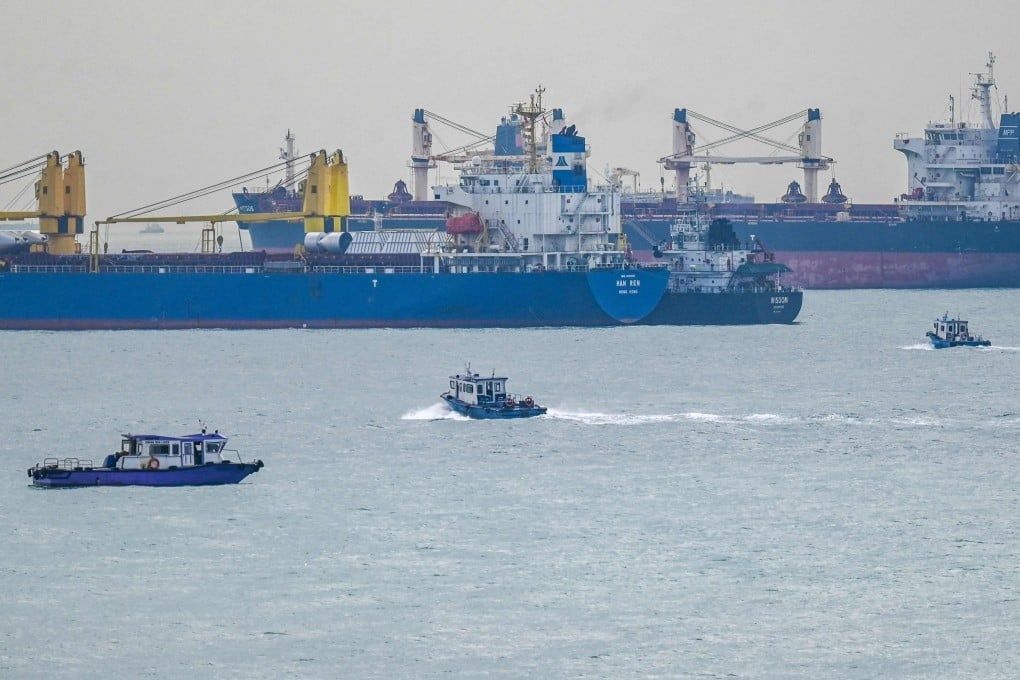
During an annual leadership retreat in Jakarta on Monday, Indonesian President Prabowo Subianto and Singapore Prime Minister Lawrence Wong jointly reaffirmed their nations' commitment to protecting the Strait of Malacca and sustaining freedom of navigation through the globally significant waterway. Speaking at a joint press conference held at Istana Merdeka, the two leaders stressed their intention to work with Malaysia and Thailand to maintain security and safety standards in the passage, underscoring a collective regional responsibility that extends beyond bilateral ties.
Prabowo emphasized that Indonesia and Singapore, as direct neighbours of the Strait of Malacca, share fundamental interests in preserving the channel as an open passage for all international users. He referenced the 1982 United Nations Convention on the Law of the Sea (UNCLOS) as the legal framework guiding their approach to maritime governance. The President's remarks reflected a sophisticated understanding of the strait's dual significance—both as a critical economic corridor and as a geopolitical flashpoint requiring constant diplomatic attention and coordinated security measures.
The strategic importance of the Strait of Malacca cannot be overstated for Malaysian readers and policymakers. As one of the world's busiest shipping lanes, the waterway handles approximately one-third of global maritime trade and serves as a vital economic artery connecting East Asia with the Middle East, Europe and Africa. Any disruption to passage through the strait ripples across international markets, affecting everything from petroleum supplies to consumer goods pricing. Malaysia's own economic interests are intrinsically tied to maintaining stable conditions in these waters, making regional coordination not merely a diplomatic courtesy but an economic necessity.
Beyond the headline commitments to open passage, Prabowo articulated a comprehensive vision of maritime security that encompasses environmental protection, accident prevention and counter-piracy operations. These concerns reflect evolving threats to shipping safety in Southeast Asian waters. Maritime piracy, while diminished from its peak in the early 2010s, remains a persistent concern requiring sustained naval patrols and international cooperation. Pollution incidents from tanker accidents pose environmental hazards that affect coastal communities across the region, while navigational accidents in congested shipping lanes threaten both economic disruption and loss of life.
The leaders' discussion during their retreat extended beyond immediate maritime issues to encompass the broader regional security architecture. Their shared emphasis on ASEAN's commitment to peaceful dispute resolution through dialogue and diplomacy carries particular significance given ongoing territorial tensions in the South China Sea. By articulating a clear preference for negotiation over confrontation, Prabowo and Wong sent a measured signal to all regional actors that the major Southeast Asian powers remain committed to rules-based frameworks and incremental diplomatic progress rather than unilateral action or military escalation.
Wong's visit to Jakarta and the second annual bilateral retreat since Prabowo's presidency demonstrates the institutional depth that Indonesia-Singapore relations have achieved. These structured high-level engagements create continuity in policymaking and build personal relationships between leaders that facilitate more nuanced negotiations during periods of disagreement. The existence of such regular forums also provides both nations with opportunities to address emerging issues before they escalate into diplomatic incidents, a valuable mechanism in a region where misunderstandings can quickly become complicated.
The upcoming 60th anniversary of Indonesia-Singapore diplomatic relations in 2025 provides a symbolic milestone for both countries to consolidate their partnership and demonstrate its enduring relevance. Six decades of formal relations encompasses multiple regional crises, shifts in global power dynamics and technological transformations that have fundamentally altered how nations interact and conduct commerce. That the relationship has not only survived but deepened through these changes suggests solid institutional foundations and shared interests that transcend transient political circumstances.
The inclusion of Malaysia and Thailand in broader coordination efforts reflects a pragmatic recognition that strait security cannot be achieved through bilateral arrangements alone. All four nations bordering or significantly affected by the Strait of Malacca must align their enforcement capabilities, information-sharing protocols and maritime governance standards to create a coherent security environment. This quadrilateral framework, while not formally institutionalized to the degree of some other regional mechanisms, represents an important informal structure for managing shared challenges.
For Malaysia specifically, the reaffirmation of Indonesian and Singaporean commitment to strait security carries implications for bilateral relations and broader regional stability. Malaysian interests in the waterway encompass not only economic concerns but also sovereignty considerations related to maritime boundaries and navigation rights. The emphasis on UNCLOS-based frameworks and peaceful resolution mechanisms provides reassurance that neighbouring powers approach these issues through established legal channels rather than through assertion of contested claims or unilateral actions that might generate friction.
The strategic context surrounding these discussions includes broader geopolitical developments that influence regional maritime security. Rising tensions between major powers, evolving security partnerships in the Indo-Pacific, and changing patterns of naval deployment all affect the Strait of Malacca's security environment. Prabowo and Wong's emphasis on regional dialogue and multilateral frameworks suggests a deliberate effort to insulate Southeast Asian interests from being subsumed within larger power competitions. By reinforcing ASEAN centrality and commitment to peaceful mechanisms, the two leaders positioned their nations as custodians of a regional order that prioritizes stability and mutual prosperity.
The substantive outcomes from these discussions—while emphasizing continuity rather than announcing dramatic new initiatives—reflect the mature nature of Indonesia-Singapore relations. Both nations understand that the most valuable contributions to regional security often come not from grand announcements but from consistent, unglamorous work on enforcement, intelligence sharing and coordination of maritime patrols. The political will to maintain focus on these operational matters, even when international attention shifts elsewhere, constitutes the true measure of commitment to strait security.

