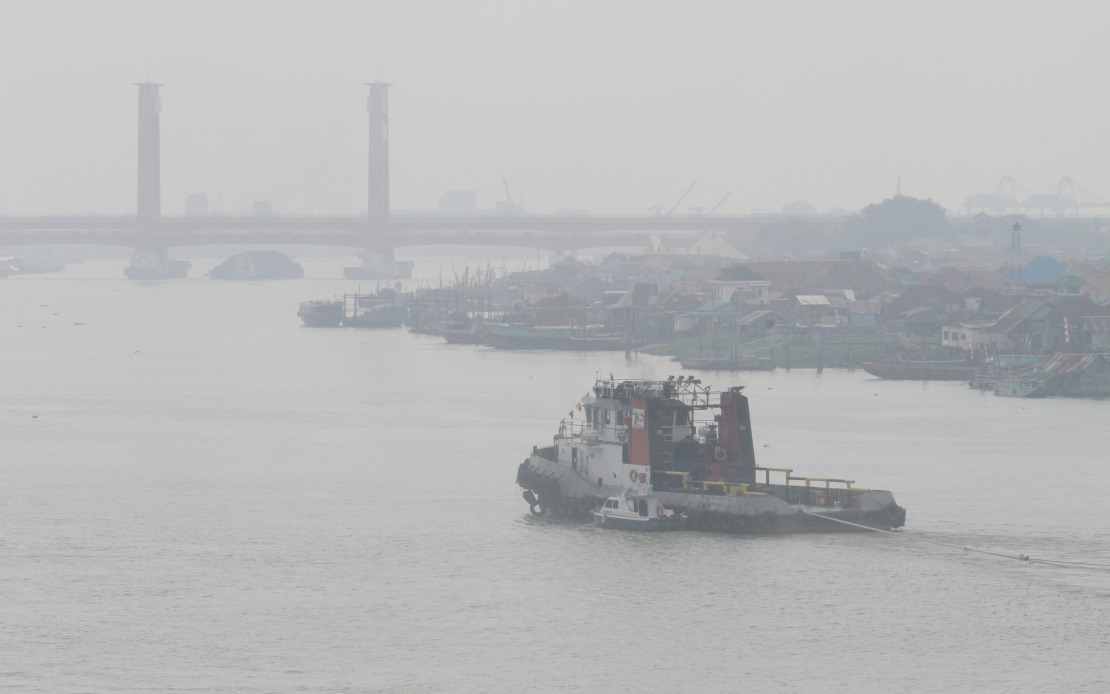
Indonesia has formally acknowledged an intensified partnership with Malaysia to address the recurring transboundary haze crisis, positioning weather modification technology as a cornerstone of their bilateral response framework. The two governments have moved beyond rhetorical commitments, establishing concrete operational mechanisms to tackle smoke drifting from forest and land fires across West Kalimantan into Malaysian territory. The escalation reflects the severity of the current episode, which has degraded air quality across multiple Malaysian states and prompted both capitals to activate diplomatic channels at ministerial levels.
The haze situation has reached concerning levels of severity. Air Pollutant Index readings in Sarawak have climbed to 195 in certain areas as of Friday morning, approaching the very unhealthy threshold of 201 and above. Simultaneously, major Malaysian population centres including Kuala Lumpur, Selangor, Penang, Kedah, and Perak have registered unhealthy air quality classifications, affecting millions of residents and prompting public health advisories. This represents a notable deterioration compared with the previous two years, during which the region experienced relative respite from acute haze episodes.
Berton Panjaitan, the Acting Head of Indonesia's National Disaster Mitigation Agency Data, Information, and Disaster Communication Centre, confirmed that bilateral discussions have progressed beyond preliminary exchanges. The two countries have formally agreed to expand cooperation across prevention mechanisms, real-time monitoring systems, and crucially, weather modification operations staged in border regions. This multi-layered approach suggests recognition by both governments that unilateral firefighting efforts in Indonesia's territory will remain insufficient to protect Malaysian air quality without complementary technological interventions.
Weather modification, commonly known as cloud-seeding, represents a significant diplomatic concession by Indonesia. The country granted Malaysia explicit permission to conduct cloud-seeding operations within Indonesian airspace, a measure that underscores the urgency both capitals perceive in the situation. This authorization carries geopolitical significance, as it requires Indonesia to permit foreign aircraft and personnel into its sovereign airspace, demonstrating substantive commitment to bilateral problem-solving despite typical sensitivities around national sovereignty in Southeast Asia.
The cooperation framework emerged from high-level ministerial discussions on August 24 between Malaysian Natural Resources and Environmental Sustainability Minister Datuk Seri Arthur Joseph Kurup and Indonesian Environment Minister Jumhur Hidayat. These conversations produced binding commitments to intensify prevention measures and coordinate firefighting operations. Malaysia simultaneously conveyed Indonesia's readiness to accept Malaysian firefighting support, establishing the diplomatic foundation for more direct intervention should Indonesian domestic capacity prove inadequate.
Jakarta has not yet formally requested immediate deployment of Malaysian water-bombing aircraft or other direct firefighting assets. This restraint likely reflects both diplomatic protocol and confidence in Indonesia's existing capabilities. However, Indonesian officials explicitly indicated openness to such requests, conditional upon necessity and alignment with established bilateral cooperation mechanisms. This cautious approach preserves Indonesia's agency while creating space for emergency collaboration if conditions deteriorate further or domestic efforts falter.
The situation in West Kalimantan carries particular urgency for Malaysian personnel deployed across the region. The Malaysian Consulate in Pontianak reported responsibility for 577 registered Malaysians, predominantly expatriates scattered throughout Kalimantan. The consulate has instructed this population to comply with local health directives, including mandatory mask usage, temporary suspension of face-to-face schooling, and restrictions on non-essential outdoor activity. This localized crisis management reflects the human dimension underlying diplomatic negotiations, as families and workers face direct health consequences from degraded air quality.
The consulate's characterization of this year's haze episode as notably worse than the previous two years points toward climatic or environmental shifts affecting fire dynamics in the region. The absence of severe haze episodes in 2024 and 2025 created an interim period during which bilateral preparedness mechanisms may have atrophied or funding for prevention initiatives diminished. The sudden return to crisis conditions has exposed potential gaps in regional early-warning systems and prevention infrastructure, suggesting that Indonesian authorities may have underestimated fire risks heading into 2025.
Malaysia's historical engagement in transboundary haze response demonstrates sustained commitment to regional cooperation. In 2023, the Malaysian Consulate contributed six water pumps to West Kalimantan's provincial administration, exemplifying how technical assistance and material support supplement diplomatic frameworks. These contributions establish goodwill and practical partnerships that facilitate more rapid mobilization when emergencies arise, transforming abstract cooperation agreements into functioning supply chains and operational relationships.
The transboundary haze problem reflects underlying structural challenges in land management and fire prevention across Indonesian territory. Despite Indonesia's status as the regional power with greater capacity to address fire sources, the country faces persistent difficulties controlling agricultural burning, illegal land clearing, and unmanaged forestry practices. The reliance on weather modification by Malaysia indicates recognition that prevention at source remains incomplete, necessitating technological compensation for emissions that escape Indonesian control mechanisms. This reality underscores the asymmetrical burden distribution, wherein Malaysia experiences severe consequences from problems originating elsewhere and must invest in mitigation technologies to protect its population.
The coordination framework also reflects institutional learning from previous haze crises. ASEAN has developed protocols and bilateral mechanisms specifically designed for transboundary pollution episodes, enabling faster activation of responses compared with developing entirely new arrangements during emergencies. Malaysia and Indonesia's mobilization of ministerial-level engagement and technical coordination demonstrates institutional memory and established diplomatic pathways, allowing governments to escalate responses efficiently when conditions warrant.
Looking forward, the effectiveness of weather modification operations will determine whether current cooperation proves sufficient or whether both countries must consider escalated interventions. Cloud-seeding success depends heavily on atmospheric conditions and careful coordination with Indonesian meteorological agencies. Failure to achieve meaningful air quality improvements could pressure Malaysian officials to pursue more aggressive cross-border interventions or demand accelerated Indonesian implementation of fire prevention measures. The current moment represents both opportunity for successful cooperation and potential flash point if diplomatic expectations exceed technical capabilities.

