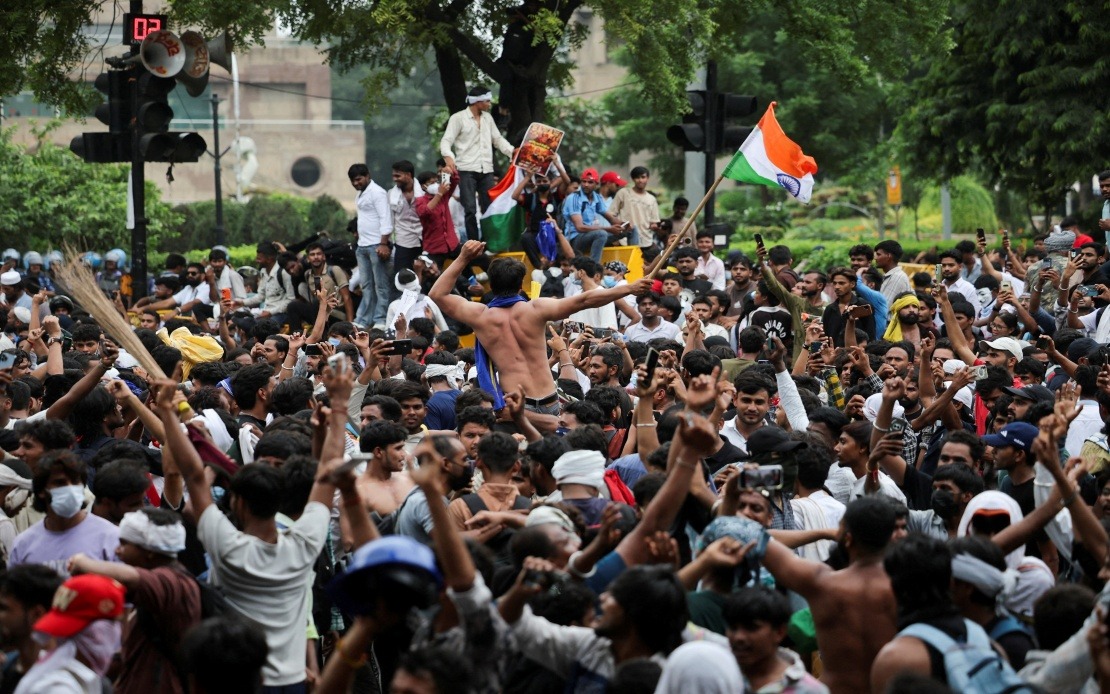
India's Education Minister Dharmendra Pradhan has stepped down from his position following intense pressure from student-led demonstrations demanding systemic changes to the nation's education infrastructure. The resignation came as thousands of protesters continued to occupy key locations in New Delhi, with the youth movement gaining momentum over concerns about examination integrity and broader educational governance. Pradhan announced his departure through a statement posted on social media on Saturday afternoon, formally communicating his decision to Prime Minister Narendra Modi.
The resignation marks a significant political development in India, reflecting the growing influence of grassroots movements in shaping government policy decisions. Pradhan's departure comes at a moment of considerable tension within Indian educational circles, where confidence in the examination system has been severely undermined by recent controversies. The minister's decision to step aside demonstrates the government's acknowledgment that public discontent over education issues has reached a critical threshold that demands immediate political response.
In his resignation statement, Pradhan emphasised concerns about national cohesion and the potential exploitation of student grievances by opposition forces. He articulated that his departure was intended to prevent anti-national actors from capitalising on widespread dissatisfaction while ensuring that protesting students would not face legal complications for their activism. The minister also highlighted his desire to allow young people to refocus their energy on academic pursuits rather than continued demonstrations. This framing reflects a deliberate attempt to position the resignation as a stabilising measure that prioritises national interests over individual political considerations.
The catalyst for the resignation has been a major examination paper leak that occurred during a national medical entrance examination in May, which exposed serious vulnerabilities in the country's testing infrastructure. This security breach triggered broader concerns about the reliability and fairness of competitive examinations that determine access to prestigious educational institutions across India. The incident amplified existing grievances among students and parents regarding systemic inefficiencies, administrative oversight failures, and the absence of meaningful accountability mechanisms within educational authorities.
Protest camps established at Jantar Mantar in New Delhi have become focal points for youth mobilisation, with demonstrators articulating demands that extend beyond the immediate examination leak issue. The movement has evolved into a comprehensive critique of the education system's structural problems, including examination frequency, assessment methodologies, and the broader alignment of educational policy with student welfare considerations. The sustained presence of thousands of protesters has kept the issue firmly on the national political agenda, preventing government attempts to manage the crisis through routine administrative channels.
Senior government figures including Ministers J.P. Nadda and Jitendra Singh, both prominent within the Modi administration, engaged directly with youth representatives from the Cockroach Janta Party to comprehend and address the protesters' specific demands. These high-level meetings signalled that the government was taking the movement with considerable seriousness, recognising that student dissatisfaction reflected genuine systemic failures rather than mere political agitation. The willingness of influential ministers to negotiate directly with protest representatives suggested internal government acknowledgment that substantive reforms would be necessary to restore confidence in educational governance.
The implications of this crisis extend across South Asia's education landscape, particularly for Malaysia and other regional nations with competitive examination systems serving large student populations. India's experience demonstrates how examination security failures can rapidly cascade into broader systemic crises of institutional credibility, affecting millions of young people whose educational and professional futures depend on fair assessment mechanisms. The Indian case study provides valuable lessons about the necessity of robust administrative oversight, transparent examination procedures, and responsive governance structures that can accommodate legitimate student concerns.
For Malaysia's policymakers, the Indian situation underscores the importance of proactive investment in examination security infrastructure, comprehensive audit mechanisms, and effective communication channels between educational authorities and student communities. The speed with which Indian student protests reached critical mass suggests that in today's digital environment, educational grievances can mobilise youth movements with unprecedented velocity and scale. Malaysia's education ministry should view India's crisis not merely as an external development but as an instructive example of institutional vulnerabilities that demand continuous attention and preventative investment.
Pradhan's resignation also reflects evolving expectations regarding ministerial accountability in democratic governance, where sustained public pressure increasingly translates into political consequences for government officials. The precedent established by his departure signals that education ministers cannot indefinitely resist demands for systemic accountability when examination integrity becomes compromised. This development may influence how other governments in the region approach education policy crises, potentially shifting the calculus around when political change becomes necessary to restore institutional credibility.
The broader context of education reform in India encompasses not only examination security but also fundamental questions about curriculum relevance, pedagogical methodologies, and alignment between educational outcomes and labour market demands. Student protests have catalysed conversations about the rigidity of competitive examination systems and their psychological impact on young people preparing for professional entry. These discussions extend beyond technical administrative reforms to encompass deeper philosophical questions about education's purpose in society.
Moving forward, the Indian government faces considerable pressure to implement substantive reforms that address both immediate security concerns and systemic governance issues raised by protesting students. The appointment of a new education minister will provide an opportunity for policy recalibration, potentially signalling commitment to youth-responsive educational governance. Success in addressing these demands will require coordination across multiple government agencies, investment in institutional capacity, and sustained dialogue with student representatives to ensure that reforms genuinely respond to articulated grievances rather than merely managing political dissent.

