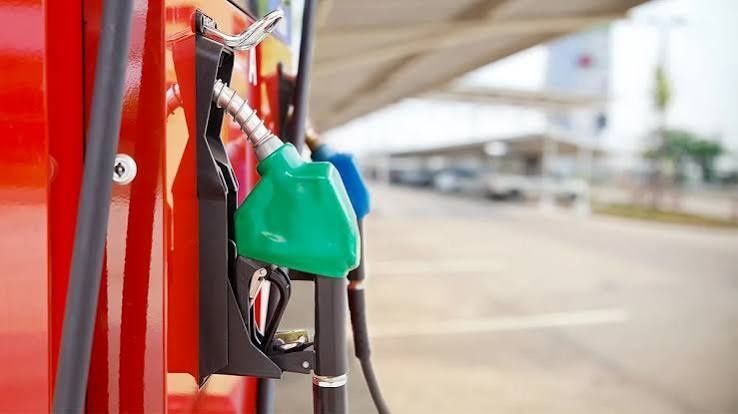
India's administration moved swiftly on Friday to manage escalating public dissatisfaction with its compulsory adoption of ethanol-blended petrol containing 20 per cent ethanol, commonly known as E20, as discontented vehicle owners prepared organised opposition to the controversial initiative. The policy, which took effect in 2022, has rapidly emerged as a significant political liability for Prime Minister Narendra Modi's government and for consumers navigating the automotive market of the world's third-largest car-purchasing nation.
The furore reached a crescendo earlier this week when Attorney General R. Venkataramani described E20 as an "experiment" during court proceedings, remarking that definitive outcomes would materialise only in the coming year. Government officials immediately disputed the characterisation, yet viral video footage from the courtroom unambiguously captured Venkataramani articulating precisely those words, rendering denials largely ineffectual and amplifying public scepticism.
Venkataramani subsequently clarified to Reuters that his terminology referred specifically to the volume trajectory of ethanol supply chains rather than the ethanol-petrol blending policy in totality. This distinction, however, has failed to meaningfully assuage motorist grievances or restore confidence in the government's handling of the transition. The damage to official credibility appears substantial, with citizens interpreting the attorney general's original language as inadvertent acknowledgment that the rollout proceeded without adequate prior validation.
Government communications channels dismissed mounting concerns as "wild claims" and cautioned the public against being manipulated by what officials characterised as inflammatory rhetoric. The defensive posture, coupled with attempts to reframe legitimate consumer complaints as manufactured outrage, has arguably deepened rather than bridged the trust deficit between policymakers and affected motorists.
Petroleum Minister Hardeep Singh Puri attempted reassurance by invoking the precedent of ethanol fuel utilisation in motor racing, noting that racing applications demonstrate the fuel's viability and highlighting that while fuel economy may decline marginally, power delivery improves. The analogy, however, resonated poorly with ordinary drivers concerned about daily commuting efficiency rather than performance enhancement, further illustrating the disconnect between government messaging and grassroots concerns.
Meanwhile, protests are materialising beyond government spin management. Tehseen Poonawalla, a Delhi-based political activist aligned with the Congress opposition party, has mobilised support for a demonstration scheduled for Sunday in the capital, reporting that thousands have expressed intention to participate. This organised resistance signals that discontent extends beyond scattered social media complaints to coordinated civic action.
The core grievance centres on consumer choice elimination at petrol pumps, where vehicles previously accommodating conventional petrol now receive E20 exclusively. Motorists have flooded social media platforms documenting alleged performance deterioration, including reduced mileage per litre and accelerated mechanical degradation. A particularly influential post featuring individual Manish Kashyap discussing costly repairs allegedly necessitated by E20 fuel damage accumulated over 500,000 views, crystallising public frustration and lending credibility to widespread anecdotal reports of problems.
Opposition Congress politician Priyank Kharge emphasised the procedural failures underpinning the initiative, contending that implementation occurred without meaningful stakeholder consultation and that burden of proof should rest with government rather than citizens to validate fuel efficacy. He further noted the irony of official claims regarding E20 safety when the government's own supporting data remains incomplete and pending.
The government's rationale for the mandate focuses on environmental benefits through reduced carbon emissions, decreased dependency on crude oil imports thereby conserving foreign currency reserves, and enhanced farmer incomes through expanded demand for agricultural raw materials processed into ethanol. These strategic advantages, while economically coherent, address macroeconomic objectives rather than household-level concerns about vehicle reliability, running costs, and consumer agency.
For Malaysian and Southeast Asian observers, the Indian experience illuminates tensions inherent in transitioning fuel infrastructure toward more environmentally sustainable models whilst navigating citizen opposition rooted in practical economic impact. India's situation demonstrates that government mandates, regardless of their environmental or economic merit at the aggregate level, require transparent risk communication, adequate stakeholder engagement, and genuine responsiveness to documented consumer grievances to maintain public legitimacy.
The controversy additionally exposes the political vulnerability created when high-ranking officials appear to contradict official positions, even through linguistically ambiguous phrasing. In the context of democratic governance, such moments crystallise broader public doubts regarding government transparency and competence, extending damage beyond the specific policy domain into general institutional trust.
As India's administration confronts mounting pressure, the trajectory of this dispute will substantially influence how Southeast Asian nations approach their own energy policy transitions. A defensive government response that dismisses motorist concerns as manufactured grievance risks entrenching opposition and complicating future sustainability initiatives. Conversely, demonstrated willingness to acknowledge implementation challenges and incorporate consumer feedback might preserve both the environmental objectives and public confidence essential for sustainable policy success.

