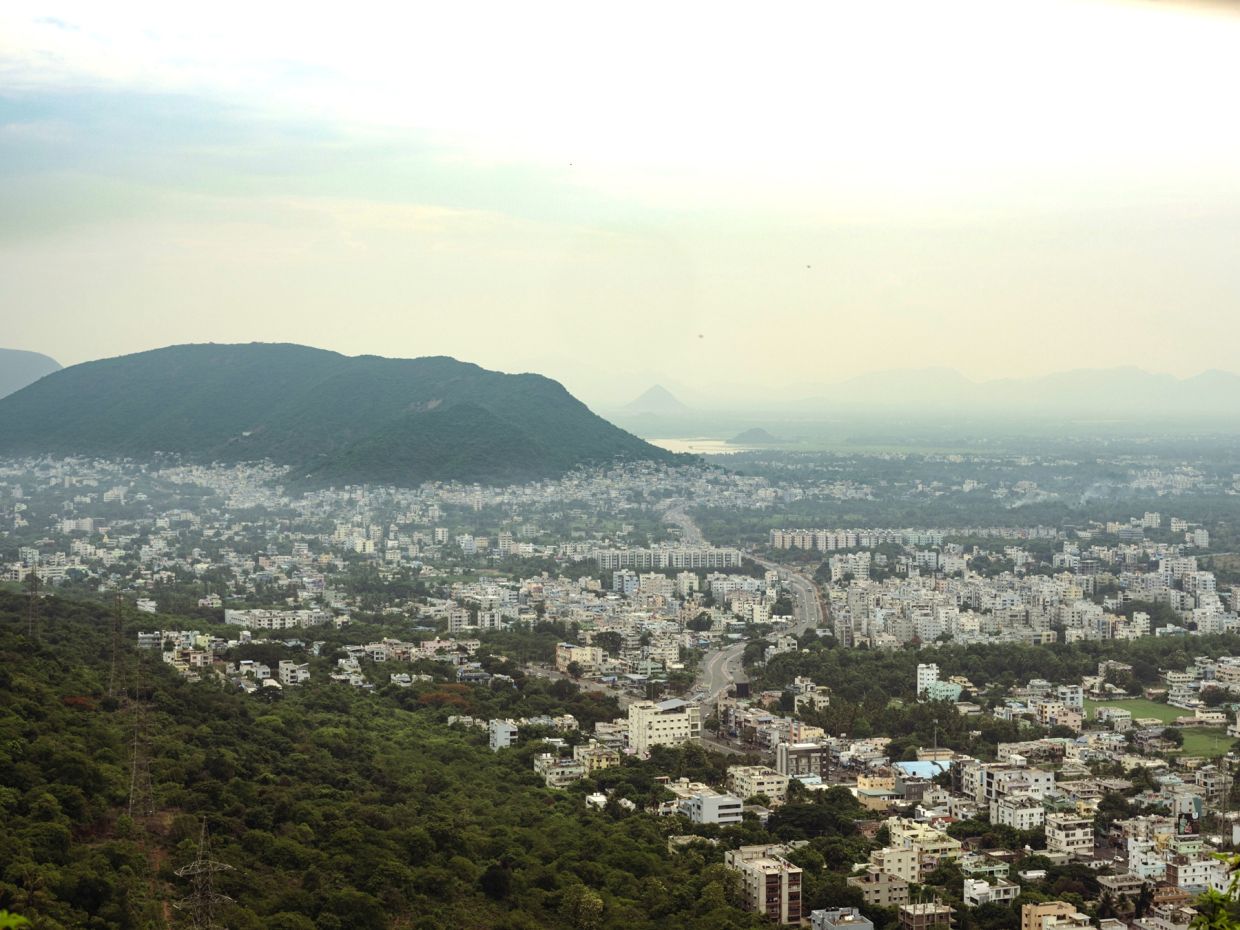
India's coastal city of Visakhapatnam is bracing itself for transformation as American tech giant Google and local conglomerate Reliance pour billions into building hyperscale data centres—a crucial infrastructure play in the nation's race to become a serious contender in artificial intelligence. Yet beneath the welcome billboards bearing the faces of national and state politicians lies deepening concern from residents and activists who question whether the promised benefits will materialise or whether the region is simply absorbing the costs of India's technological ambitions.
Google's contribution to this shift involves a US$15 billion investment that includes not only the construction of a one-gigawatt data centre but also the laying of new subsea cables to connect the Indian coast to global networks. The project, announced with considerable fanfare by the Modi government, represents the kind of infrastructure that New Delhi believes is essential to positioning India as a serious player in the global AI economy. Alongside this, a similarly sized facility developed by a consortium featuring Brookfield Asset Management and Reliance will nearly double India's existing data centre capacity once both facilities become operational—a dramatic expansion that reflects the government's determination to close what it sees as a critical gap in the nation's technological infrastructure.
State-level enthusiasm is palpable. Andhra Pradesh's information technology minister Nara Lokesh has framed the data centre projects as catalysts for broader economic transformation, envisioning benefits extending far beyond the facilities themselves. His vision encompasses manufacturing hubs for power electronics, air conditioning systems, and building materials—essentially imagining the data centres as anchors that will draw an entire industrial ecosystem to the region. This cascading effect of investment represents the optimistic calculation driving government support, with Lokesh pointing to job creation figures of around 120,000 during construction and 60,000 afterward, positioning the projects as significant employment generators for a state competing fiercely with neighbouring regions for foreign capital.
However, this optimism encounters serious scrutiny when examined against the reality of data centre operations globally and India's particular structural challenges. Unlike manufacturing facilities or service hubs, hyperscale data centres are remarkably capital-intensive but labour-light operations. They consume enormous quantities of electricity and water—resources that are already stretched in water-stressed regions like Visakhapatnam, which regularly faces supply disruptions during summer months. The American experience provides cautionary tales: projects worth tens of billions of dollars have been delayed or blocked in the United States by local communities mobilising against the environmental and infrastructure demands these facilities impose. India's government, by contrast, has offered Google and the Adani Group extraordinary incentives including subsidised land, discounted energy and water, and extensive tax breaks to overcome such resistance and accelerate deployment.
The opacity surrounding the projects has compounded resident anxieties. Environmental clearance processes, according to critics, have been expedited or modified to accommodate construction in ecologically sensitive zones. Details remain scarce regarding how water supplies will be sourced, where electricity will come from, and who ultimately bears the cost of the substantial subsidies being offered to foreign investors and local billionaires. This lack of transparency sits uneasily in a region already accustomed to government reluctance to air contentious debates publicly. Campaigners point out that the fundamental question—why massive infrastructure projects serving global corporations should not undergo rigorous public scrutiny—remains largely unanswered by authorities.
The human dimension adds another layer of concern. Employment projections contained in project documentation appear inconsistent with figures being promoted by government officials. When examining details submitted for environmental clearance—mundane matters like parking space requirements and toilet water flushing estimates—the implied workforce numbers are substantially lower than the 60,000 jobs promised for the operational phase. This discrepancy raises questions about whether state officials are understating true operational staffing requirements or whether job creation estimates have been inflated to justify the investment and subsidies being extended.
India's position in the global AI competition provides important context for understanding why the government is willing to offer such generous terms and override local concerns. Despite possessing nearly one-fifth of the world's data production and a substantial talent pool in software development, India lags significantly in building actual AI capability. A recent Morgan Stanley analysis characterised India as a "laggard" in developing indigenous AI technologies, particularly semiconductors and chip manufacturing. Capital has been flowing away from India toward Taiwan and South Korea, which are establishing dominance in cutting-edge technology production. India's role in the AI economy is increasingly defined as a deployer and implementer of technologies developed elsewhere, rather than an innovator generating breakthrough capabilities domestically.
The data centre capacity gap becomes particularly acute when viewed against this backdrop. India generates approximately one-fifth of global data yet controls only a fraction of the world's data processing infrastructure. Closing this gap requires massive upfront investment in physical facilities, and the Modi government has evidently concluded that offering preferential terms to Google and other tech giants is the fastest route to building this capacity. Yet this calculation prioritises speed and scale over consideration of whether the costs—environmental degradation, water depletion, subsidies funded by taxpayers—are being fairly distributed across society.
Gautam Adani's involvement in the venture as Google's local partner adds a political dimension to the conversation. The billionaire industrialist has consolidated an enormous business empire during Modi's twelve years in office, with his wealth expanding dramatically even as his business activities have sometimes generated controversy. Adani's reputation for successfully navigating Indian bureaucracy and securing government approvals for major projects shapes how local residents and critics perceive the data centre developments. Critics argue that Adani's political connections essentially guarantee project approval regardless of environmental or community concerns—a perception that deepens scepticism about whether proper oversight is occurring.
Google and Adani representatives have publicly stated that environmental and resource concerns have been factored into planning, and that the facilities will utilise advanced cooling technologies minimising water consumption while relying on independent sources rather than drawing on public water supplies. The company has pledged to invest in clean energy generation and has committed to ensuring that no costs from the project are passed to local households, businesses, or the state government. These assurances, however, have failed to convince many residents and observers, including former senior government officials like EAS Sarma, who holds a doctorate in energy planning and has served in India's finance and energy ministries.
Sarma and others point out that even if the facilities themselves operate independently, the broader infrastructure requirements—particularly new transmission lines needed to deliver power to the facilities—will ultimately impose costs on the public through electricity bills. Every subsidy offered to attract investment represents a cost transferred from the corporation receiving it to the broader society bearing the burden. In this view, the question is not whether costs exist but rather who pays them and whether the distribution is equitable given that benefits accrue primarily to foreign investors and politically connected domestic partners.
The labour market dimension adds a longer-term concern to India's AI gambit. While the immediate political imperative is demonstrating progress on AI infrastructure, India simultaneously faces pressure to generate employment for a population exceeding 1.4 billion. The International Monetary Fund has warned that artificial intelligence could produce a "tsunami hitting the labour market," with particular disruption expected in India's technology support services sector—a pillar of the nation's economy and a major employer. Betting heavily on automated data centre infrastructure rather than labour-intensive manufacturing or service operations could exacerbate this structural challenge, leaving policymakers caught between competing imperatives.
For Malaysian and broader Southeast Asian observers, the Visakhapatnam situation offers instructive lessons about the costs and complications of rapid technological infrastructure deployment. As region-wide competition intensifies to attract AI and data centre investment, the Indian experience demonstrates that governments' eagerness to secure projects can lead to environmental compromises, opacity in decision-making, and promises of employment and development that may not materialise as presented. The debate unfolding in Andhra Pradesh reflects fundamental questions about who benefits from the AI economy and who bears its costs—questions that will shape not only India's technological trajectory but also the broader pattern of AI infrastructure development across Asia.

