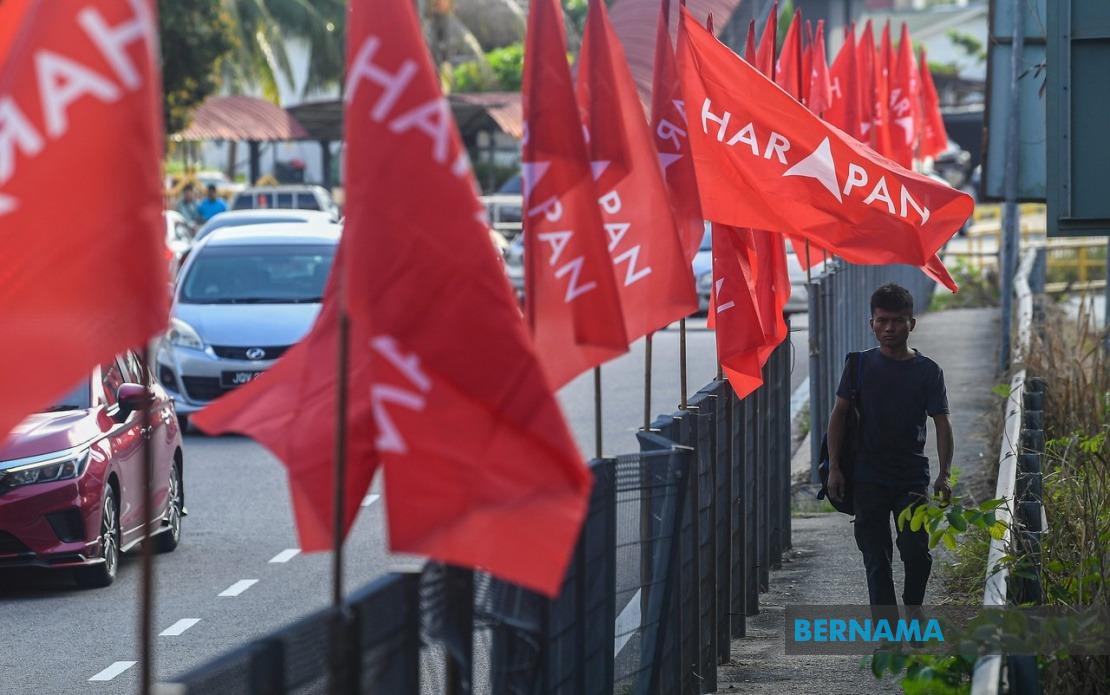
With the Johor state election scheduled for July 11, the Indian community has emerged as a potentially decisive voting bloc, capable of influencing outcomes in a quarter of the state's contested seats. PKR Central Leadership Council member Dr Gunaraj George framed the upcoming poll not merely as a choice between candidates, but as a referendum on Malaysia's trajectory toward political maturity and sustained development versus a return to institutional instability that could undermine investor confidence and economic momentum.
Despite comprising a demographic minority in Johor, the Indian electorate wields disproportionate influence across approximately 25 State Legislative Assembly constituencies classified as mixed or marginal—areas where traditional party strongholds have eroded and swing votes determine winners. Dr Gunaraj, who himself represents the Sentosa state seat, articulated this strategic reality while appealing for backing of Pakatan Harapan's continued governance of the state. His statement reflects broader PH strategy to consolidate support across all ethnic communities rather than rely solely on traditional power bases, a tactical shift that mirrors evolving demographic patterns in Malaysian politics.
The timing of this appeal carries particular weight given the global economic environment. Dr Gunaraj emphasized that Malaysia faces converging pressures—geopolitical instability, volatile energy markets, and domestic cost-of-living pressures—that demand consistent, focused governance rather than the distraction of political upheaval. In such contexts, investor appetite for exposure to any economy hinges substantially on perceptions of institutional durability. Political uncertainty translates directly into capital flight, delayed investment decisions, and reduced employment creation at precisely the moment when job opportunities matter most to working families, particularly those in lower-income brackets.
The PKR leader positioned the MADANI reform agenda as central to his message, arguing that three and a half years of continuous government have yielded measurable outcomes across sectors relevant to Indian community interests. Most prominently, he highlighted the elevation of the Malaysian Indian Transformation Unit (MITRA) allocation from RM100 million to RM150 million—the first increase in nearly a decade—and Prime Minister Datuk Seri Anwar Ibrahim's commitment to progressive annual increases. Beyond the budgetary figure lies a shift in governance philosophy: MITRA now operates under enhanced transparency and parliamentary accountability mechanisms, signaling institutional reform extending beyond symbolic gestures to substantive changes in how state resources reach beneficiary communities.
Educational access represents another policy lever through which the government has sought to strengthen Indian community engagement. Increased allocations for Tamil National-Type Schools (SJKT) directly address schooling quality concerns that have long animated community discourse. Concurrently, expansion of Technical and Vocational Education and Training (TVET) pathways acknowledges demographic reality: not all students pursue university education, yet pathways to skilled employment remain essential for upward mobility. Supporting low-income students through aid programs and financial assistance initiatives creates practical scaffolding that translates policy rhetoric into classroom and laboratory reality.
Spiritual and cultural infrastructure maintenance also figures in the government's community-targeted spending. Maintenance grants for temples and other places of worship address accumulated deferred maintenance in many religious buildings while signaling respect for community identity and spiritual needs. This category of spending, often overlooked in economic analyses, carries outsized symbolic weight in communities where temple life intersects with social cohesion, cultural transmission, and personal meaning-making. It reflects a governing philosophy that development encompasses more than GDP growth and infrastructure projects.
The government's cash transfer programs—specifically Sumbangan Tunai Rahmah (STR) and Sumbangan Asas Rahmah (SARA)—constitute direct household relief mechanisms implemented during sustained inflationary pressure. For Indian households clustering in lower-income brackets, these transfers provide crucial breathing room when food prices, fuel costs, and rental pressures accumulate. Dr Gunaraj framed such measures as evidence of a government attentive to lived economic realities, distinguishing between administrations that acknowledge citizen hardship and those that regard such concerns as secondary to other priorities.
Micro, small, and medium enterprise (MSME) support initiatives extend opportunity structures to Indian entrepreneurs seeking to establish or expand businesses. Access to financing, business advisory services, and market linkages has historically posed barriers for communities with limited inherited capital and network disadvantages. Targeted MSME programs partially address this structural constraint, enabling community members to participate in economic growth rather than experience it passively as wage earners alone.
Dr Gunaraj's framing of institutional reform and anti-corruption efforts as foundational to economic inclusion warrants particular emphasis. Pervasive corruption that siphons public resources, distorts market competition, and undermines merit-based advancement disproportionately harms communities historically marginalized in access to political patronage networks. Anti-corruption efforts thus represent not merely administrative housekeeping but essential infrastructure for equitable development, creating conditions where community advancement depends upon legitimate capability rather than faction membership.
The broader political context deserves consideration: Pakatan Harapan will contest all 56 state seats in Johor, signaling comprehensive engagement across the state rather than strategic retreat to core constituencies. This approach implicitly acknowledges that political legitimacy requires broad-based support and that governance effectiveness demands coalitional breadth. Indian voters in marginal seats occupy precisely the position where their electoral choices determine whether PH maintains momentum or faces setback in this crucial state.
For Malaysian political observers, particularly those monitoring the evolution of communal voting patterns and coalition dynamics, this election offers insight into whether ethnically-based political appeals retain their former dominance or whether issue-based, performance-oriented messaging increasingly shapes voter behavior. The Indian community's response—whether emphasizing MITRA allocations and TVET expansion, or prioritizing alternative concerns—will illuminate broader trends in Malaysian electoral behavior and the sustainability of multiethnic coalition governance in an era of rising economic anxiety and institutional transformation.

