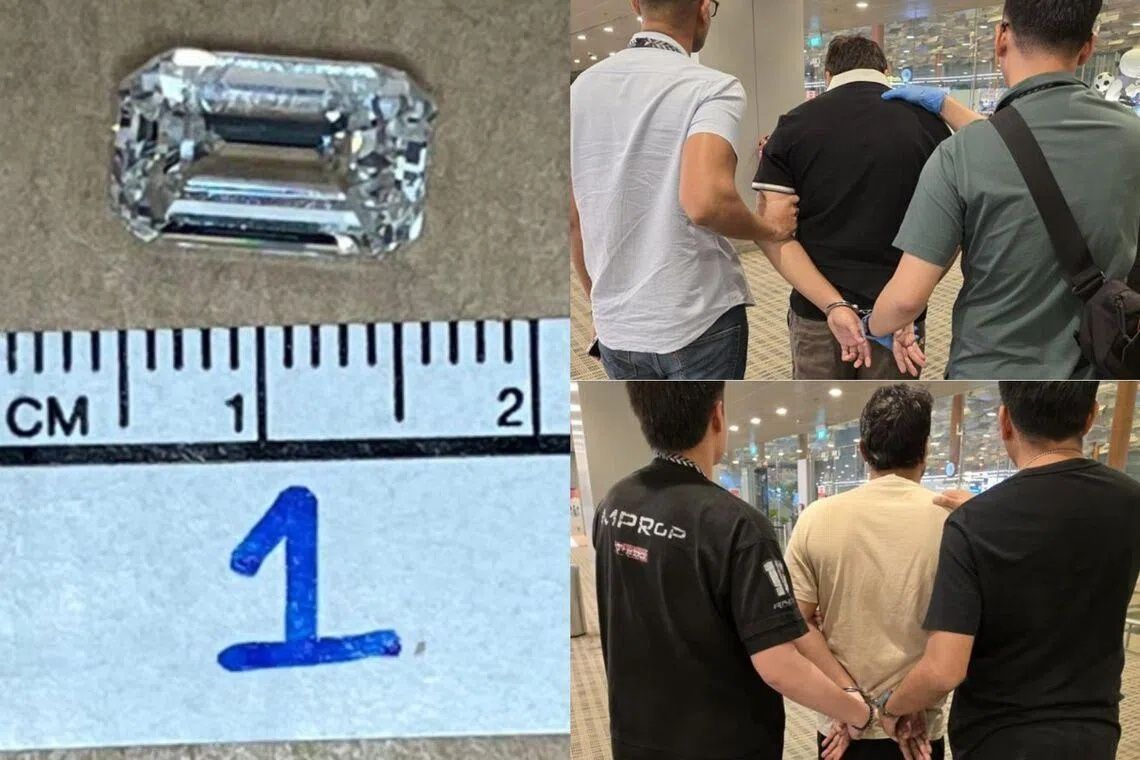
A meticulously orchestrated diamond theft at a Singapore jewellery store has resulted in a two-year jail sentence for one of two Indian tourists involved in the audacious heist. Mangroliya Manojkumar Kurjibhai, 41, was convicted on Friday for stealing a 4.95-carat diamond valued at over S$199,000 from Dianoche jewellery store in Kreta Ayer Road in Chinatown on June 19. His accomplice, Serasiya Milan Ramnikbhai, 30, remains under investigation with his case pending in court. The pair's attempt to flee Singapore was thwarted when airport authorities intercepted them as they tried to clear immigration at Changi Airport the same evening, recovering the stolen gem from Serasiya's possession.
The sophistication of the crime lay in its meticulous preparation and execution. Before arriving in Singapore, the two men commissioned a counterfeit diamond in India that matched both the specifications and serial number of the genuine stone they intended to steal. This level of detail suggests the operation was not a spontaneous act of opportunism but rather a carefully calibrated plan developed well in advance. The prosecution presented evidence that both tourists arrived in Singapore specifically on June 19, indicating the entire operation was timed around their visit to the island nation. How the men became aware of the particular diamond at the store was never disclosed in court documents, leaving questions about whether they had inside information or conducted reconnaissance prior to their arrival.
At approximately 3 p.m. on the day of the theft, Serasiya arrived at the Chinatown store with the counterfeit diamond concealed in his mouth—a risky and uncomfortable method designed to pass through any initial scrutiny. Mangroliya then requested to examine the genuine 4.95-carat diamond, which was valued at US$154,000, approximately S$199,000 at the time. The sales manager retrieved the precious item for inspection, unaware that a carefully choreographed swap was about to unfold. To create the opportunity for the exchange, Mangroliya asked to view multiple additional items, deliberately keeping the manager occupied and forcing him away from his seat repeatedly. This tactical maneuvering provided the window needed for their criminal act.
With the manager temporarily distracted, Mangroliya signalled Serasiya to execute the swap. Serasiya expelled the fake diamond and retrieved the genuine stone, quickly concealing it in his own mouth to minimise the risk of detection. The pair then casually informed the manager they would consider purchasing items and exited the store as if their visit had been nothing more than a routine browsing expedition. Their composed departure was crucial—any sign of nervousness or rushed behavior might have alerted staff to investigate further. The entire scheme depended on the substitution going unnoticed long enough for them to leave the premises and reach the airport.
Their deception was ultimately undone by security measures at the store. The CCTV camera system captured images of both men and their actions inside the store, providing crucial visual evidence of the crime. More immediately, when the manager examined the diamond left behind using an optical gemstone identification machine, the counterfeit nature of the stone became apparent. This discovery triggered an alert, and authorities were notified. Though the men had already departed, they could not have anticipated how quickly Singapore's integrated security apparatus would respond to the incident. Airport authorities had been put on alert, and when Mangroliya and Serasiya attempted to board their flight to India at approximately 9 p.m. that evening, they were apprehended at Changi Airport Terminal 3. Officers recovered the genuine diamond from Serasiya's haversack during the arrest.
The case underscores the professional nature of organized jewellery theft operations that target luxury retail stores across Asia. Such heists typically involve multiple stages: reconnaissance, procurement of counterfeit materials, timing the swap with precision, and rapid exit strategies. The involvement of two nationals suggests a network operating across borders, possibly coordinating similar operations in other jurisdictions. Singapore's strict border controls and surveillance infrastructure proved decisive in preventing the successful smuggling of the stolen gem out of the country. For regional readers, the case illustrates how even meticulously planned crimes can unravel when they collide with sophisticated airport and retail security systems now standard across Southeast Asia's major financial hubs.
Mangroliya's sentencing to two years, two months and two weeks reflects Singapore's serious approach to theft offences, particularly those involving high-value items. The Penal Code provision under which he was convicted allows for sentences of up to seven years imprisonment and fines, so Mangroliya received a substantial but not maximum sentence. State Prosecuting Officer Yip Cheng Yee presented evidence demonstrating the premeditated nature of the crime, which likely influenced the court's decision. The fact that the genuine diamond was recovered and the offence was captured on video evidence provided strong grounds for conviction. Serasiya's pending case will determine whether he receives a similar sentence or if his role as the secondary participant results in a different outcome.
The implications for the jewellery retail sector across Southeast Asia are significant. Stores must contend with increasingly sophisticated theft techniques that exploit momentary lapses in attention, the vulnerability of staff to social engineering, and the use of high-quality counterfeit materials. The Dianoche store's experience demonstrates that even robust security measures—including CCTV and gemstone identification equipment—require human vigilance and quick decision-making to be effective. Other retailers in the region may take note that the substitution method remains viable if perpetrators are patient and well-coordinated. The case also highlights the importance of airport security protocols in apprehending offenders attempting to export stolen goods, a critical function given Southeast Asia's role as a major transit hub for illicit goods trafficking.

