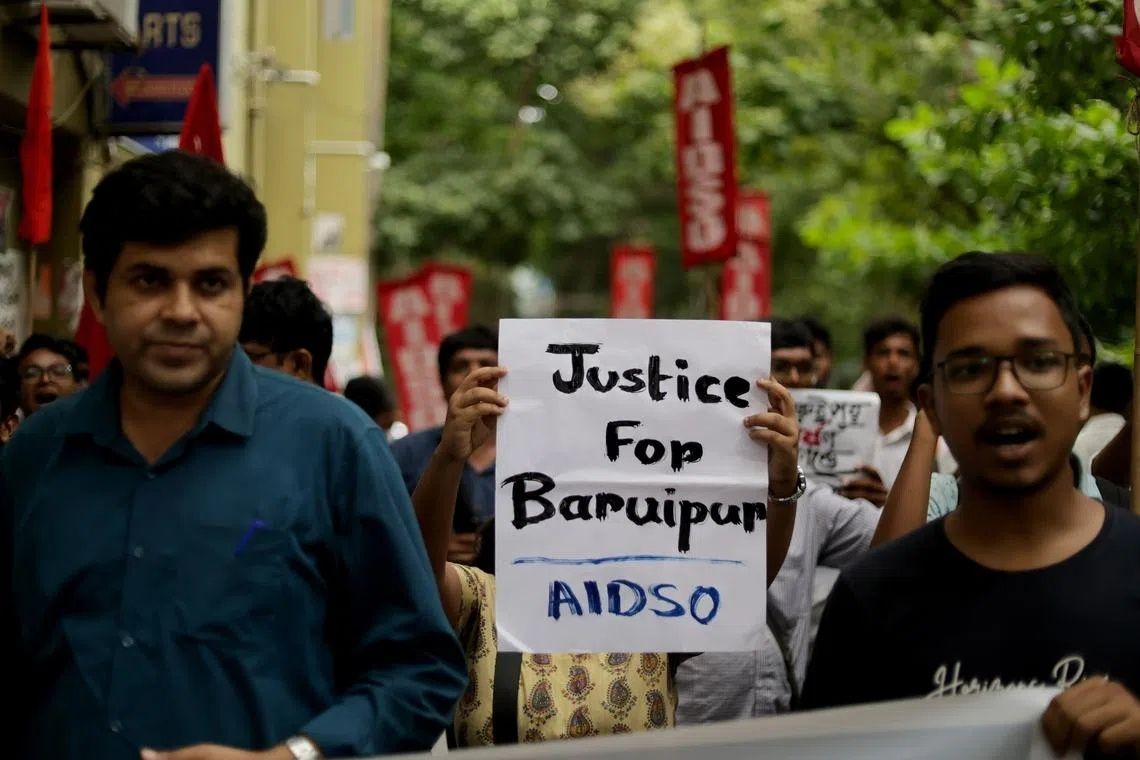
Police in West Bengal have arrested 35 people for committing violence and vandalism during a wave of protests that swept through the eastern state after the discovery of an 11-year-old girl's body in a pond. The arrests represent authorities' response to several days of civil unrest that erupted following the child's death on July 5 in Baruipur, a city located roughly 30 kilometres from the state capital Kolkata. Senior state police officer Arvind Kumar Anand indicated that investigations into the disturbances were continuing, with officers identifying additional suspects through examination of video footage that circulated widely on social media platforms.
The girl went missing on July 4, and her body was recovered the following day from a pond in the area. News of the discovery triggered immediate outrage among residents, who took to the streets demanding swift justice. Demonstrators blocked major thoroughfares and set fire to vehicles in acts of protest that continued for several days as anger mounted over the apparent failure of local authorities to prevent such a tragedy. The intensity of public reaction underscores growing frustration in communities across India with persistent gaps in security measures designed to protect vulnerable populations, particularly girls and women in remote and semi-urban areas.
In a separate and highly controversial development, police fatally shot one of four men arrested in connection with the girl's rape and murder. The suspect, identified as Prabhas Mondal, was killed in the early morning hours of July 8 when he allegedly attempted to flee while being escorted to the crime scene as part of the police investigation. Encounters during suspect transfers have become a recurring flashpoint in Indian policing, raising questions about whether due process is being appropriately followed in high-profile cases involving crimes against children.
The shooting of Mondal has become a focal point in discussions about vigilantism and extrajudicial action in the Indian justice system. Even Mondal's own mother distanced herself from her son, refusing to accept his body and declaring in a television interview that she did not wish to bring him home because he "did not do anything good." Her statement, unusual in its public renunciation of family bonds, reflects the severity of social stigma attached to such crimes and the emotional toll on families implicated in cases of violence against children.
Meanwhile, questions have arisen regarding the cases against all four arrested individuals. Indian media outlets reported that the family of one of the other three suspects claims he was arrested wrongly and has become a victim of mistaken identity. Such assertions add layers of concern to an already sensitive case, particularly given the pattern in Indian criminal justice where innocent individuals have occasionally been swept up in high-profile investigations following intense public pressure. The lack of public comment from families of the remaining two suspects leaves considerable uncertainty about the strength of evidence against each individual.
The new chief minister of West Bengal, Suvendu Adhikari, who assumed office following his Bharatiya Janata Party's victory in state elections held in May, used the case to affirm his government's commitment to combating sexual violence. In a statement posted on social media platform X on July 9, Adhikari pledged that his administration would show "no leniency" toward perpetrators of rape and violence, as well as toward vigilantes who take law into their own hands by beating "innocent and blameless" people to death. He asserted that the new government would pursue offenders through rigorous application of existing legal frameworks and ensure that justice reaches victims and their families.
This particular case has once again thrust India's record on women's and girls' safety into the international spotlight, despite significant legislative reforms introduced over the past decade. Following the 2012 Delhi gang rape and murder of a 22-year-old woman, which sparked massive nationwide protests demanding systemic change, India enacted tougher criminal statutes designed to expedite trials and increase penalties for sexual offences. Four men convicted in that landmark case were subsequently hanged, representing a rare instance of capital punishment being carried out in India. Yet more than a decade later, horrific crimes against women and girls continue to occur with alarming regularity.
The broader context of women's safety in India remains deeply troubling for policymakers and civil society alike. Despite the legislative changes and increased public awareness following the 2012 Delhi case, reported incidents of sexual violence have not decreased proportionally, suggesting that laws alone are insufficient without corresponding improvements in police conduct, judicial efficiency, and community attitudes toward gender-based violence. The gap between laws on paper and their effective implementation continues to plague India's approach to protecting its most vulnerable citizens.
West Bengal itself has faced heightened scrutiny on women's safety issues in recent years. In 2024, the state attracted intense global attention following the rape and murder of a trainee doctor at Kolkata's RG Kar Medical College and Hospital. That case similarly sparked nationwide demonstrations, with protesters demanding fundamental changes to how institutions protect women and how the justice system responds to such crimes. The convergence of multiple high-profile cases within a relatively short timeframe has intensified calls for comprehensive reforms addressing everything from workplace security to police training and victim support services.
For Malaysian observers, the Indian experience offers instructive parallels regarding the challenges of translating legal protections into meaningful safety improvements. While Malaysia has its own frameworks addressing violence against women and children, the Indian cases underscore how quickly public trust can erode when institutions fail to prevent tragedies or when justice appears to be administered through violence rather than deliberative legal processes. The tension between community demands for swift punishment and the need for due process remains a defining feature of how emerging democracies manage high-profile criminal cases.

