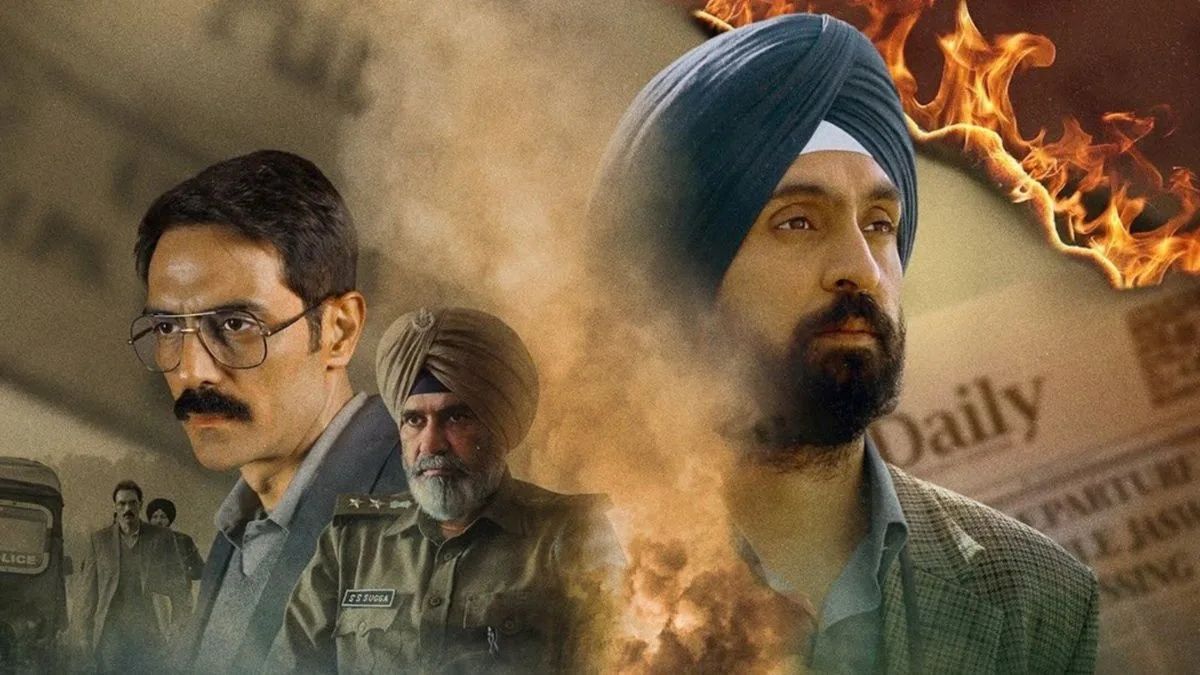
A prominent Indian filmmaker's four-year struggle to bring a biographical film about a Sikh human rights activist to cinema screens has crystallised growing concerns about state control over the nation's film industry. Honey Trehan spent years negotiating with Indian film authorities over his production "Satluj," ultimately enduring 127 requested alterations before abandoning theatrical release entirely. When the film finally appeared on streaming platform ZEE5 earlier this month, it remained available for only two days before being removed without clear explanation, with reports attributing the withdrawal to government pressure citing unspecified security concerns.
The rapid takedown of "Satluj" represents a troubling pattern that filmmakers and observers say reflects an unprecedented squeeze on creative expression in Indian cinema. The film depicts the life of Jaswant Singh Khalra, who documented extrajudicial killings and police brutality during counterinsurgency operations in Punjab during the 1980s and 1990s. These historical events remain politically sensitive, particularly given renewed scrutiny following Canada's allegations in 2023 regarding Indian government involvement in the death of a Sikh activist in Vancouver. For Prime Minister Narendra Modi's Bharatiya Janata Party, the subject matter touches on longstanding concerns about separatism and national security, even as decades have passed since the original conflict ended.
Trehan's accusation that authorities are using film regulation as a tool for political control points to a deeper transformation in how India manages cultural narratives. Unlike Western democracies that employ age-based rating systems, India's government-appointed Central Board of Film Certification wields direct authority over film content, capable of demanding edits before public exhibition. This structural power differs fundamentally from classification approaches used across North America and Europe, where regulatory bodies primarily advise on age appropriateness while filmmakers retain creative control. India's system grants state authorities the ability to actively reshape artistic works before audiences encounter them.
Parliamentary data underscores the scale of this regulatory machinery. Official figures show that 3,033 films required modifications during fiscal year 2025, more than double the number four years earlier. Yet the government provides minimal transparency about which changes were ordered or the justifications provided. The Central Board of Film Certification has not published a comprehensive standalone annual report detailing its activities since 2017, leaving the public and filmmaking community with incomplete information about censorship patterns and reasoning. This opacity itself constrains the ability of industry stakeholders to mount coherent challenges to perceived overreach.
Sadanand Dhume, a senior fellow at the Council on Foreign Relations specialising in South Asian politics, characterises the current moment as representing a significant departure from previous decades. While film censorship has deep historical roots extending back to colonial-era legislation, the intensity and scope of contemporary interventions appear to have intensified notably since 2014. Dhume suggests that India's broader political trajectory under Modi has created downstream consequences for Bollywood, with cinematic expression increasingly shaped by nationalist sensibilities and security anxieties rather than purely artistic or commercial considerations.
The board's official position, articulated by Chairperson Shashi Shekhar Vempati, maintains that modifications are imposed only when content violates specific legal categories including national sovereignty, public order, decency, and morality. The Ministry of Information and Broadcasting further notes that nearly 72,000 films have received certification over the past five years, suggesting a functioning system processing large volumes. However, filmmakers contend that the line between legitimate regulatory concerns and politically motivated suppression has become dangerously blurred, with vague standards like "national integrity" susceptible to arbitrary interpretation.
Recent cases illustrate how censorship extends beyond pre-release intervention. In 2025, the board demanded 24 post-release cuts to the Malayalam-language blockbuster "L2: Empuraan" following complaints from Hindu nationalist organisations regarding depictions of 2002 religious riots. Similarly, "Phule," a biographical film about 19th-century caste reformers, faced demands to remove caste-related language, while "Homebound," India's submission for the 2026 Academy Awards, obtained clearance only after 11 cuts targeting caste and religious references. By contrast, "Dhurandhar," a 2025 spy thriller depicting Indian intelligence operations against Pakistan, cleared certification with minimal difficulty, becoming the highest-grossing Hindi-language film ever—suggesting that patriotic narratives face substantially fewer obstacles.
Filmmaker Onir, who operates under a single name, describes the current environment as among the worst phases of Indian cinema, characterised by narrowing thematic variety and disappearing narratives. He recounts his own experience seeking certification for "Pine Cone," a 2023 film flagged by censors for containing the word "gay" in a scene involving a child character. The board's objection to this terminology forced removal of the dialogue before clearance could be granted, exemplifying how regulatory intervention extends to vocabulary and language itself, constraining not merely plot elements but the linguistic texture of storytelling.
Trehan's experience also demonstrates how international film festivals have become casualties of this domestic regulatory environment. "Satluj" had been selected for the Toronto International Film Festival in 2023 but was withdrawn before its scheduled premiere—a decision Trehan attributes to the ongoing legal conflict with Indian censors. The film was ultimately screened privately at Cannes in May, yet these international venues reach far smaller audiences than theatrical or streaming distribution. This dynamic effectively reduces Indian cinema's global visibility and denies international audiences access to important stories about the nation's recent history.
Despite official barriers and streaming platform removal, "Satluj" has nonetheless found its way to audiences through grassroots circulation. Across Punjab, the film is being screened in Sikh temples, community centres, and village squares by viewers who downloaded it before its disappearance from ZEE5. Trehan describes this organic distribution network as transformative, bringing together diverse communities—Hindu, Sikh, rich, poor, across caste lines—around shared viewing. The film's underground circulation paradoxically demonstrates both the futility of suppression attempts and the hunger for narratives authorities wish to constrain.
For Malaysian and Southeast Asian observers, the Indian situation carries cautionary implications. As democratic institutions across the region face pressure from nationalist movements and security concerns, the Indian example demonstrates how regulatory frameworks ostensibly designed for legitimate purposes can expand into comprehensive narrative control. The distinction between protecting genuine national security interests and suppressing politically inconvenient stories becomes increasingly difficult to maintain once governments possess direct censorship authority. Southeast Asian nations contemplating their own media regulation policies would benefit from examining how India's approach has contracted creative freedom while claiming to serve public interest, offering lessons about the long-term costs of centralised cultural control in nominally democratic systems.

