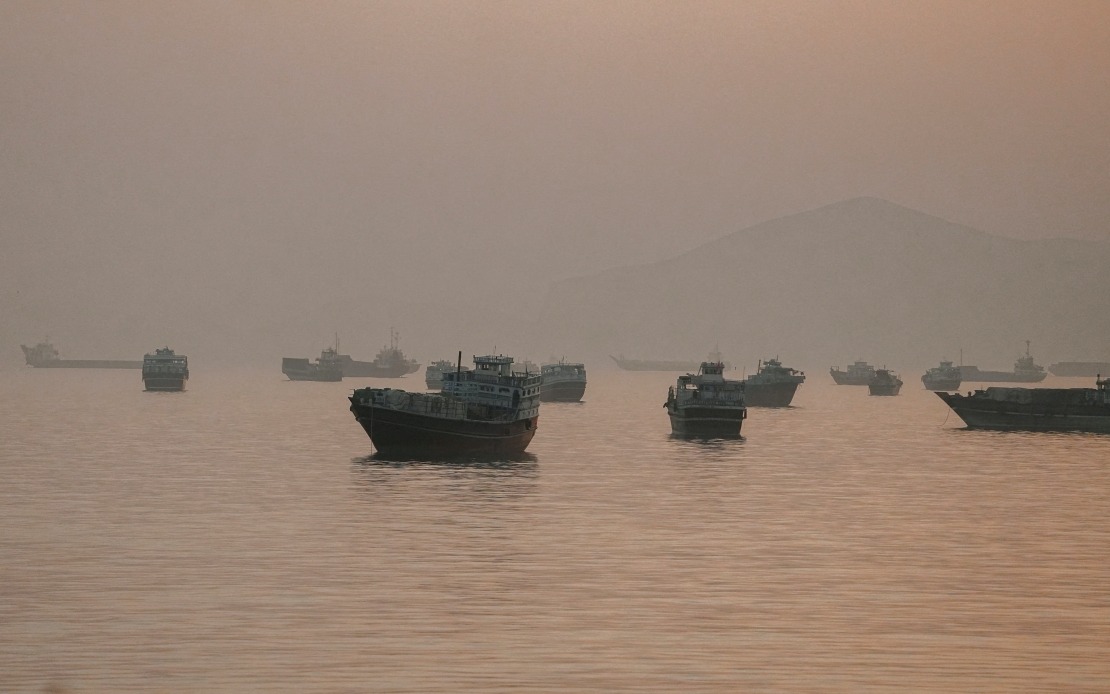
India's maritime regulator has taken decisive action to protect its seafarers by prohibiting their deployment on commercial vessels navigating the Strait of Hormuz, one of the world's most strategically vital shipping corridors. The Directorate General of Shipping, which functions as India's principal maritime authority, issued the sweeping directive late Wednesday, targeting shipowners, vessel management companies, and maritime recruitment agencies across the country. The intervention reflects growing alarm over deteriorating security conditions in the Persian Gulf and surrounding waters, where multiple vessel incidents have created a hazardous operating environment for merchant ships and their crews.
The catalyst for India's protective measure stems from a troubling surge in hostile activities targeting commercial shipping throughout the region. Over a three-day period immediately preceding the announcement, two Indian seafarers lost their lives in coordinated attacks against merchant vessels transiting disputed waters, while several additional crew members sustained injuries in related incidents. These casualties underscore the tangible human cost of geopolitical tensions in West Asia, where Indian maritime workers constitute a significant portion of the global merchant marine workforce. Rather than respond with diplomatic channels alone, New Delhi's maritime authority chose to enforce concrete operational restrictions designed to shield its nationals from immediate physical danger.
The underlying geopolitical driver for heightened maritime insecurity centres on the renewed confrontation between the United States and Iran, tensions that have reached fever pitch in the Arabian Sea and Persian Gulf region. The Strait of Hormuz, a waterway through which approximately one-third of global sea-borne traded petroleum transits daily, has emerged as a focal point for this escalating rivalry. When superpower competition intensifies in such strategically compressed geography, commercial shipping inevitably becomes collateral damage, caught between military posturing, proxy operations, and asymmetric tactics employed by competing powers. For maritime nations like India, whose seafaring population depends on international shipping for employment and livelihoods, such geopolitical turbulence translates directly into personal risk and economic uncertainty.
India's workforce dominates global seafaring professions, with Indian nationals comprising roughly 10 percent of the world's merchant marine personnel. Many hail from coastal states and maritime communities where generations have built careers in commercial shipping, making employment at sea a primary economic livelihood for thousands of families. The government's intervention to restrict deployment signals that New Delhi views the Strait of Hormuz corridor as presenting unacceptable occupational hazards that outweigh employment opportunities. This policy reversal demonstrates how geopolitical volatility in one region can trigger immediate economic consequences for workers thousands of kilometres away, disrupting employment chains and forcing mariners to seek alternative routes and assignments.
The practical implications of India's directive extend beyond individual seafarers to encompass the broader maritime and shipping ecosystem. Indian shipping companies and recruitment firms that specialise in placing crews aboard international vessels must now navigate a narrowed operational geography. Vessels previously routed through the Strait of Hormuz may require rerouting via longer southern passages around Africa, adding weeks to voyages, increasing fuel consumption, and elevating shipping costs. For Indian companies competing in a globally integrated maritime market, the restriction creates competitive disadvantages against carriers from nations without equivalent safety restrictions. The cascading economic effects ripple through related industries including port operations, maritime insurance, and logistics services where Indian enterprises maintain substantial commercial interests.
The timing of India's action reflects the acceleration of regional instability rather than any isolated incident. Attacks on commercial shipping in the Arabian Sea and Gulf waters have intensified substantially in recent months, creating a pattern rather than sporadic occurrences. International maritime authorities have issued repeated warnings about transit risks, and insurance premiums for vessels operating in the region have escalated dramatically. By formalising what many shipping companies were already doing informally, India's maritime authority publicly validates the severity of security deterioration and acknowledges that market forces alone cannot adequately protect workers in zones where geopolitical actors deliberately target commercial infrastructure.
For Southeast Asian shipping interests and maritime nations within the region, India's protective measure carries instructive implications. Countries including Malaysia, Singapore, and Indonesia, which maintain substantial maritime sectors and seafaring populations, monitor Indian policy closely as a bellwether for broader shipping industry challenges. The Strait of Hormuz incident underscores how regional geopolitical conflicts can directly threaten maritime labour forces across Asia, creating pressure on governments to implement protective restrictions that ultimately fragment global shipping networks. Southeast Asian nations have their own seafarers deployed throughout international waters, making them vulnerable to similar security risks in conflict-affected regions. India's precedent may encourage other maritime nations to implement comparable restrictions in other geopolitically sensitive zones, further fracturing the globalised shipping system.
The diplomatic dimension of India's action merits consideration alongside its immediate occupational safety rationale. By publicly restricting seafarer deployment, India sends a clear message about the unacceptability of maritime insecurity in zones critical to global commerce. The move effectively externalises India's maritime security concerns to international forums, pressuring global powers to address underlying tensions. Simultaneously, the restriction signals to India's seafarers that government prioritises their welfare over commercial interests, enhancing state legitimacy among maritime communities. The directive also provides political cover for Indian shipping companies facing pressure from crew unions and safety advocates to protect workers from unreasonable occupational hazards.
The longer-term trajectory of this policy depends substantially on how geopolitical tensions in the Persian Gulf evolve. Should US-Iran confrontation intensify further, India may expand restrictions to additional zones or impose stricter monitoring of alternative routes. Conversely, if diplomatic channels produce de-escalation and security conditions normalise, the government might gradually relax deployment restrictions, though probably only after establishing sustained periods of reduced incident frequency. The decision reflects a broader global shift toward placing increased weight on worker safety considerations in maritime policy, acknowledging that commercial shipping cannot function sustainably when crews face unacceptable security threats. For Indian seafarers and the nations that employ them, the government's willingness to enforce occupational safety restrictions represents a significant acknowledgment that profit maximisation cannot override fundamental protections for maritime labour.

