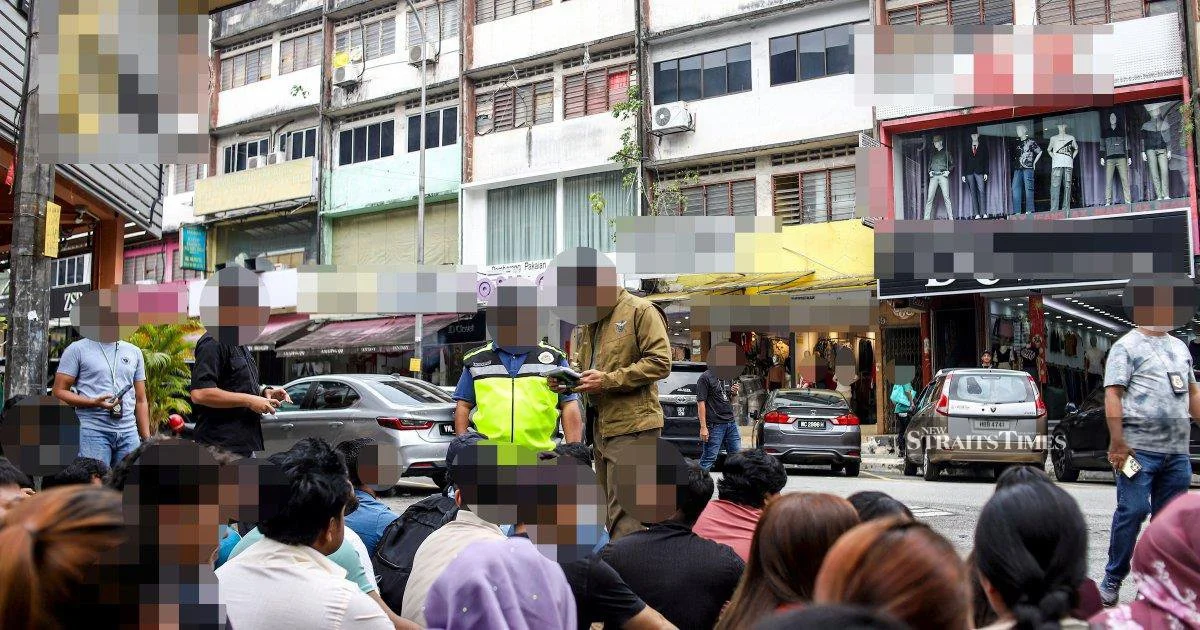
A major immigration enforcement operation targeting undocumented workers unfolded across Kuala Lumpur's prominent Jalan Kenanga wholesale clothing precinct, resulting in the apprehension of 111 individuals found to be in the country without proper documentation. The coordinated raid by immigration officers represents continued crackdowns on irregular migration within Malaysia's commercial districts, where concentration of migrant workers remains an ongoing enforcement priority.
Jalan Kenanga has long served as a critical hub for Malaysia's textile and wholesale clothing trade, with hundreds of businesses operating from the narrow streets and shophouses that characterise the area. The district attracts significant migrant labour due to the nature of work available and the accessibility of employment opportunities for both documented and undocumented workers. This economic magnetism has also made it a focal point for immigration enforcement activities, as authorities seek to regulate the movement and employment of foreign nationals within high-density commercial zones.
The scale of the operation underscores the persistent challenge facing Malaysian immigration authorities in managing undocumented migration, particularly in urban commercial areas where workers often blend into existing communities and supply chains. Such enforcement sweeps have become routine across major cities, though the capture of over one hundred individuals in a single operation demonstrates the sizeable informal migrant workforce operating within visible business premises despite regulatory oversight.
Undocumented migration remains a complex issue for Malaysia, which hosts one of Southeast Asia's largest migrant workforces. The phenomenon spans multiple sectors including manufacturing, construction, hospitality, and domestic work, though commercial districts like Jalan Kenanga reveal how irregular workers penetrate even formal wholesale operations. The presence of undocumented migrants in legitimate businesses creates friction between labour market demands and regulatory compliance, with employers often facing pressure to meet productivity targets while navigating increasingly stringent immigration enforcement.
Immediate processing of the 111 apprehended individuals would typically follow standard immigration procedures, including documentation verification, background screening, and arrangements for either deportation or regularisation depending on individual circumstances and applicable regulations. The logistics of processing such large numbers place significant strain on immigration detention facilities and administrative resources, a recurring challenge during intensive enforcement periods.
Beyond immediate enforcement outcomes, the operation reflects broader Malaysian policy oscillations regarding migrant worker management. Authorities must balance suppressing irregular migration against economic realities where certain sectors depend substantially on migrant labour, documented or otherwise. The wholesale clothing industry exemplifies this tension, as many businesses cannot compete regionally or globally without cost structures that historically have relied on flexible, informal labour arrangements.
Industry observers note that enforcement sweeps, while necessary for regulatory compliance and worker protection, often create short-term supply disruptions without addressing underlying structural factors driving undocumented employment. Without complementary measures addressing employer compliance incentives or regularisation pathways, raids typically yield temporary displacement of workers rather than sustained reduction in irregular migration flows.
The Jalan Kenanga operation also highlights geographic concentration of enforcement attention, with immigration resources focusing disproportionately on visible commercial precincts rather than scattered informal sectors. This approach yields high arrest numbers suitable for public reporting but may not optimally address the broader undocumented migration landscape where workers in domestic service, agriculture, and scattered manufacturing often evade detection entirely.
From a Southeast Asian regional perspective, Malaysia's enforcement intensity reflects broader anxieties across destination countries regarding migration management and border integrity. The region collectively hosts millions of migrant workers whose legal status varies considerably, and individual nation crackdowns create ripple effects affecting labour availability, pricing, and informal networks spanning multiple countries.
Worker rights implications merit consideration alongside enforcement priorities, as undocumented status inherently creates vulnerability to exploitation, wage theft, and unsafe working conditions. Rather than incentivising compliance with protective labour standards, enforcement-only approaches may drive workers further underground, reducing visibility and making them more susceptible to trafficking networks and employer abuses.
Looking forward, the incident underscores ongoing pressures on Malaysian immigration agencies to demonstrate operational effectiveness while acknowledging that sustainable solutions to irregular migration require coordination across multiple government agencies, private sector engagement, and potentially regional cooperation mechanisms addressing root causes in origin countries.

