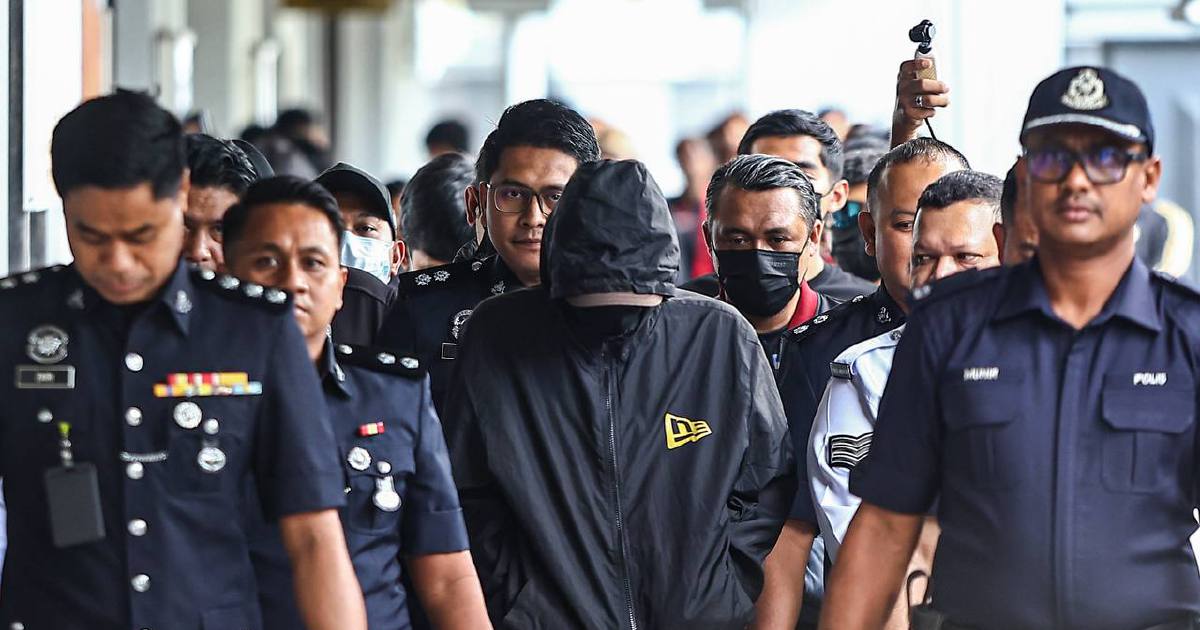
The driver of an Immigration Department lorry appeared before the Kuala Lumpur magistrates' court to face a total of five charges stemming from a catastrophic collision at the Maju Junction intersection on Jalan Sultan Ismail. Among these charges are three counts of causing death through reckless or dangerous driving—each carrying substantial sentencing implications—related to the deaths of three family members who perished in the accident. The driver maintained a not guilty plea when presented before the court, setting the stage for what is expected to be a closely watched case given the government institution involved and the tragic loss of life.
The accident at the Maju Junction, a busy commercial and traffic interchange in central Kuala Lumpur, has drawn significant public attention given the severity of the outcome and the number of fatalities involved in what appeared to be a single vehicular incident. Such fatal collisions at major intersections in Kuala Lumpur have become a recurring concern for traffic safety advocates and city planners, who have repeatedly highlighted the dangers posed by congested roads and high-speed traffic flow at critical junctures. The Maju Junction serves as a crucial convergence point for multiple routes in the city, making it an intersection where vehicle volumes are typically considerable throughout the day.
The charges brought against the driver encompass not only the three counts of causing death by reckless or dangerous driving but also additional offences that collectively paint a picture of the prosecution's case. The distinction between reckless and dangerous driving in Malaysian law carries different thresholds of culpability, with courts examining factors such as the driver's awareness of risk, their actions in response to hazards, and the degree to which their conduct deviated from the standard expected of a reasonably prudent driver. Each element will likely feature prominently in the forthcoming legal proceedings.
The death of three members of a single family unit within the same vehicle incident underscores the devastating human cost of traffic accidents, particularly those involving heavy vehicles such as lorries. Family fatalities in road crashes often trigger broader conversations about enforcement of traffic regulations, the adequacy of vehicle maintenance standards, and the professional competency of drivers operating commercial vehicles. The involvement of an Immigration Department vehicle adds a layer of institutional responsibility, as government agencies are frequently held to particular standards regarding fleet management and driver conduct.
For families who have suffered losses in fatal traffic incidents, the court proceedings represent both a pursuit of accountability and a means of understanding how and why their loved ones died. The trial will inevitably examine the circumstances leading to the collision, including questions about the vehicle's condition, the driver's actions in the moments preceding the crash, visibility conditions, traffic signals, and whether any mechanical failure contributed to the incident. Expert testimony from accident reconstruction specialists, medical examiners, and vehicle mechanics may be called to establish the sequence of events.
The magistrates' court decision to allow the driver to claim trial rather than proceed with a guilty plea indicates that there are factual disputes to be resolved or legal arguments to be contested. The defence may challenge the characterization of the driving as sufficiently reckless or dangerous, may point to external factors beyond the driver's control, or may contest the causation between the driving conduct and the fatalities. Alternatively, the driver's legal team might pursue arguments relating to the appropriateness of the court level for certain charges, given that causing death by dangerous driving can carry sentences of up to ten years imprisonment and substantial fines.
From a broader traffic safety perspective, fatal accidents involving government vehicles are particularly significant because they often prompt institutional reviews of training protocols, vehicle maintenance procedures, and driver vetting mechanisms. The Immigration Department, as a public-sector employer, may face scrutiny regarding whether its drivers receive adequate training in defensive driving techniques and whether its fleet vehicles are maintained to the highest standards. Such reviews, while sometimes viewed as inconvenient by agencies, can yield important systemic improvements that protect both road users and the public.
The Jalan Sultan Ismail corridor, being a major arterial route in central Kuala Lumpur, experiences constant traffic pressure. Accidents at the Maju Junction may prompt traffic authorities to evaluate whether additional safety measures—such as enhanced signage, modified traffic light timing, or revised speed restrictions—could be implemented to reduce collision risk. The height differential between a loaded lorry and a typical car, combined with the substantial mass and momentum of such vehicles, creates inherent vulnerabilities that demand careful management by drivers and supportive traffic infrastructure.
The court proceedings will unfold over what is likely to be several months, during which evidence will be presented and tested. The prosecution must establish beyond reasonable doubt that the driver's conduct constituted reckless or dangerous driving and that this conduct directly caused the deaths. The defence will have the opportunity to challenge the credibility of witnesses, the reliability of physical evidence, and the conclusions drawn by investigators. These proceedings will ultimately contribute to the evolving body of case law in Malaysia regarding vehicular homicide and the standards by which drivers are held accountable for traffic fatalities.

