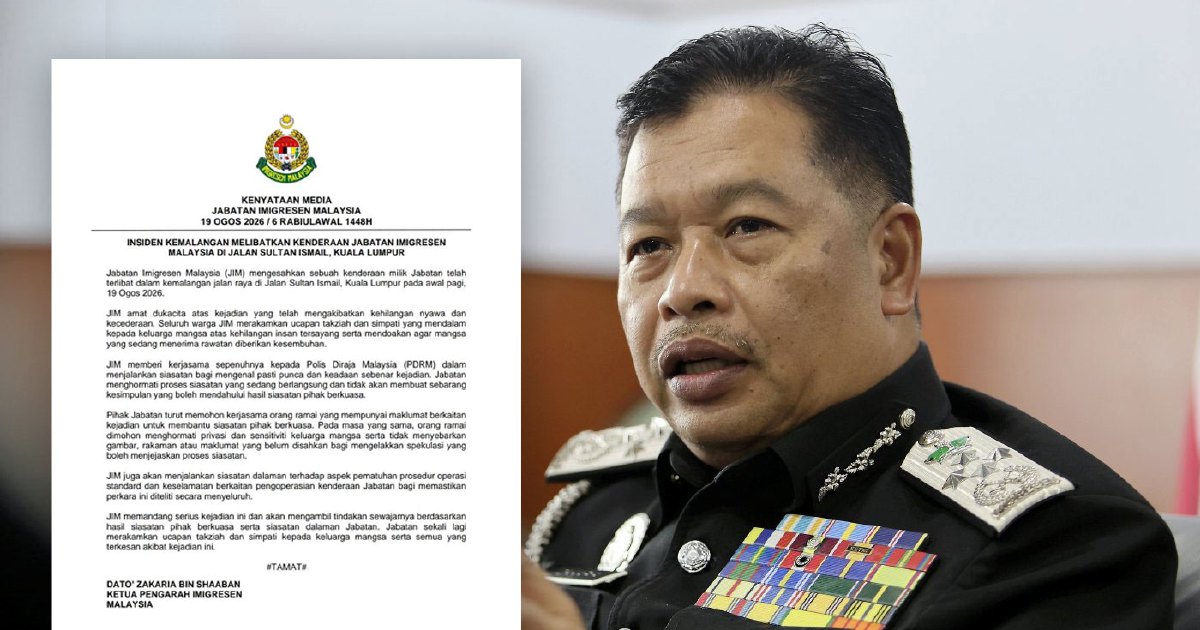
The Immigration Department has launched an internal investigation into the fatal road accident involving one of its vehicles that occurred on Jalan Sultan Ismail in Kuala Lumpur early today. The probe will focus on whether departmental staff adhered to established standard operating procedures and implemented proper safety measures at the time of the incident. This development underscores the growing scrutiny on government agencies regarding vehicular safety and compliance with operational guidelines.
The decision to conduct an in-house review reflects the department's commitment to accountability following the incident. Internal investigations of this nature typically examine multiple factors, including driver conduct, vehicle maintenance records, adherence to speed limits, and whether all prescribed safety protocols were observed. The Immigration Department's proactive stance suggests management takes the matter seriously and seeks to identify any gaps in current operational frameworks that may have contributed to the tragedy.
Jalan Sultan Ismail, a major arterial route in central Kuala Lumpur frequently traversed by government and private vehicles, has been the site of several accidents over the years. The incident highlights ongoing concerns about road safety even on well-established routes with regular traffic management. For Malaysian readers, such accidents involving government vehicles often raise questions about whether public sector employees receive adequate training in defensive driving techniques and whether vehicles meet current safety standards.
The Immigration Department operates a significant fleet of vehicles used for operational duties across Malaysia. These range from patrol vehicles to administrative transport. Maintaining compliance with SOPs is critical not only for the safety of department personnel but also for protecting the public who share roads with these vehicles. Any lapse in safety measures could have serious consequences, making the investigation particularly important for establishing accountability and preventing future occurrences.
Standard operating procedures in government departments typically include mandatory safety briefings, regular vehicle maintenance schedules, speed compliance guidelines, and protocols for different road conditions. The investigation will likely examine whether the Immigration Department's existing procedures were comprehensive enough and whether staff training was adequate. This examination may result in updated guidelines or enhanced training programmes to reinforce safety consciousness among personnel.
Road fatalities involving government vehicles often attract heightened public attention and media scrutiny in Malaysia. The public expects higher standards of conduct from government employees, particularly regarding compliance with traffic laws and safety regulations. An accident resulting in fatalities raises legitimate questions about whether the vehicle's operators were held to the same standards as other road users, and whether departmental culture prioritises safety sufficiently.
The outcome of this internal investigation will likely be monitored by other government agencies and ministries, as it may set precedent for how similar incidents are handled across the public sector. If the Immigration Department identifies systematic failures in its safety protocols, it could prompt a broader review of vehicle management practices throughout government agencies. Conversely, if the investigation concludes that all SOPs were followed and the incident was unavoidable, it may provide reassurance about existing procedures.
For the affected families and the wider public, such investigations serve an important function beyond merely documenting what happened. They demonstrate institutional commitment to learning from tragedy and implementing safeguards to reduce future risk. The transparency with which the Immigration Department conducts and reports its findings will significantly influence public confidence in the department's integrity and effectiveness.
The timing and scope of this investigation will be crucial indicators of the department's commitment to thoroughness. A superficial review conducted hastily could undermine public trust, whereas a comprehensive examination that takes appropriate time to examine all relevant factors demonstrates genuine accountability. The department's willingness to share findings and implement recommendations will ultimately determine whether this incident leads to meaningful improvements in safety practices.
Regional context is also relevant here, as Malaysian government agencies increasingly face pressure to demonstrate world-class standards in operational management and safety. As Southeast Asia's economies develop, expectations for public sector performance and accountability continue to rise. How the Immigration Department handles this investigation and implements any resulting reforms may influence perceptions of Malaysia's public administration more broadly.

