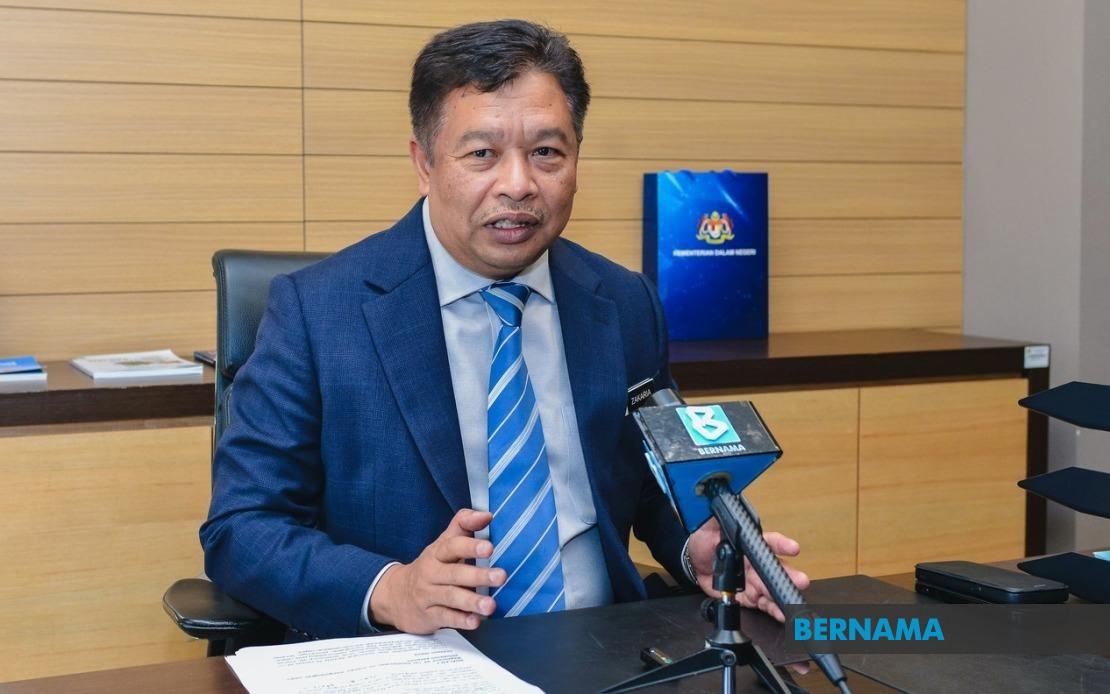
The Immigration Department has elevated its operational readiness to maximum capacity as it braces for a potential surge in cross-border traffic ahead of the Johor State Election scheduled for Saturday, July 11. Department director-general Datuk Zakaria Shaaban announced that continuous system monitoring is underway at the country's primary entry points to facilitate the smooth return of voters, underscoring the government's determination to remove logistical obstacles to democratic participation.
Operations at the two major gateway facilities serving the Johor-Singapore corridor are currently functioning without incident, according to Zakaria. The Sultan Abu Bakar Complex at Tanjung Kupang and the Sultan Iskandar Building at JB Sentral, which collectively process hundreds of thousands of travellers daily, are both operating within normal parameters. The department is maintaining vigilant oversight of these critical infrastructure points to preempt any technical failures that could impede voter mobility during the election period.
Recognising the vulnerability of digital systems to unexpected disruptions, the Immigration Department has devised contingency arrangements to sustain operations regardless of circumstances. Zakaria revealed that while the current inspection infrastructure remains operational, the technical team stands prepared to implement manual processing procedures should any system malfunction occur. This two-tiered approach ensures that even in worst-case scenarios, the flow of returning voters through the Immigration, Customs and Quarantine complexes will remain uninterrupted, preventing frustrated queues and frustration among citizens attempting to fulfil their electoral obligations.
The around-the-clock surveillance by immigration technical specialists represents a calculated investment in electoral accessibility. By maintaining constant vigilance over system performance metrics, technicians can identify and resolve emerging problems before they escalate into operational crises. This proactive stance reflects an understanding that delays at border crossings disproportionately affect working voters commuting from Singapore, potentially discouraging participation among one of the largest concentrated blocs of Johor-connected voters.
Home Minister Datuk Seri Saifuddin Nasution Ismail has also offered assurances that his ministry will prioritise seamless travel arrangements for voters employed in Singapore. His commitment extends beyond merely hoping for the best; it encompasses a comprehensive mitigation framework designed to address multiple contingency scenarios. This layered approach demonstrates governmental acknowledgment that international border infrastructure represents one of the most complex operational environments in national administration.
The two primary crossing points handle extraordinary volumes under normal circumstances. The Sultan Iskandar Building, which links JB Sentral with Singapore's Woodlands checkpoint, and the Sultan Abu Bakar Complex, accessible via the Malaysia-Singapore Second Link known as Linkedua, collectively process up to 300,000 individuals daily during routine periods. Election day will likely see these already strained facilities absorb concentrations of returning voters compressed into a relatively brief window, testing operational capacity despite enhanced preparations.
This election represents a significant democratic exercise, with 172 candidates competing for 56 parliamentary seats across Johor. The scale of this contest underscores why smooth border operations are critical to electoral integrity. Voters unable to traverse immigration checkpoints cannot participate, effectively disenfranchising portions of the eligible population. The government's emphasis on removing these barriers reflects recognition that logistical impediments can undermine democratic processes just as substantially as formal restrictions.
Early voting opportunities scheduled for July 7 provide some relief to the system by distributing voter traffic across multiple days rather than concentrating movement on polling day itself. However, many voters may still prefer to participate on the final day or may be unable to coordinate leave from their workplaces for an earlier voting date, necessitating robust contingency planning for the main election day. The staggered arrangement helps but cannot entirely mitigate the pressure expected on immigration infrastructure.
For Malaysians resident in Singapore, which represents a substantial demographic in Johor's registered voter rolls, these preparations carry direct personal significance. The inability to vote easily translates into reduced representation and diminished political voice for expatriate workers. By emphasising accessibility, the government signals that diaspora participation matters and that employment abroad need not result in democratic exclusion. This approach may have broader implications for voter engagement patterns among Malaysia's significant transnational workforce.
The coordination between the Immigration Department and Home Ministry reflects an integrated approach to managing what is fundamentally a shared governance challenge. Rather than siloing responsibility, both entities have aligned their preparedness strategies around a common objective. This inter-agency collaboration provides additional assurance that problems at one facility will not cascade into broader systemic failures elsewhere along the corridor.
The operational emphasis on system redundancy and manual backup procedures also illustrates Malaysia's technological maturity and organisational capacity. Rather than relying entirely on automated systems, planners have engineered fallback mechanisms that allow human expertise to sustain operations when technology falters. This hybrid approach balances efficiency with resilience, ensuring that even unexpected failures do not translate into democratic dysfunction.
As polling day approaches, these preparations will face their ultimate test. The actual performance of immigration infrastructure under election-day conditions will determine whether advance planning translates into genuine voter accessibility or whether workers returning from Singapore encounter the bottlenecks and delays that preparations ostensibly aim to prevent. Success requires not only technical readiness but also flexibility and problem-solving capacity from frontline immigration personnel navigating real-time challenges.
The government's commitment to enabling voter participation across the Johor-Singapore frontier ultimately reflects a broader principle: that electoral access should not be constrained by geography or employment circumstances. By mobilising resources and demonstrating political will to maintain border functionality on election day, authorities acknowledge their responsibility to facilitate democratic engagement across all segments of the eligible population, regardless of where they work or reside.

