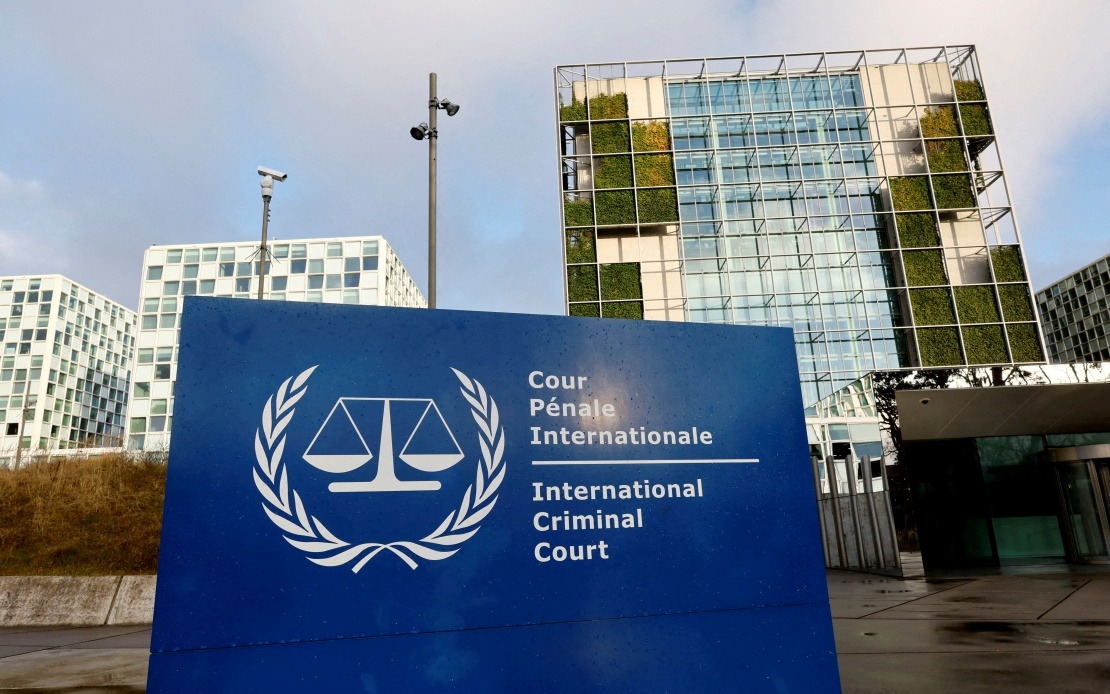
The International Criminal Court has issued a forceful rebuke to the United States over fresh sanctions imposed on the institution's leadership and key judicial personnel. The latest designations, announced in August, target ICC President Tomoko Akane of Japan alongside Abdoulaye Seye, a prominent trial lawyer within the Office of the Prosecutor based at The Hague. The court's leadership characterized these measures as fundamentally incompatible with the principles that underpin international legal frameworks and the pursuit of accountability for mass atrocities.
The escalating sanctions regime now ensnares nine of the court's eighteen sitting judges, both deputy prosecutors, a former prosecutor, and additional staff members. This expansion reflects an intensifying pressure campaign that has grown substantially over recent years, representing a significant shift in Washington's posture toward multilateral judicial institutions. The breadth of the targeting—spanning multiple organizational levels and encompassing both serving and former officials—suggests a coordinated effort to penalize the institution as a whole rather than specific individuals for particular actions.
In its formal statement, the ICC articulated a clear distinction between legitimate government criticism and coercive measures that compromise institutional functioning. The court emphasized that sanctions targeting judges and prosecutors for executing their constitutional mandate contradict foundational commitments to due process and independent adjudication. This framing positions the dispute not as a disagreement over specific cases or interpretations, but as a fundamental challenge to whether international institutions can operate free from great-power pressure.
The timing and scope of the sanctions reflect underlying tensions between the United States and the ICC over the court's investigative and prosecutorial priorities. The institution's pursuit of cases involving American allies and, increasingly, investigations into matters that Washington views as beyond the court's proper jurisdiction, have created sustained friction. For regional observers, particularly those in Southeast Asia, the sanctions underscore how powerful nations can weaponize economic and diplomatic tools to constrain international institutions they view as threatening to their interests.
The ICC's concern about victims' access to justice carries particular resonance in contexts marked by protracted conflict and weak domestic accountability mechanisms. When survivors of international crimes have exhausted local remedies and find themselves unable to secure justice through national courts due to state incapacity or unwillingness, the international criminal system becomes their final recourse. Sanctions that weaken the ICC's institutional capacity or deter officials from performing their duties effectively thus create direct consequences for victims seeking recognition and accountability.
The court characterized these sanctions as creating broader systemic risks beyond the immediate institutional impact. By subjecting international judicial personnel to unilateral economic punishment for performing their official duties, states potentially establish dangerous precedents that could undermine cooperation with other international bodies. This concern extends to specialized agencies, human rights mechanisms, and dispute resolution forums that depend on the presumption that their officials can act without fear of retribution from powerful nations.
The ICC's assertion of continued independence despite external pressure represents both a defiant posture and an acknowledgment of vulnerability. The court's statement reaffirmed its commitment to the Rome Statute framework, which establishes its mandate and operational principles. However, the necessity of such reaffirmations suggests that the institutional resolve faces testing. Judges and prosecutors who face asset freezes and visa restrictions may experience genuine constraints on their effectiveness, even if they maintain formal independence in their decision-making.
The expressed support from member states and civil society organizations mentioned in the court's response indicates divisions within the international community regarding American sanctions policy. Many nations that comprise the ICC's membership view the sanctions as illegitimate interference in judicial processes. This support, however, remains largely rhetorical, with few states willing to impose offsetting consequences on the United States or provide meaningful material support to sanctioned officials.
For Malaysia and other Southeast Asian nations, this dispute presents complex considerations. The region's states have varied relationships with the ICC and differing assessments of international justice mechanisms. Some view the court as a valuable institution for addressing atrocities that domestic systems cannot handle, while others regard it with suspicion as potentially infringing on national sovereignty. The sanctions crisis forces these nations to contemplate whether they will support multilateral judicial institutions even when doing so creates friction with powerful allies.
The broader trajectory suggests sustained institutional strain ahead. If the United States maintains or expands sanctions while the ICC continues pursuing investigations that Washington opposes, the court faces genuine operational challenges. The financial penalties and travel restrictions complicate recruitment of international staff, may reduce the institution's attractiveness to potential employees, and create practical obstacles for officials seeking to fulfill their functions. These cascading effects could ultimately compromise the court's capacity to deliver on its mandate regardless of stated commitment to independence.
The institutional conflict also reflects deeper questions about power and international law in an era of declining consensus on global governance. The United States' willingness to employ sanctions against an institution it helped establish signals significant shifts in American foreign policy orientation. For the international legal order more broadly, and for justice-seeking communities worldwide, the outcome of this confrontation will likely influence whether international institutions can operate as genuinely independent bodies or whether they remain ultimately subordinate to great-power interests.

