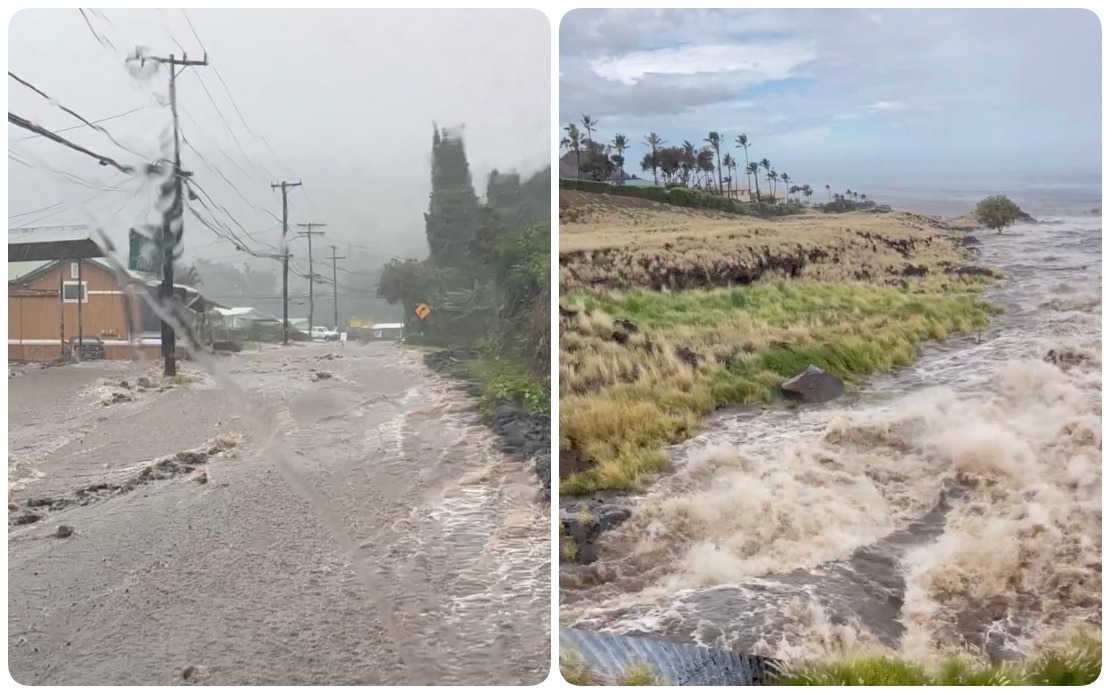
Hurricane Lala descended upon Hawaii on Saturday, August 15, delivering a punishing combination of destructive winds and relentless rainfall across the archipelago's populated islands. The storm tracked just south of Hawaii Island, its outer bands extending damaging conditions across Maui County, Oahu and Kauai. By evening, the disruption had become severe enough that authorities urged residents to remain sheltered indoors as conditions deteriorated throughout the day.
The scale of the electrical infrastructure damage proved immediately evident. Hawaiian Electric reported that more than 88,000 customers had lost power by 7 p.m. local time. The utility's detailed breakdown illustrated the storm's uneven but widespread impact: Hawaii Island bore the brunt with 63,270 outages, followed by Maui County with approximately 15,260 disconnections and Oahu with roughly 9,500. These figures represented a significant proportion of the utility's customer base across these major population centers, disrupting hospitals, businesses, water systems and homes throughout the affected regions.
Rainfall measurements underscored the intensity of precipitation in the most exposed areas. Hawaii Governor Josh Green reported that certain locations on Hawaii Island had accumulated more than 13 inches of rain by mid-afternoon, a volume that typically overwhelms drainage systems and creates dangerous water conditions. The governor also indicated that conditions continued to deteriorate across the other islands as the storm's center moved through the region, suggesting that rainfall totals and wind damage would worsen before improvement occurred.
Physical infrastructure sustained considerable damage from both wind and water. The Hawaii Emergency Management Agency documented extensive flooding, numerously downed trees and perilous wind conditions across Hawaii Island particularly. Footage released by the Department of Transportation depicted streams overflowing their banks and roadways submerged under moving water. Hawaii police reports highlighted specific locations where damage forced public infrastructure closures: Kahikopele Street in Mountain View became impassable due to floodwaters, while Pauahi Street experienced significant inundation. The Mamalahoa Highway saw numerous fallen trees and accumulated debris that necessitated traffic warnings and likely closures.
Wind speeds achieved dangerous levels in exposed areas, with Hawaiian Electric recording gusts approaching 90 miles per hour on portions of Hawaii Island. Such velocity caused severe structural damage to the electrical transmission system, particularly along the Hamakua coast where a 42-mile stretch of transmission lines experienced multiple poles and supporting structures knocked down by fallen trees. This extensive damage to the backbone of the electricity distribution system meant that even after dangerous conditions subsided, restoration would require substantial time and resources.
The utility company provided a sobering assessment of recovery timelines. Hawaiian Electric cautioned that customers already without power on Hawaii Island and Maui should expect to remain disconnected at minimum through the night, as hazardous winds and downed debris made it impossible for line crews to access damaged equipment safely. This extended outage window posed particular challenges for vulnerable populations including the elderly, individuals with medical equipment dependence and families with young children, while also disrupting commercial activity and food storage in homes and small businesses.
Transportation disruptions compounded the disaster's immediate impact. Multiple road closures across Hawaii Island, Maui and Oahu fragmented the transportation network just when residents needed to reach shelters, medical facilities or safety. The Department of Transportation's advisories stressed the importance of sheltering in place or relocating to established shelter facilities, acknowledging that traveling during the storm represented an unacceptable risk. Downed power lines that forced the closure of Plumeria Street exemplified how electrical infrastructure damage created secondary hazards that restricted movement and access.
The timing and trajectory of Hurricane Lala held particular significance for Hawaii's economic and residential stability. August represents a critical period for tourism and summer business activity, with the disruption affecting visitor accommodations, restaurants and attractions across multiple islands. More fundamentally, the widespread outages threatened water supply systems that depend on electrically-powered pumps, food security in refrigeration-dependent households and businesses, and access to air conditioning in tropical climates where heat exposure poses genuine health risks.
For Malaysian and Southeast Asian observers, Hurricane Lala's impact illuminates the vulnerability of island communities to tropical weather systems, despite the presence of developed infrastructure and substantial resources. The storm demonstrated how rapidly modern power systems can be compromised by sustained winds exceeding 90 mph and how recovery from widespread tree fall and transmission line damage requires days of careful restoration work. The Hawaiian response pattern—emphasizing emergency management coordination, utility rapid assessment and shelter-in-place directives—represents an approach familiar to regions frequently affected by monsoons and typhoons, though Hawaii's infrastructure generally allows faster restoration than developing nations might achieve.

