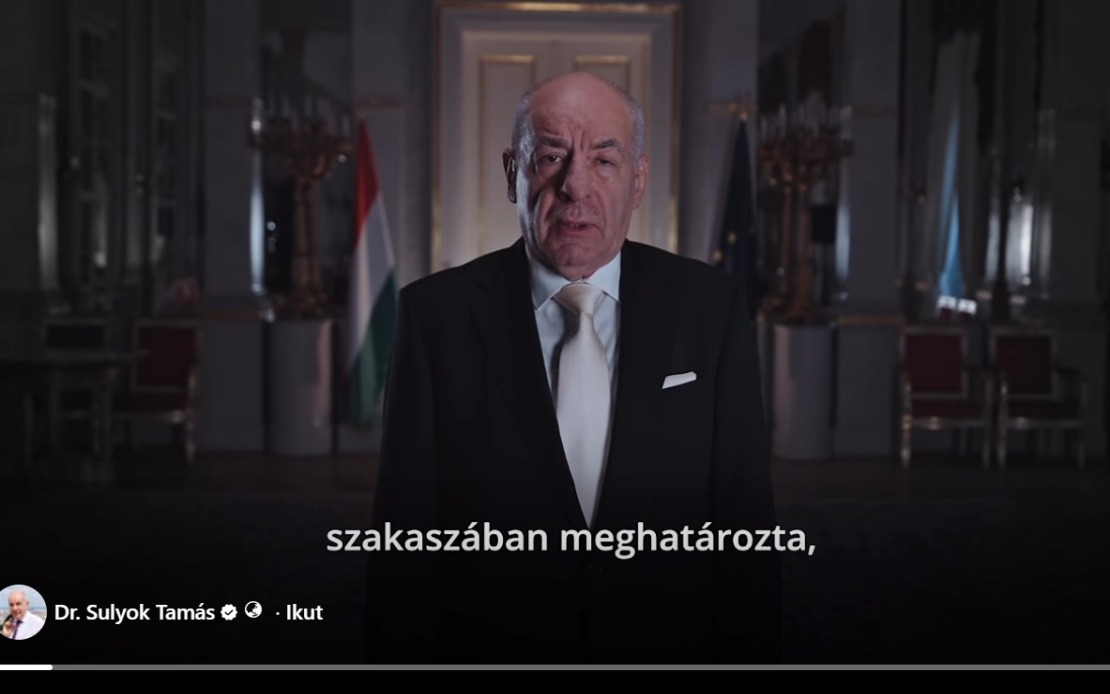
Hungary's political landscape shifted decisively on Monday when President Tamás Sulyok, an ideological supporter of ousted former Prime Minister Viktor Orbán, capitulated to pressure and approved constitutional amendments designed to force his resignation from office. The decision concludes a tense standoff that erupted after Hungary's parliament passed sweeping constitutional reforms intended to reshape the nation's governance framework and curtail presidential powers that had accumulated under the Orbán administration's tenure.
Sulyok's acceptance came under duress, following an ultimatum from newly elected Prime Minister Péter Magyar that gave the president five days to endorse the constitutional changes or face impeachment proceedings. The threat of formal removal proved sufficient incentive for Sulyok to countersign the amendments, effectively paving his own exit despite his stated reservations about the legality of the proceedings. This capitulation represents a dramatic reversal from Sulyok's initial hesitation and opens the door for Hungary's political transition to advance without the constitutional crisis that had threatened to derail Magyar's reform agenda.
The constitutional amendments themselves constitute a fundamental restructuring of Hungary's executive authority. Under the new framework, the presidency becomes significantly weakened compared to its previous configuration, with the head of state stripped of meaningful oversight functions that political analysts had increasingly criticized as incompatible with genuine democratic governance. The changes address longstanding concerns among international observers and domestic reformers who contended that the Orbán-era presidency had evolved into a ceremonial position with limited accountability, essentially serving as a rubber-stamp institution rather than an independent constitutional guardian.
Parliamentary Speaker Agnes Forsthoffer will assume presidential duties following Sulyok's departure, serving in a caretaker capacity until parliament selects a successor within thirty days. This interim arrangement reflects Hungary's constitutional framework whereby the legislature, rather than direct popular election, determines who occupies the highest state office. The procedural approach underscores how Hungary's political system concentrates significant power within parliament, a characteristic that both enables rapid institutional reform and creates vulnerability to majoritarian overreach if democratic safeguards prove insufficient.
Sulyok's position throughout this episode revealed the inherent contradiction facing institutional leaders tied to previous political regimes. Though he publicly objected to what he characterized as unconstitutional proceedings, his practical legal options evaporated once the constitutional court declined to intervene on substantive grounds. The court's restraint, limiting itself to potential formal objections rather than substantive review, effectively neutralized Sulyok's primary avenue for resistance and exposed the vulnerability of individual officials when arrayed against determined parliamentary majorities empowered to amend foundational law.
Prime Minister Magyar framed the constitutional overhaul as restoration of authentic democratic governance and reassertion of civil authority over state institutions. His Facebook statement emphasized that the reforms would restore public confidence in limited executive power, reverse what he characterized as the Orbán regime's systematic erosion of constitutional constraints, and reestablish the principle that state apparatus exists to serve citizens rather than perpetuate elite prerogatives. This rhetorical positioning situates Magyar's government within a broader historical narrative of democratic renewal following perceived authoritarian consolidation.
Sulyok's public complaints about presidential powerlessness proved prescient regarding the institutional vulnerabilities his position had exposed. In a video address, he lamented that the reformed presidency would render future heads of state entirely subordinate to executive and parliamentary will, stripped of meaningful independent function or capacity to constrain political overreach. His warnings, however accurate regarding the diminished stature of his successor's office, arrived too late to mobilize effective institutional resistance and instead served primarily as an epitaph for a presidential model that Magyar's government explicitly rejected as incompatible with democratic renewal.
For Southeast Asian observers, Hungary's constitutional reconfiguration offers instructive parallels regarding the mechanisms through which political transitions fundamentally reorganize institutional power. The episode demonstrates how constitutional amendment procedures, particularly in parliamentary systems where legislatures control the amendment process, can facilitate rapid institutional reconstruction when political majorities command supermajority support. Malaysia's own constitutional framework and the historical debates surrounding executive-legislative balance provide relevant context for understanding how different democracies structure checks and balances across institutions.
The constitutional changes enabling broader political reforms represent an ambitious attempt to dismantle institutional inheritance from the Orbán period. Magyar's government clearly envisioned the presidential reform as merely the first step in a larger project of institutional redesign intended to create governance structures that proponents argue better reflect democratic principles and citizen sovereignty. The success or failure of these reforms in achieving their stated objectives will significantly influence Hungary's political trajectory and potentially shape regional assessments regarding the viability of comprehensive institutional transformation following electoral transitions.
Hungary's experience also illuminates the challenges confronting individuals who occupy prestigious positions within institutions undergoing fundamental questioning. Sulyok's combination of principled constitutional objections paired with practical acknowledgment of his limited recourse encapsulates the predicament facing institutional actors when parliamentary supermajorities mobilize to restructure foundational law. His resignation, while involuntary, at least spares Hungary from the prolonged constitutional crisis that formal impeachment proceedings might have precipitated, potentially allowing Magyar's government to direct political energy toward substantive policy implementation rather than protracted institutional conflict.

