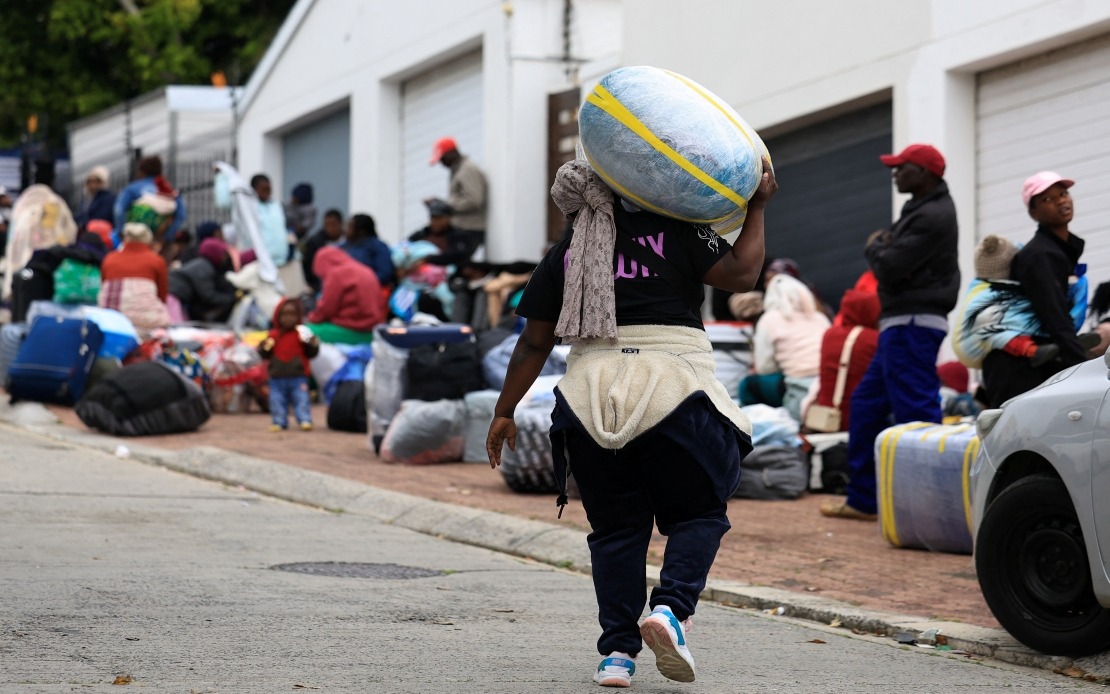
South African authorities initiated a large-scale relocation of foreign nationals on Saturday, moving hundreds of Zimbabwean migrants and some Malawians away from a temporary processing facility in Cape Town as tensions surrounding immigration continue to mount across the country. The operation, which saw buses departing from the Epping processing centre bound for Musina in Limpopo Province, represents an attempt by the Department of Home Affairs to manage a mounting humanitarian and security crisis triggered by increasingly hostile anti-immigrant sentiment sweeping through South Africa's urban centres.
The decision to consolidate processing operations at the Musina facility reflects growing pressure on Cape Town's infrastructure and the volatile security environment that has made maintaining the Epping centre untenable. Authorities have simultaneously encouraged remaining applicants to bypass the Cape Town facility entirely and travel directly to Musina, where thousands of undocumented foreign nationals are already queuing for processing and eventual repatriation. This dual approach—actively relocating some migrants while directing others to move independently—suggests that South African officials recognise the urgent need to disperse concentrated populations of foreign nationals from urban areas where anti-immigrant sentiment runs highest.
Conditions at the Epping processing centre have deteriorated markedly during the weeks-long occupation by desperate migrants seeking government assistance. Humanitarian organisations working on site have struggled to provide adequate food, shelter, and sanitation facilities for the growing population, with aid workers reporting that illness has become commonplace among residents. Some individuals have contracted diarrhoea and flu-like symptoms, raising concerns about disease transmission and the sustainability of maintaining such temporary facilities in urban areas. The humanitarian dimension of this crisis underscores the precarious circumstances facing hundreds of vulnerable people caught between their desire to remain in South Africa and mounting pressure to leave.
The urgency accelerated this weekend as approximately 400 additional people arrived overnight, only to find themselves turned away as the processing centre approached closure. These newly arrived migrants found themselves in an impossible situation—unable to access the processing centre they had travelled to reach and lacking clear direction on how to proceed. Many remained nearby, stranded in limbo while authorities implemented their relocation strategy. This bottleneck illustrates the broader challenge facing both South African officials and migrant communities: the infrastructure and protocols designed to handle immigration flows have been overwhelmed by the scale of people seeking either to remain legally in South Africa or to secure assisted passage home.
Personal testimonies from those affected by the relocation convey the desperation characterising this crisis. Yekuai Mokoena, a Zimbabwean national who had sheltered at the processing centre with her two children after spending several nights outside the Zimbabwean consulate itself, could only offer a stark assessment of her circumstances: the situation was undeniably bad. Her case exemplifies the vulnerability of families caught in this scenario, having already endured the trauma of sleeping rough outside government facilities before finally accessing the processing centre, only to face relocation once again.
The background to this crisis stems from an escalation of xenophobic activity that reached a critical point around June 30, when anti-immigrant groups issued an informal ultimatum demanding that all undocumented foreign nationals depart South Africa by that date. This deadline, though lacking legal authority, triggered genuine fear among vulnerable migrant communities throughout the country. Facing the threat of violence and harassment from organised xenophobic actors, approximately 3,000 people congregated outside the Zimbabwean consulate in Cape Town, spending roughly two weeks in makeshift conditions while seeking government protection and assistance.
The relocation to the Epping processing centre represented an initial response to this crisis, offering at least the prospect of shelter and basic services. However, the facility's capacity quickly proved insufficient for the scale of demand, and conditions rapidly deteriorated. By early July, it became apparent that the Epping operation could not be sustained indefinitely, prompting authorities to initiate Saturday's transfer operation. Buses continued loading passengers and luggage throughout the afternoon as the centre prepared for closure, with officials prioritising the movement of residents before the facility shut down entirely.
For Malaysian readers and observers across Southeast Asia, this situation carries important implications regarding regional migration patterns and the vulnerability of foreign workers and displaced persons in countries experiencing economic hardship or political instability. Zimbabwe's ongoing economic crisis has driven significant emigration to neighbouring countries, with South Africa historically serving as a destination for Zimbabwean migrants seeking employment opportunities. However, South Africa's own economic challenges have fuelled rising resentment toward foreign nationals, who some segments of the population blame for taking jobs and straining public services. This dynamic mirrors tensions evident in various Southeast Asian labour markets, where tensions between migrant workers and local populations periodically escalate into conflict.
The broader context reveals structural challenges in how South African authorities manage migration during periods of heightened xenophobic activity. Rather than implementing comprehensive protection measures for vulnerable foreign nationals, the state has opted for a dispersal strategy that shifts the problem geographically rather than addressing underlying causes. The Musina facility, while potentially offering better logistical capacity for processing, remains remote and potentially difficult for migrants to access, potentially creating new humanitarian challenges even as the immediate crisis in Cape Town is resolved.
The situation also highlights the limited capacity of humanitarian organisations operating on the ground to address crises of this scale. Aid workers providing food, shelter, and sanitation support at the Epping centre have worked under severely constrained conditions, unable to adequately address health concerns or provide dignified living conditions for residents. As operations shift to Musina, these organisations face the challenge of maintaining their service delivery across a geographically dispersed population.
Looking ahead, the success of this relocation operation will depend on whether the Musina facility can efficiently process the influx of new arrivals while simultaneously handling the thousands already awaiting processing. The stated objective of authorities—to facilitate repatriation of foreign nationals to their home countries—will require coordination with source countries including Zimbabwe and Malawi, as well as adequate resources for transportation and documentation. For many migrants facing the choice between returning home to precarious circumstances or attempting to remain in South Africa despite growing hostility, the outcome of this process will fundamentally reshape their prospects.

